What was putting pressure on miners’ operating economics? In a report published on November 18, 2026, 算力之心 said 15 of 18 publicly traded mining companies it tracked had fallen over the preceding week. The median decline was 10%. Bitdeer (BTDR) fell 31.9%, while IREN fell 23.4%; Cango (CANG) rose 32.4%.
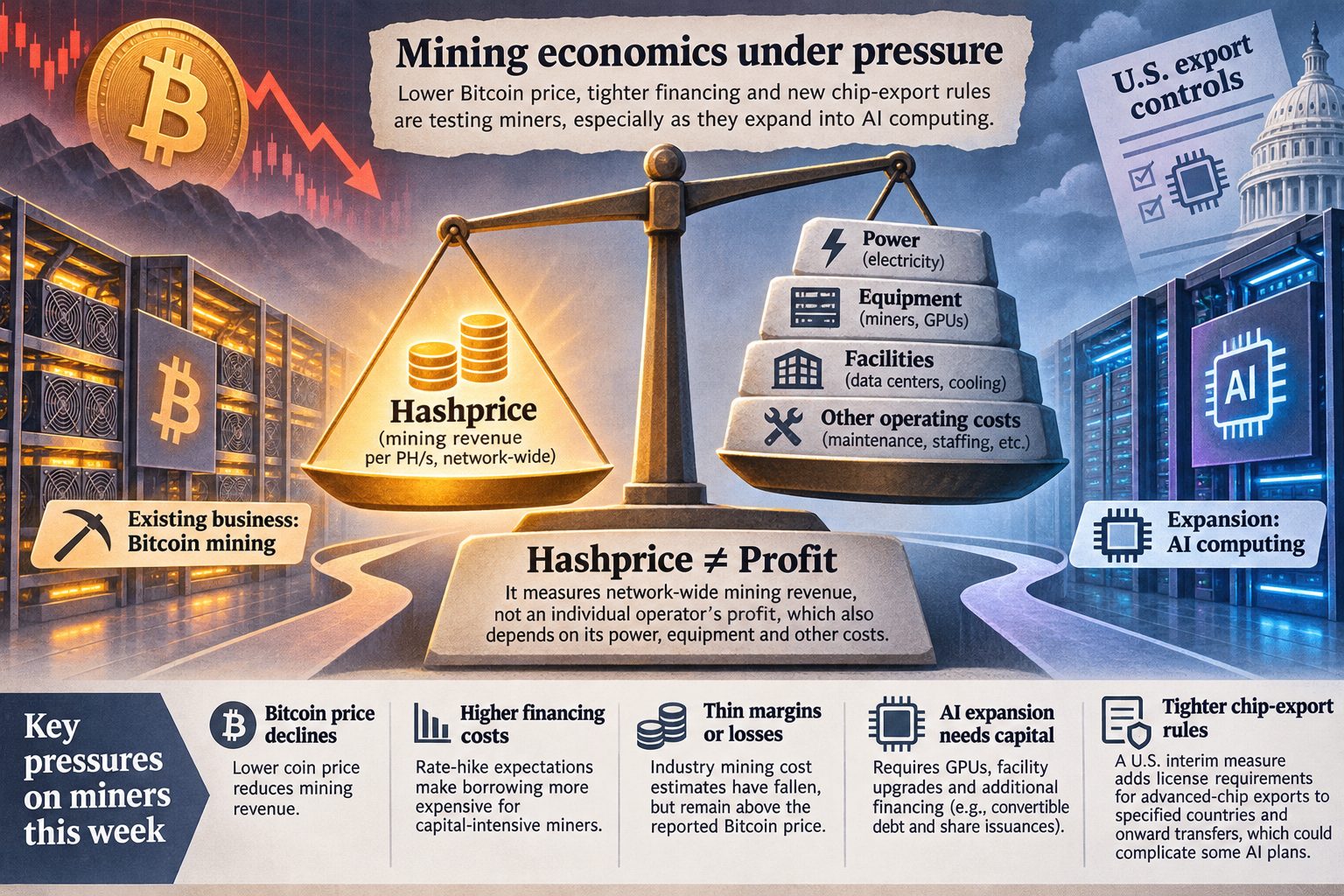
The report put Bitcoin at about $64,377 on November 18, down 12.96% over seven days. It also put hashprice—daily mining revenue per PH/s of computing power—at about $33.30. That is a network-wide revenue measure, not an individual operator’s profit: a miner’s result also depends on its power, equipment and other costs.
Citing JPMorgan, the report said an estimated industry cost to mine one bitcoin had fallen from $90,000 to about $78,000 as higher-cost miners shut down. That estimate remained above the reported Bitcoin price, but it does not establish that every operator mined at a loss.
Bitdeer’s capital demands
The report linked attention on Bitdeer to both its mining results and the cost of expanding into AI computing. It said Bitdeer’s November 10 third-quarter results showed revenue of $320.7 million, up 89% year over year, while its net loss widened from $30.1 million to $125.5 million. Gross margin fell from 23.4% to 3.4%, and the quarter included a $54.6 million accounting loss on a digital-asset loan.
AI expansion requires capital for GPUs and facility work in addition to existing mining operations. According to the report, Bitdeer had issued more than $1.5 billion in convertible debt and had also raised funds through share issuances. Those are financing pressures; the report did not quantify a resulting cost per unit of AI capacity or establish a return on the spending.
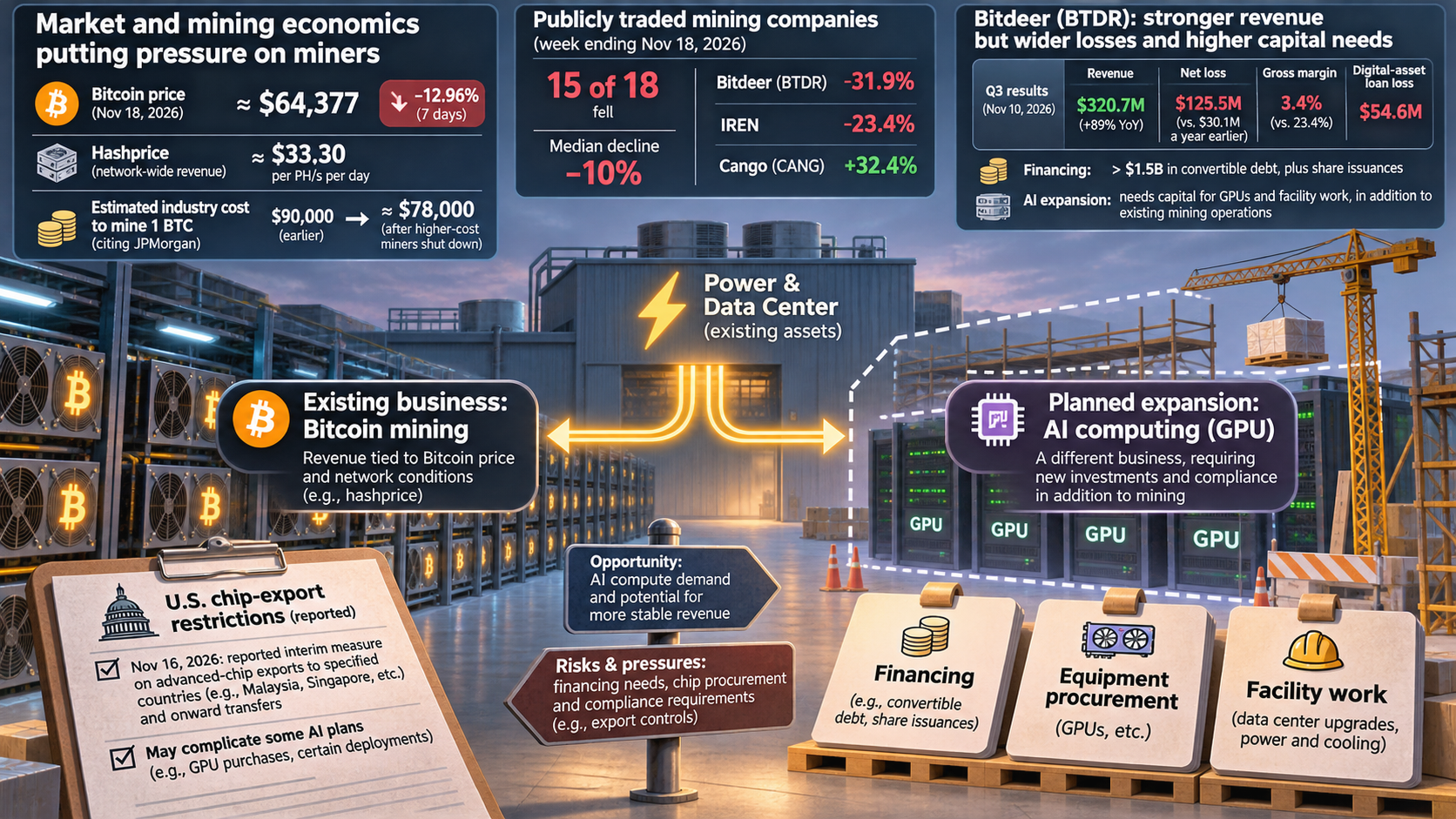
The author also argued that reported U.S. chip-export restrictions could complicate some AI plans, noting Bitdeer’s Singapore headquarters and data centers in Malaysia, among other countries. The source described a November 16 interim measure concerning advanced-chip exports to specified countries and onward transfers. That account does not establish that Bitdeer was denied a license or that its GPU purchases or customer contracts had been blocked. The report’s explanation for Bitdeer’s share-price decline should therefore be read as an interpretation, not a confirmed cause.
For miners weighing AI expansion, the operational distinction is between revenue from existing mining capacity and the financing, equipment procurement and compliance requirements of a different business. The reported share-price moves show investor pressure during that week; they do not, on their own, measure the profitability of either operation.