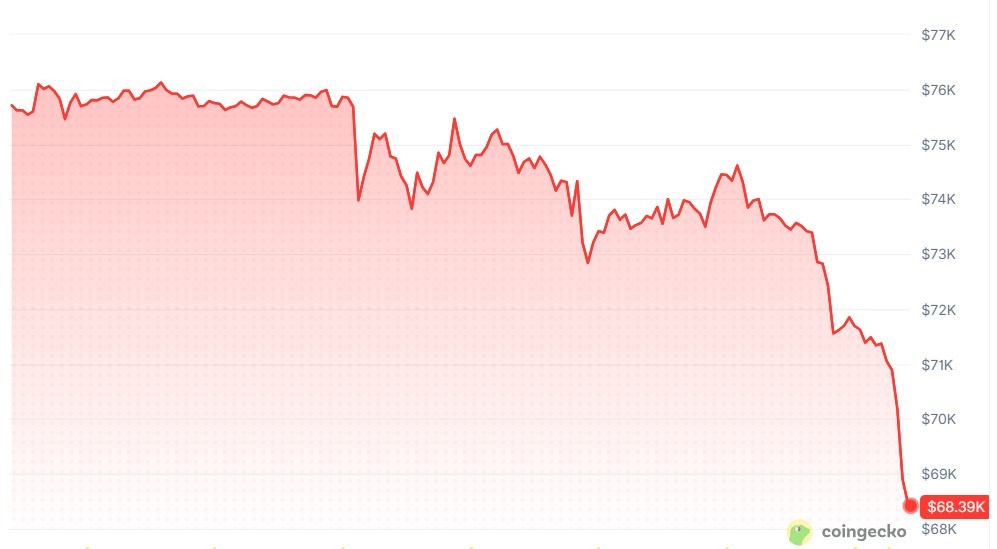
As reported on November 13, 2026, Bitcoin had fallen below $70,000. It was trading at $68,607.23 at the time of the report, down 9.2% over seven days, according to CoinGecko. The Crypto Fear & Greed Index stood at 20—its lowest reading since July 8—placing sentiment in “extreme fear.”
Vikram Subburaj, CEO of crypto exchange Giottus, attributed the weakness to institutional outflows, tighter crypto-market liquidity and expectations of a December Federal Reserve interest-rate hike.
A report from 10x Research pointed to Bitcoin’s divergence from US technology stocks. From November 5 to November 12, Bitcoin fell 5.9% while the Nasdaq 100 rose 6.4%. Gold fell 5.5% over the same period, and the US 10-year Treasury yield climbed above 5%. The firm said Bitcoin appeared to be responding more to yields and the stronger dollar than to technology stocks.
Liquidity was another concern. Talos reported that Bitcoin order-book depth across major exchanges fell to $72 million on November 9, roughly 33% below normal levels. Tanay Ved, a senior research associate at Talos, warned that thin liquidity combined with elevated leverage could amplify moves in either direction.
US spot Bitcoin ETFs had also seen withdrawals. BlackRock’s iShares Bitcoin Trust recorded more than $2 billion in net outflows over nine consecutive trading sessions through Wednesday, November 11, while spot Bitcoin funds overall shed nearly $1.44 billion over five sessions. Preliminary Farside Investors data showed a further $47.7 million in net outflows on Thursday, November 12; figures for BlackRock and Fidelity were still pending.