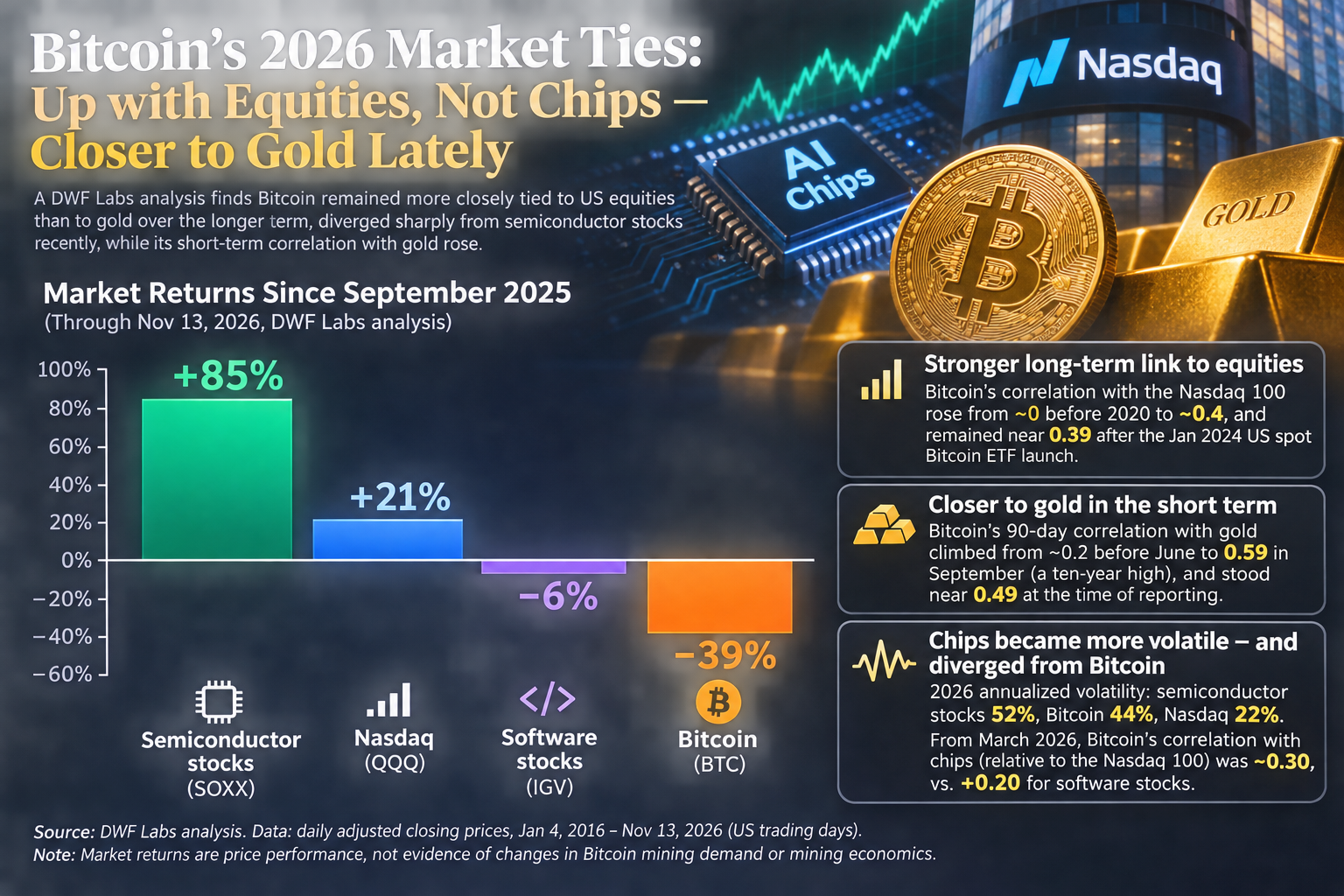
What did Bitcoin trade alongside in 2026? A DWF Labs analysis published on November 20, 2026, found that Bitcoin remained more closely tied to US equities than to gold over the longer term. But its recent returns diverged sharply from semiconductor stocks, while its short-term correlation with gold rose.
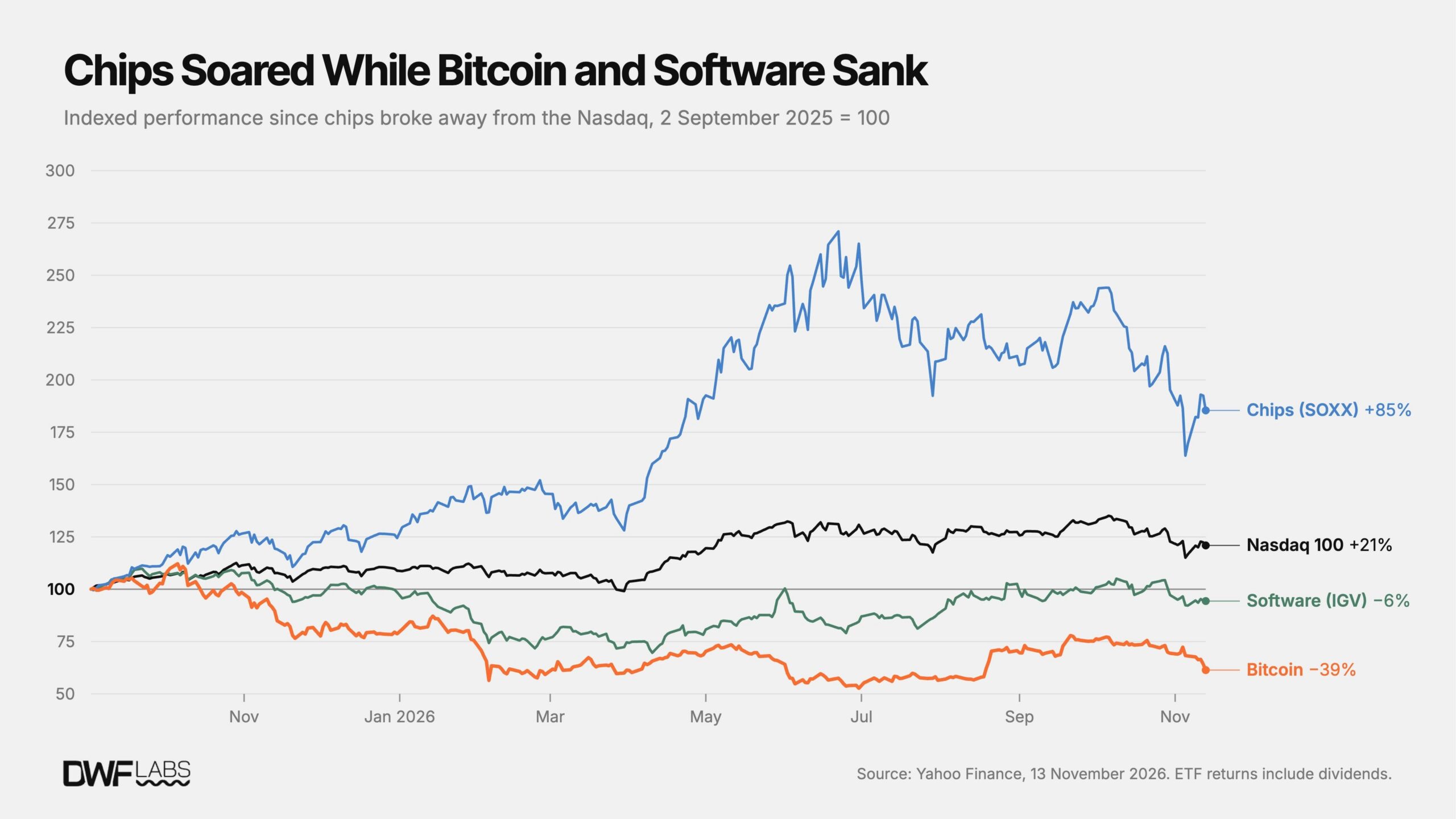
From September 2025 through the analysis, semiconductor stocks gained 85% and the Nasdaq rose 21%. Bitcoin fell 39%, while software stocks declined 6%. Those are market returns, not evidence of a change in Bitcoin mining demand or mining economics.
Equities remained the stronger long-term link
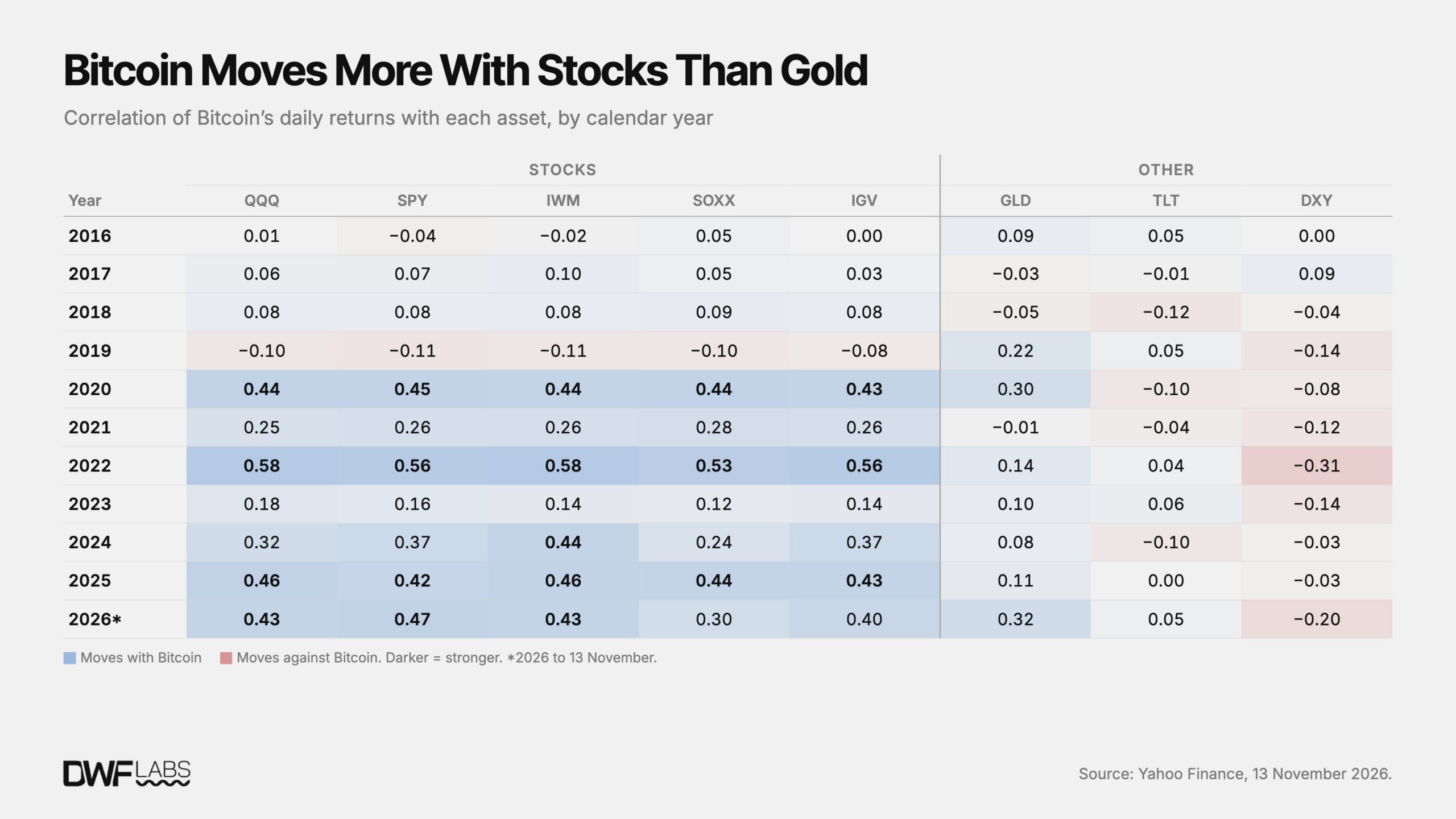
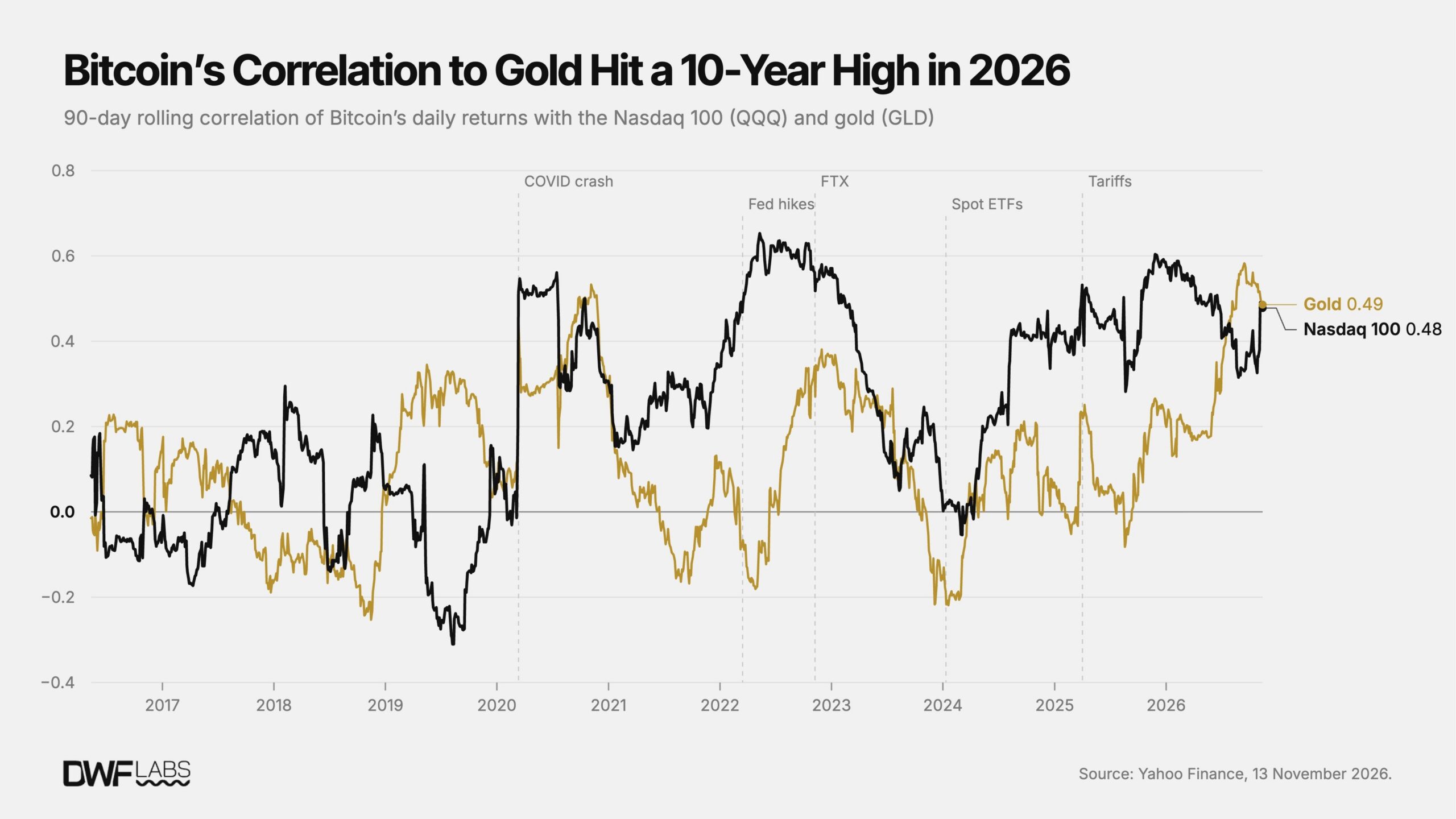
DWF Labs calculated that Bitcoin’s correlation with the Nasdaq 100 rose from around zero before 2020 to roughly 0.4 afterward. It said the relationship remained near 0.39 following the launch of US spot Bitcoin ETFs in January 2024. A correlation of 0.4 is moderate, not a sign that the two assets move together every day.
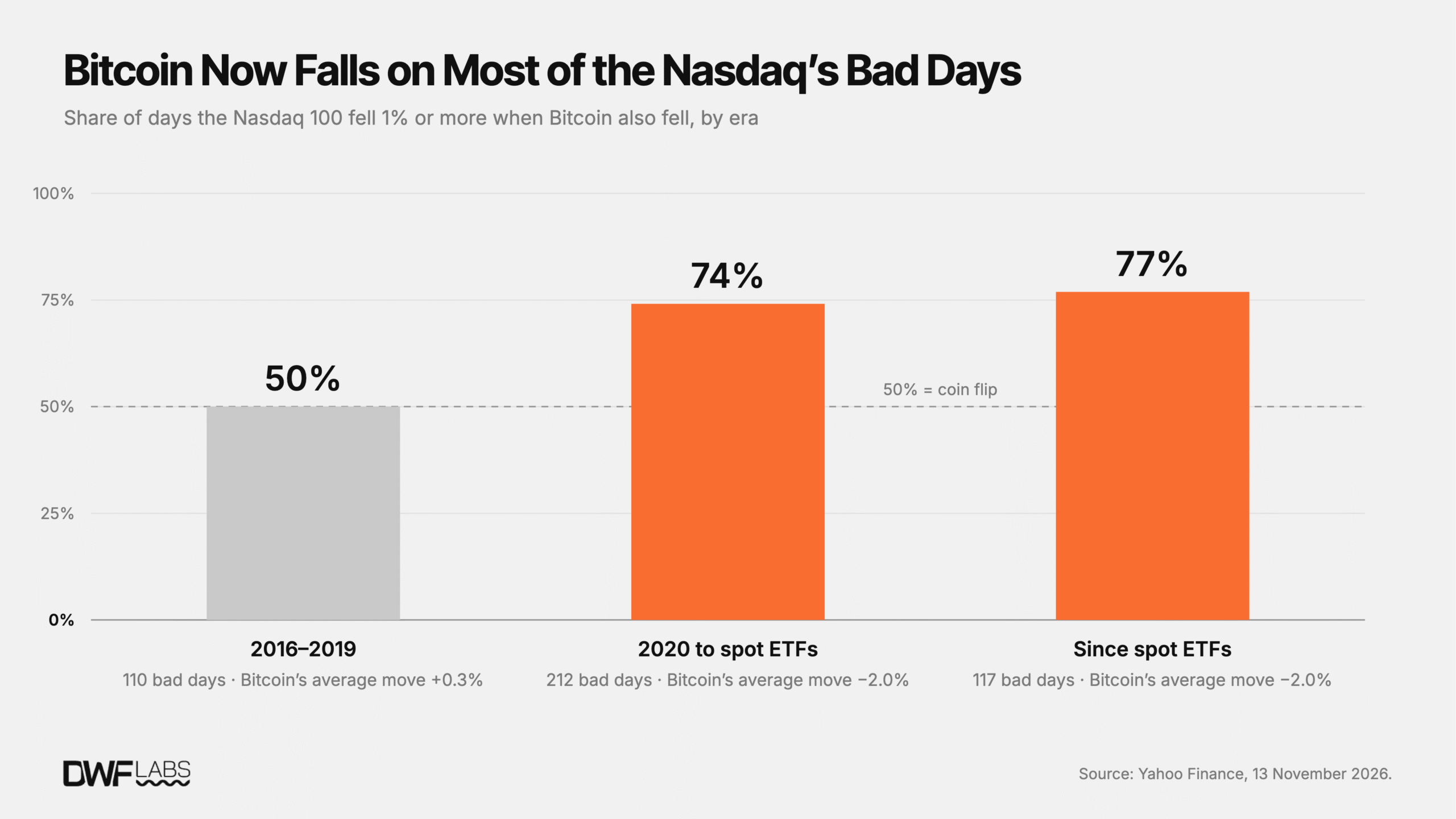
The link was more pronounced during equity sell-offs. On days when the Nasdaq fell at least 1%, Bitcoin also declined 74% of the time between 2020 and the ETF launch, and 77% of the time afterward. Its average decline on those days was 2.0%, according to the analysis. Gold fell on 57% of comparable days, with an average decline of 0.2%.
Bitcoin’s correlation with gold was generally weak across the preceding decade. In 2026 through the study’s November 13 data cutoff, its annual correlation with gold reached 0.32. The 90-day rolling measure climbed from around 0.2 before June to 0.59 in September—a ten-year high in the analysis—and stood near 0.49 at the time of reporting. That shorter-term increase does not establish that Bitcoin had become a reliable haven during stock-market declines.
Chip stocks became more volatile—and moved differently
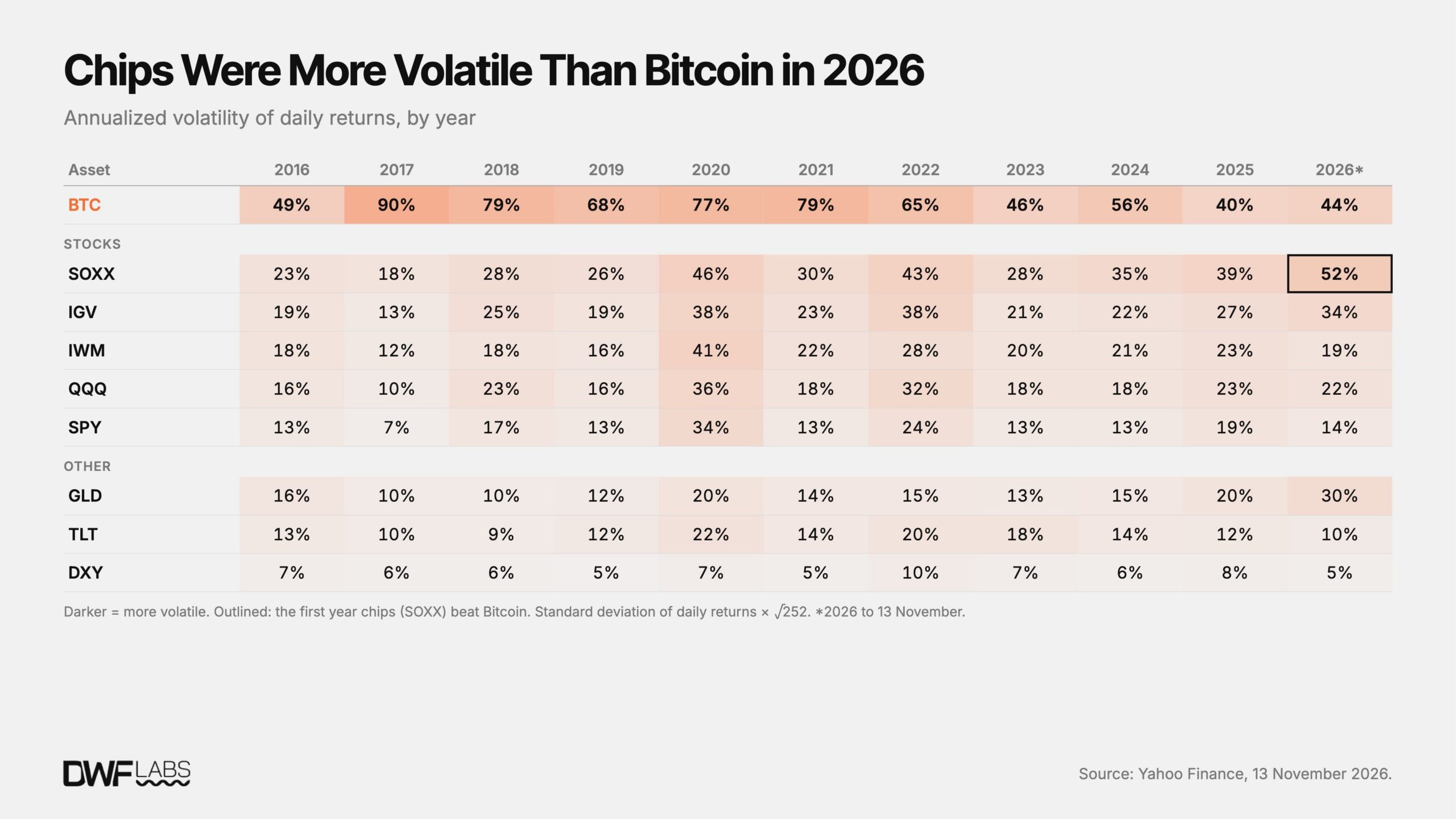
Bitcoin’s annualized volatility fell from 90% in 2017 to 44% in 2026 through the study’s data cutoff. It was still twice the Nasdaq’s 22%. Semiconductor stocks, represented by SOXX, registered 52% annualized volatility in 2026, exceeding Bitcoin’s figure for the first time in the study’s ten-year comparison.
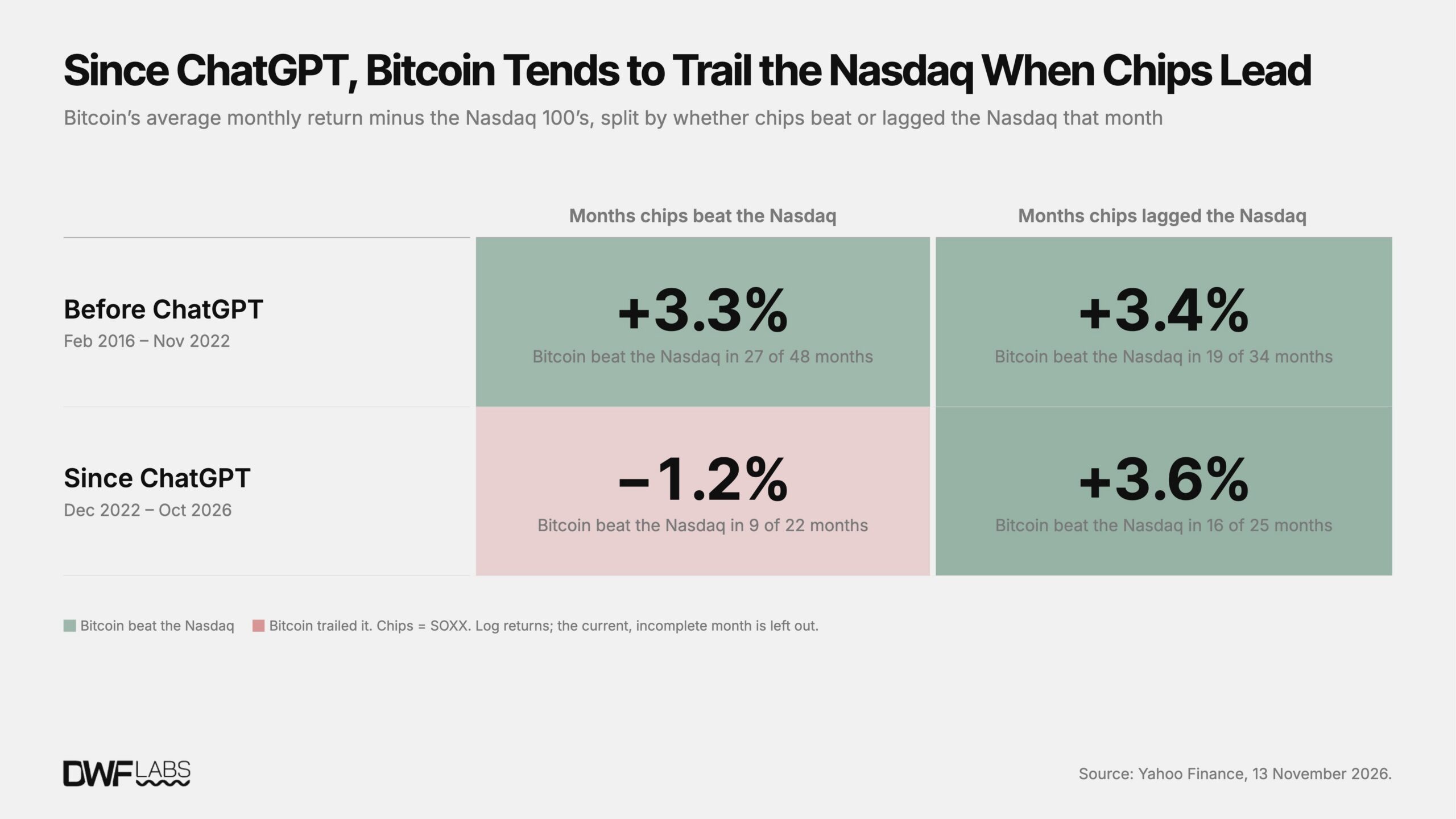
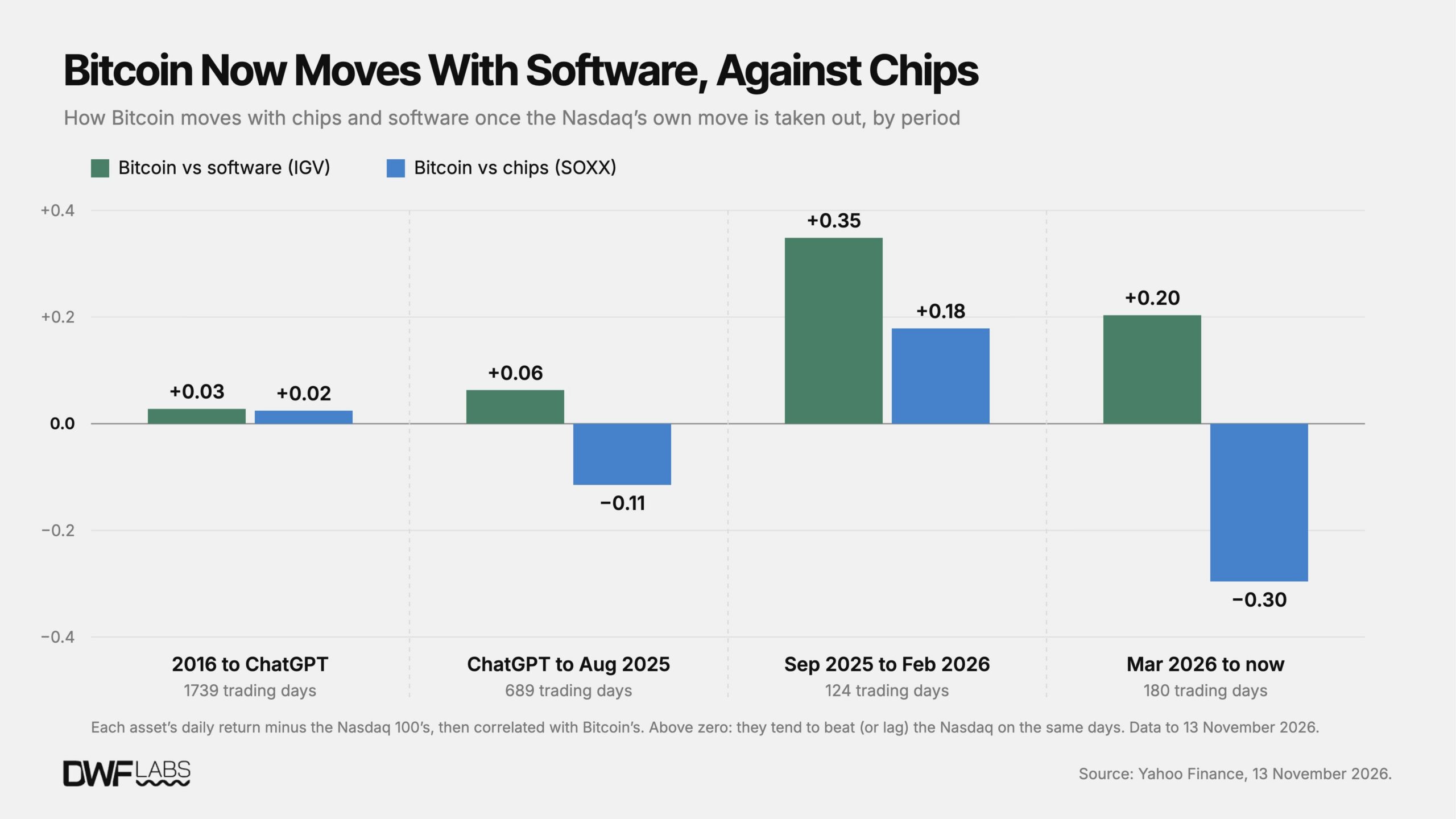
The difference between Bitcoin and chips went beyond their total returns. DWF Labs also compared each asset’s daily return relative to the Nasdaq 100, represented by QQQ. By that measure, Bitcoin’s correlation with semiconductor stocks was −0.30 from March 2026 onward, while its correlation with software stocks was +0.20. A beta-adjusted calculation for 2026 produced a similar contrast: −0.22 for chips and +0.25 for software.
This is a comparison of asset prices, not a measure of Bitcoin’s network hashrate, miner revenue or electricity use. The source provides no basis for attributing the chip-stock rally or Bitcoin’s decline to changes in mining operations.
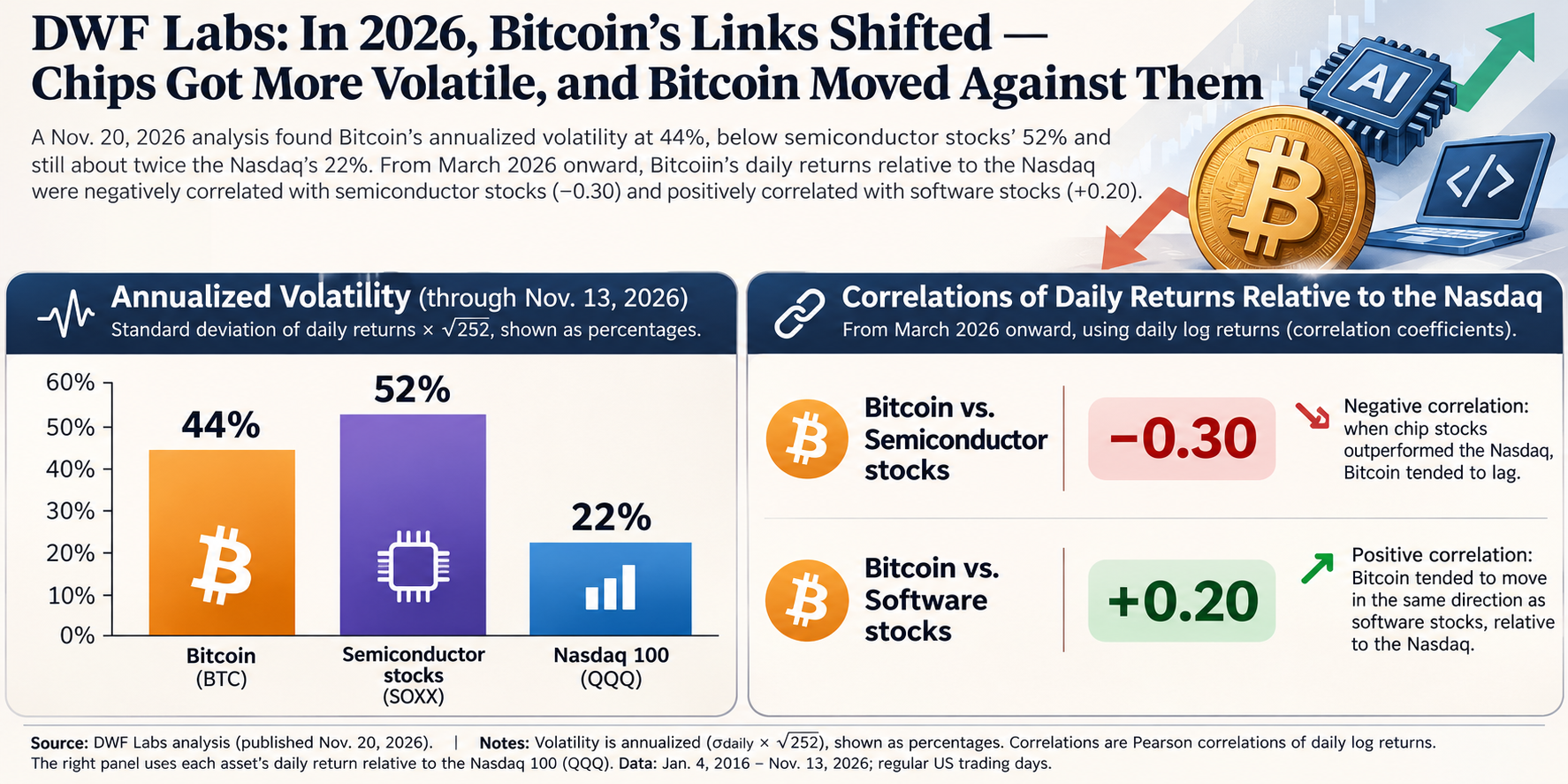
DWF Labs used daily adjusted closing prices from January 4, 2016, through November 13, 2026, restricted to regular US stock-market trading days. Its correlations use daily log returns; annualized volatility is the standard deviation of daily returns multiplied by √252. Bitcoin’s daily closing price was taken at 00:00 UTC, roughly three to four hours after the US stock-market close—a timing difference to bear in mind when reading daily correlations.