As reported on November 19, 2026, Bitcoin had returned to roughly $62,000 for the second time in a week. The immediate question for traders was whether the Federal Reserve would raise rates in both December and January—and whether spot demand could support Bitcoin if the dollar and Treasury yields stayed high. The report did not identify a mining-specific development.
Ether fell below $1,750, touching $1,735. The sell-off extended beyond crypto: over the preceding 24 hours, spot gold fell 3.6% and silver about 5%, while London copper dropped more than 4% intraday and tin more than 8% at one point.
December and January remain open questions
Fed Governor and FOMC voter Christopher Waller told CNBC before the U.S. stock-market open that inflation was moving in the wrong direction and price pressures had spread to services. He favored a 50-basis-point increase in December, though he said a 25-basis-point move could work if the Fed clearly signaled another 25 basis points in January. These were policy preferences, not announced decisions.
Minutes of the Fed’s October meeting, released that morning, showed earlier disagreement over the pace of tightening. After a 25-basis-point increase in September, the Fed held its rate at 3.75%–4.00% in October. Governor Lisa Cook and Cleveland Fed President Beth Hammack dissented in favor of another increase. Nearly all participants expected further hikes in the coming months if the economy developed as forecast; two said an increase of more than 25 basis points in December could be considered if inflation data disappointed.
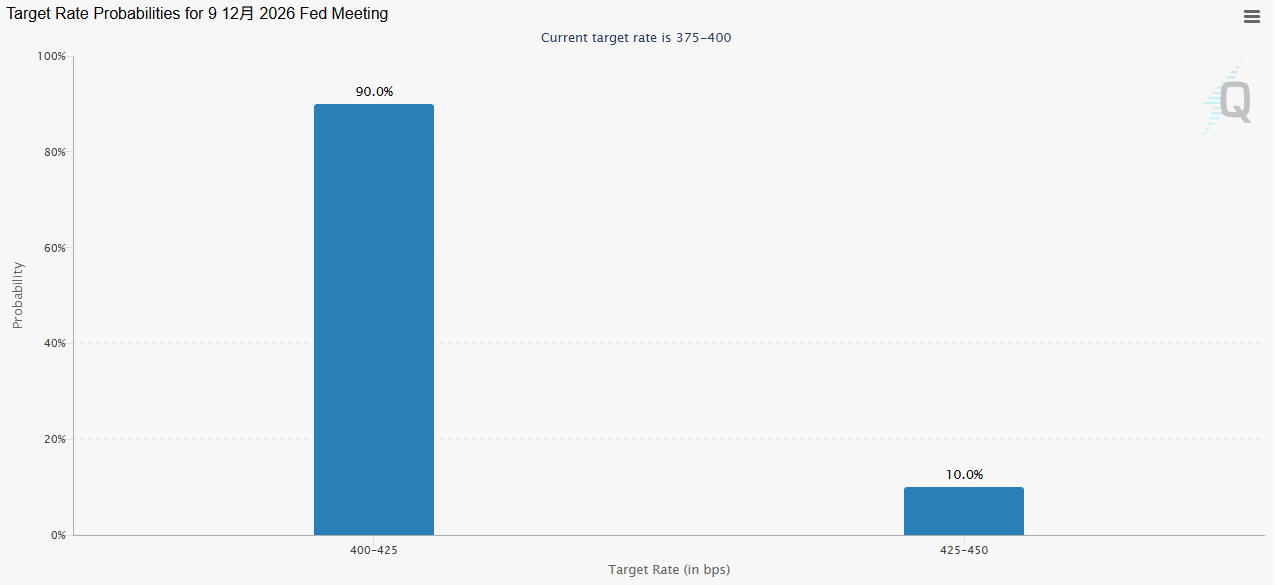
At the time of the report, CME data put the probability of a December 25-basis-point increase at 90%, versus 10% for a 50-basis-point increase. The probability of 50 basis points in cumulative increases by January was 75.5%, consistent with markets favoring a 25-basis-point move at each meeting. Those figures described market pricing, not a Fed commitment.
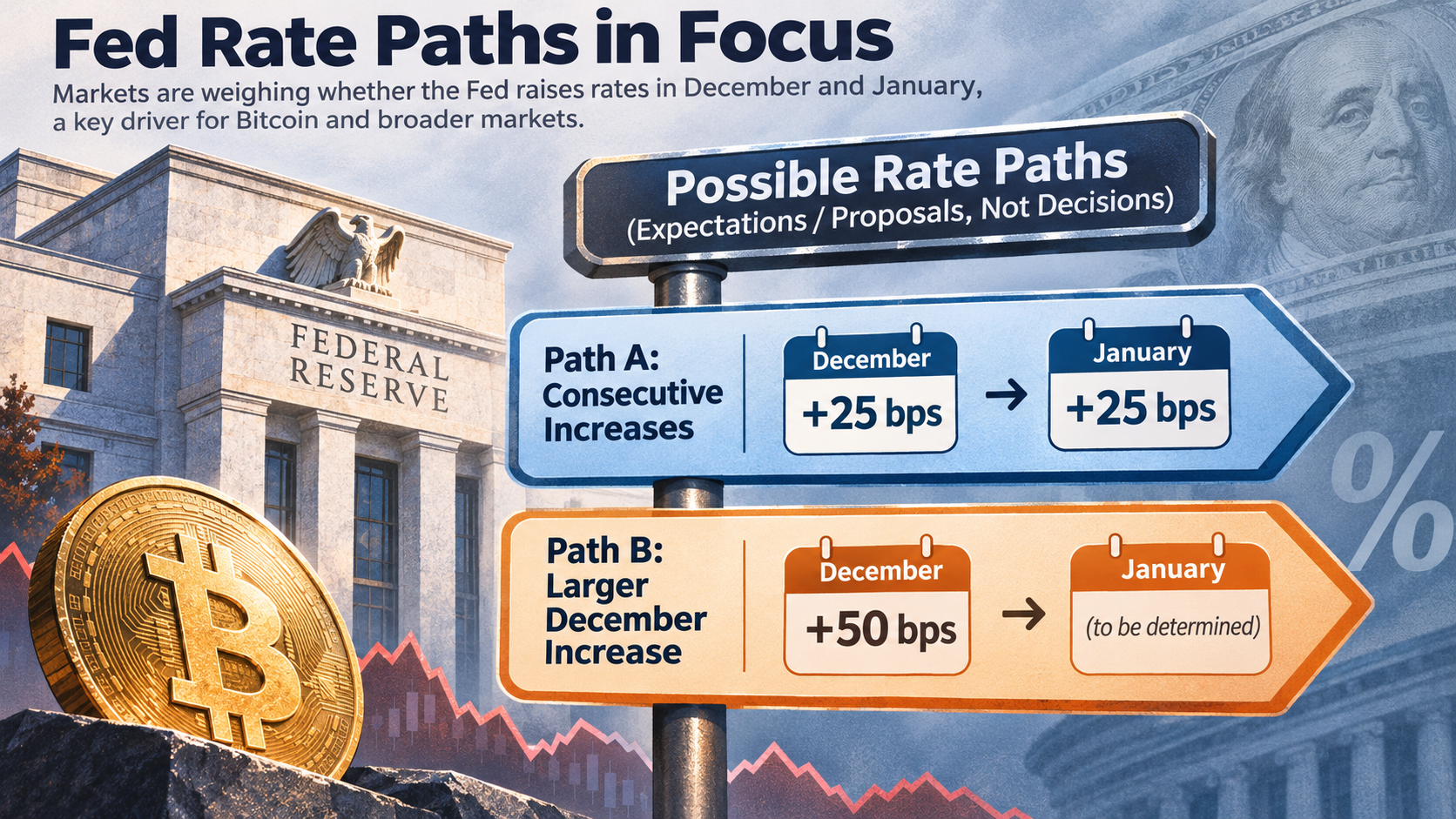
Economists differed on what might change that outlook. BMO Capital Markets’ Scott Anderson said the October minutes reinforced expectations of consecutive increases. LPL Financial’s Jeffrey Roach expected inflation readings to improve over the next two months and considered a 25-basis-point December increase sufficient. Robin Brooks noted that lower oil prices had reduced Treasury-market inflation expectations, but the report said persistent core-services inflation could keep January hike expectations in place.
Bitcoin’s support is still contested
In a November 17 report, Bitwise chief investment officer Matt Hougan attributed the earlier move toward $62,000 partly to hotter-than-expected U.S. inflation and the liquidation of roughly $2 billion in leveraged positions during a thinly traded weekend. K33 research head Vetle Lunde pointed to negative perpetual-futures funding rates, options hedging demand and more than half of circulating Bitcoin being held at a loss as signs traders were watching for a rebound.
After the Fed minutes, analysts focused more closely on sustained pressure from rates. Sygnum Bank chief investment officer Fabian Dori said stronger long-term Treasury yields and the dollar could weigh on Bitcoin, depending on the strength of institutional allocation and currency-debasement hedging demand. Bitget analyst Lewis Huang warned that, if the dollar and yields rose further and Bitcoin lost the area around $62,000, selling could continue.
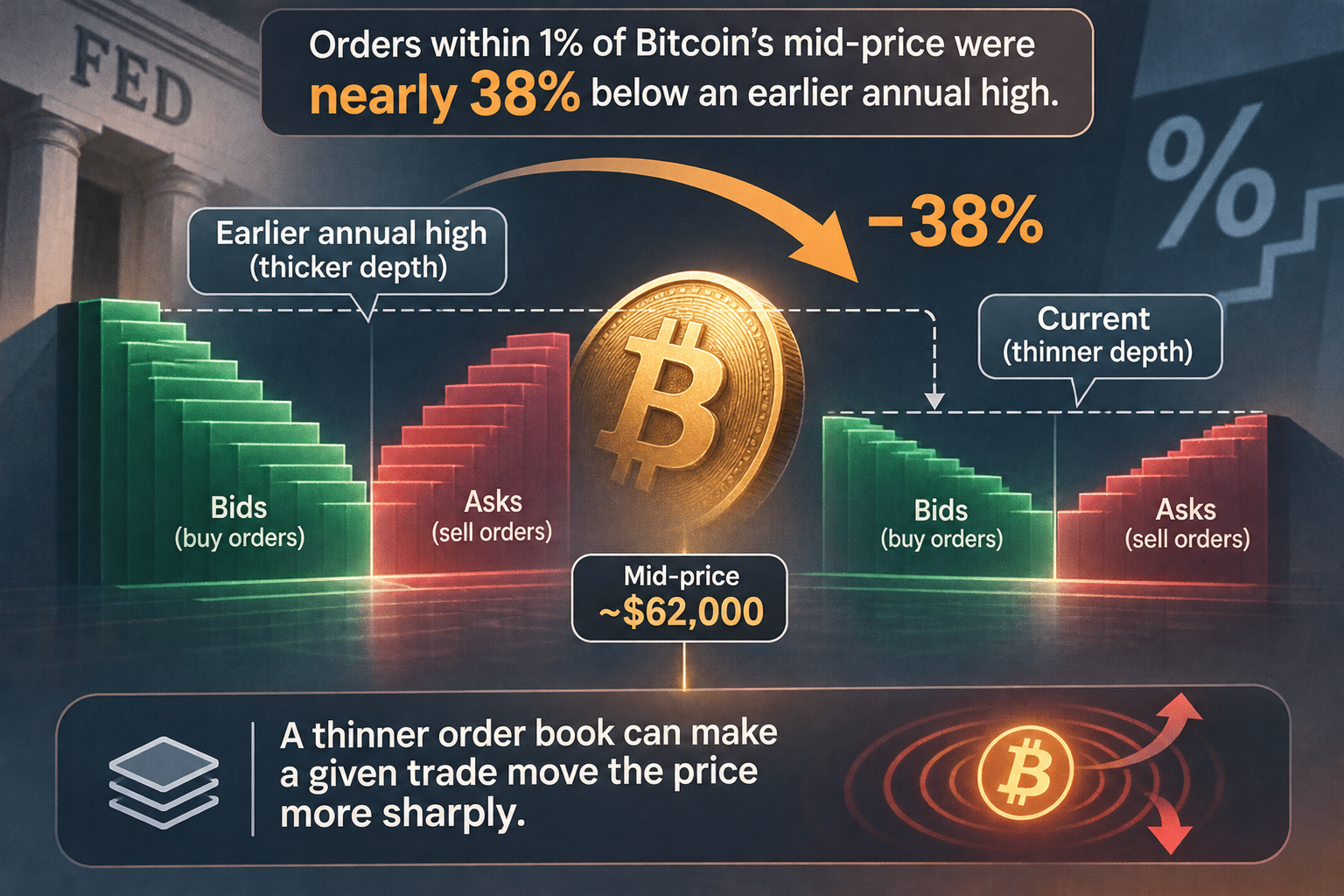
The case for a durable rebound also depended on buyers returning. Wintermute OTC trader Jasper de Maere said he saw little clear support from ETFs, crypto treasury companies, retail traders or institutions. According to Talos, the total value of orders within 1% above and below Bitcoin’s mid-price was nearly 38% below its earlier annual high, measured before the Binance hack referenced in the report. A thinner order book can make a given trade move the price more sharply; it does not establish where Bitcoin will go next.
Views on a bottom remained divided. Fidelity’s Jurrien Timmer said Bitcoin was near a support line in his long-term price model, while Wellington-Altus strategist James Thorne viewed $57,000 as the level that would invalidate his bullish weekly-chart reading. Trader Peter Brandt instead warned of a possible head-and-shoulders pattern, with greater downside risk if confirmed. None of those assessments established $62,000 as a floor.