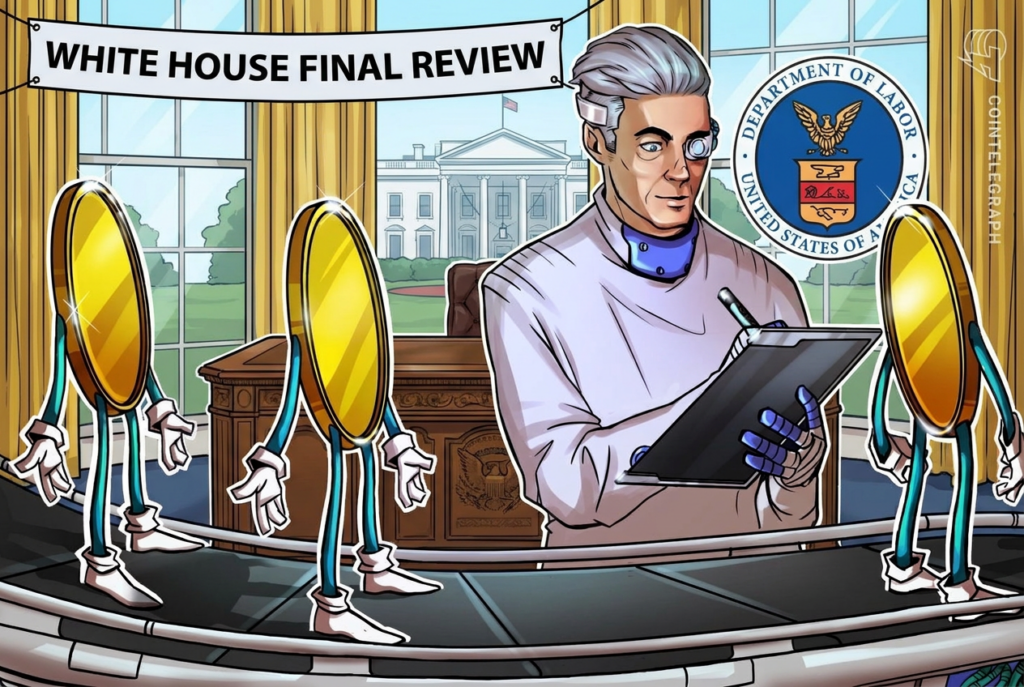
Could a US retirement plan offer cryptocurrencies beyond Bitcoin and Ether? Under a proposed Labor Department rule, the answer could be yes—but plan managers would still have to justify each investment choice.
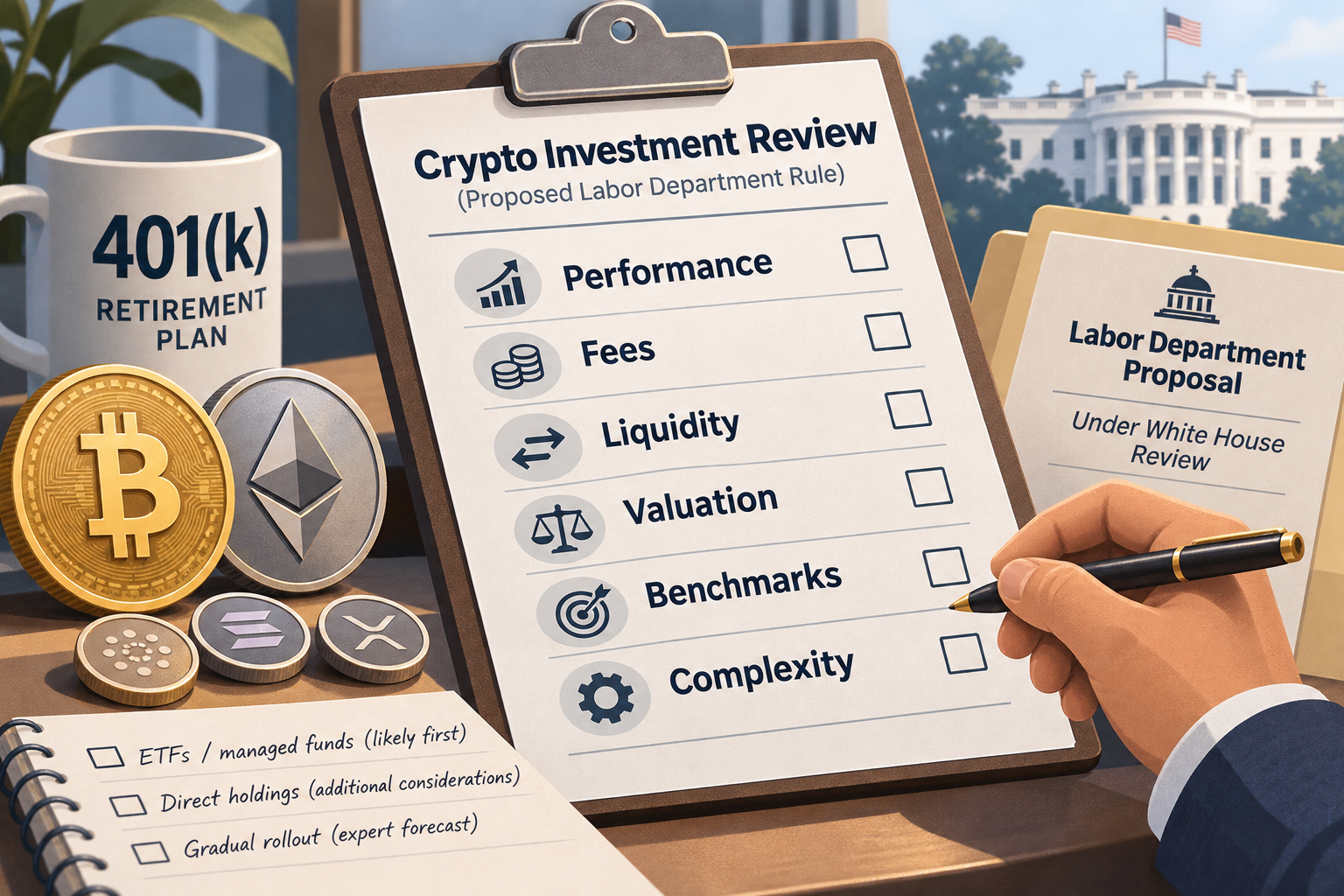
As of the original report on November 7, 2026, the proposal had reached the White House for final review, according to the Office of Information and Regulatory Affairs. It was not yet an enacted rule. The Labor Department’s March proposal names no eligible digital assets and sets no minimum market capitalization. Instead, it directs plan managers to consider performance, fees, liquidity, valuation, benchmarks and complexity.
Why smaller tokens face a higher bar
Teresa Goody Guillén, managing partner at Bellementis PLLC, said Bitcoin and Ether would likely be offered first because they have established markets and investment products. CoinGecko put their market capitalizations at approximately $1.5 trillion and $273 billion, respectively, as of 20:01 UTC on November 6. Guillén cautioned that size alone should neither qualify nor disqualify an asset; plan managers would need to show that their choices meet ordinary standards of prudence and investor protection.
Bernardo Brites, co-founder and CEO of Trace Finance, took a stricter view. He said Bitcoin and Ether could meet the proposal’s tests, while other tokens would fail on track record or benchmarks. In his view, a practical hurdle is whether a plan committee can document a reliable daily price through a regulated investment product.
Funds may come before direct holdings
The proposal does not restrict plans to exchange-traded funds or managed funds. Guillén nevertheless expects those products to come first because they fit existing custody and recordkeeping systems. Direct crypto holdings would raise additional storage, cybersecurity and pricing questions, she said, though those concerns would not automatically rule them out.
Brites projected a gradual rollout: existing brokerage options first, some crypto investment options in 2027, ETFs at larger employers later that year, and potentially broader availability by 2028. Those are his forecasts, not a timetable set by the proposal.
Legal risk also remains. Brites said the proposed protection for plan managers would not prevent lawsuits over their decisions, and a future administration could reverse the rule. He pointed to guidance issued in 2022 and reversed in 2025 as a reason employers might hesitate to make long-term plan changes.