The House Financial Services Committee’s rewrite of H.R. 8957 would put Bitcoin the federal government already owns into a Treasury reserve, generally for at least 20 years. It would not fund a federal buying program. At the time of reporting on November 27, 2026, at 18:35 UTC+8, neither the amount eligible for transfer nor a date for a House floor vote was known.
The committee submitted its substitute text and report (119-894) to the House on November 24. The U.S. Reserve Modernization Act of 2026 was then placed on the Union Calendar as No. 789. The rewrite removed language from the original bill’s long title about using Federal Reserve System resources to offset costs.
How much Bitcoin would qualify?
Only federally owned BTC not already committed to another purpose by law would qualify. Victim restitution and statutory claims on forfeited property, including those of Treasury and Justice Department forfeiture funds, would take priority over transfers to the reserve.
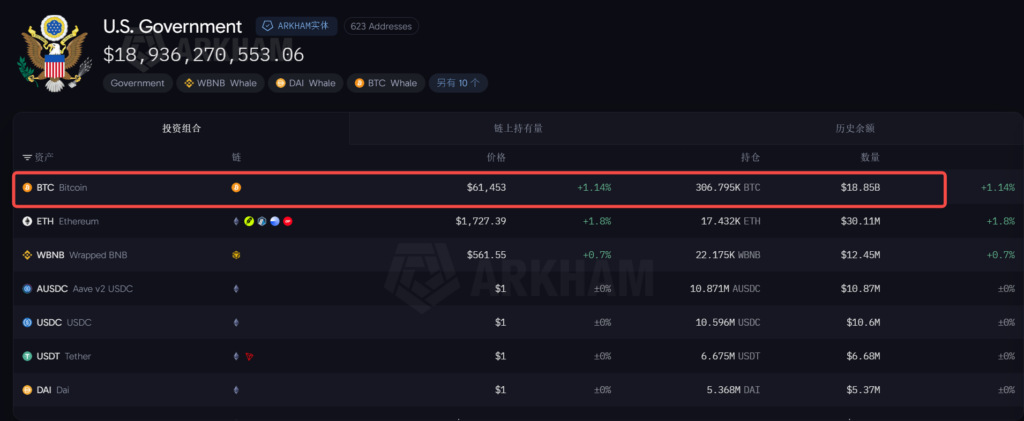
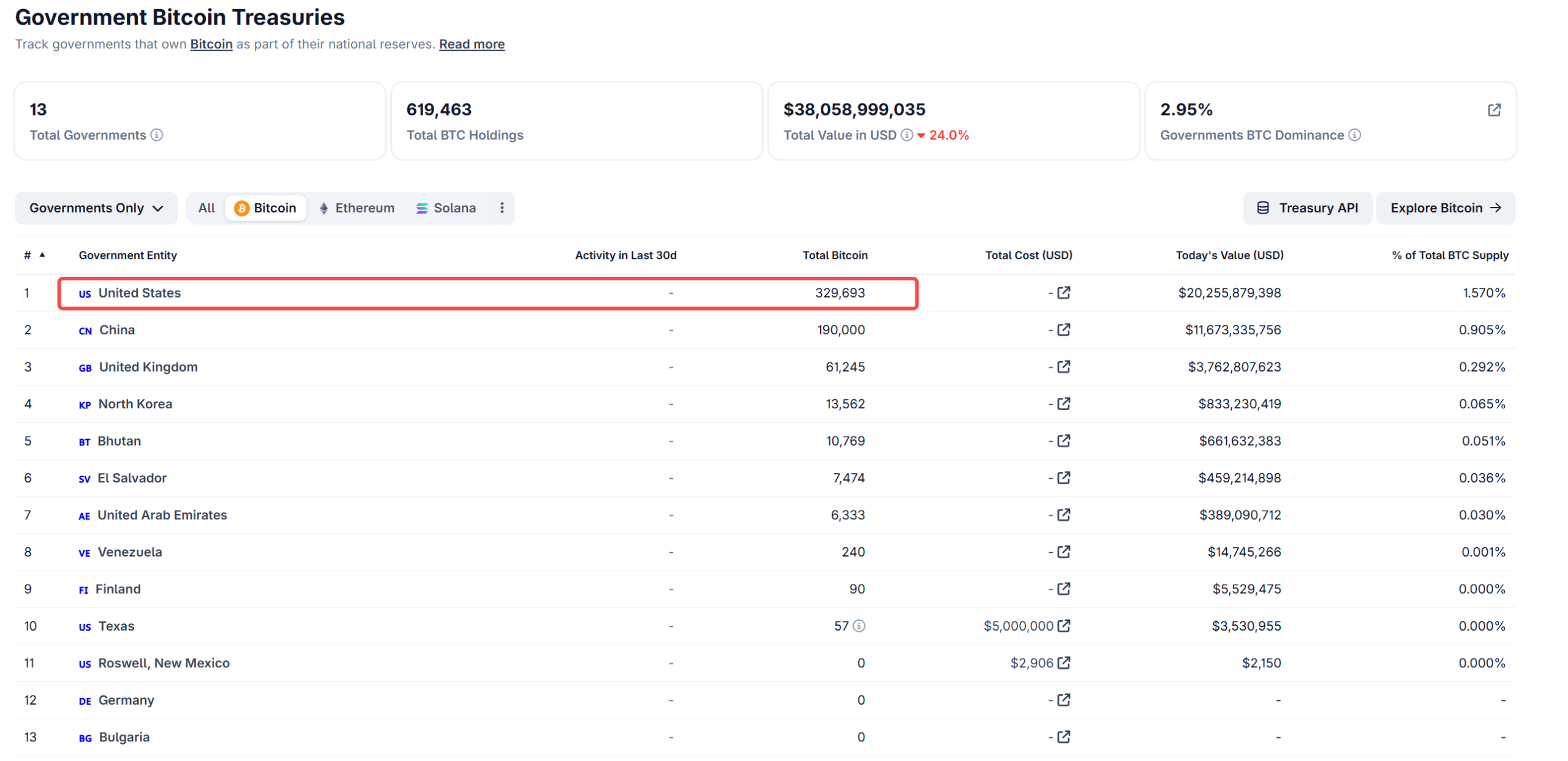
The White House had not published an audited inventory. In November 2026, Arkham attributed 306,795 BTC, worth about $18.85 billion, to U.S. government addresses. CoinGecko’s broader count was 329,693 BTC, or about 1.57% of total Bitcoin supply. Its figure included assets still in civil forfeiture proceedings, such as those in the Prince Group case involving about 127,300 BTC. Neither figure measures the balance Treasury could place in the reserve: control of an address does not settle ownership or extinguish a victim’s claim.
Two accounts with different custody rules
Federal agencies would have 60 days after enactment to report their digital assets and would update their inventories annually. Treasury would have 180 days to establish a Strategic Bitcoin Reserve and a separate Digital Asset Stockpile. Agencies would generally have to suspend disposals in the interim, subject to national security needs, statutory requirements, court orders and victim restitution. They would transfer the assets and their ownership to Treasury within 30 days of the accounts being established.
For reserve BTC, Section 5 would bar sales, exchanges, auctions and pledges for at least 20 years from enactment. Two years before the term ended, Treasury would recommend whether to continue holding or begin a gradual release. Any recommended sales after the term would be capped at 10% of the reserve every two years. An annual public cryptographic proof of reserves would disclose holdings, transactions and control of private keys, with independent verification and periodic oversight by the U.S. comptroller general.
The text leaves a question about early sales. Section 4 would allow Treasury to sell under published rules if the secretary determined a sale served U.S. interests; those rules would have to disclose how sales were scheduled and the maximum amount for sale. That authority sits alongside Section 5’s prohibition. A separate requirement for Treasury to study early-sale conditions, including possible national security and financial stability exceptions, within one year would not itself activate an exception.
Non-Bitcoin assets in the stockpile would face neither the 20-year restriction nor the mandatory cryptographic audit. Treasury could sell them under publicly adopted rules, using proceeds first to cover the operating costs of both accounts and then to reduce federal debt. Forked and airdropped assets would have a one-year holding period. Afterward, Treasury would retain the dominant chain’s asset based on publicly traded market capitalization and could sell minor fork assets unless the Commerce Department and industry experts identified a distinct strategic use.
An acquisition study, not a purchase authorization
Section 9 would give the Treasury and Commerce secretaries 180 days from enactment to report to congressional committees on budget-neutral ways to increase Bitcoin holdings. One option to evaluate would be selling or exchanging non-Bitcoin stockpile assets. A qualifying approach could not increase federal debt in nominal or real terms, require a new appropriation or impose a net cost on taxpayers or federal agencies. The bill would not authorize borrowing, financing, pledging federal assets, raising taxes or deficit spending to buy BTC.
Section 10 would also bar the government from using the act to confiscate or infringe on lawfully held private digital assets. Its endorsement of individuals’ right to hold their own private keys is framed as a sense of Congress.
Calendar placement does not guarantee a vote
Rep. Nicholas J. Begich, an Alaska Republican, introduced the bill on May 21 with 21 original cosponsors, including Maine Democrat Jared Golden. Byron Donalds and Maria Elvira Salazar joined on November 24, bringing the count to 23. Despite that bipartisan sponsorship, the committee’s September 16 vote was 28–21 along party lines, with all 21 votes against coming from Democrats.
The bill still faced House floor procedures and passage, Senate approval of identical text and presidential signature. Unfinished legislation would lapse when the 119th Congress ended on January 3, 2027. Democrats had won control of both chambers in the November 3 elections and were due to take control in the next Congress.
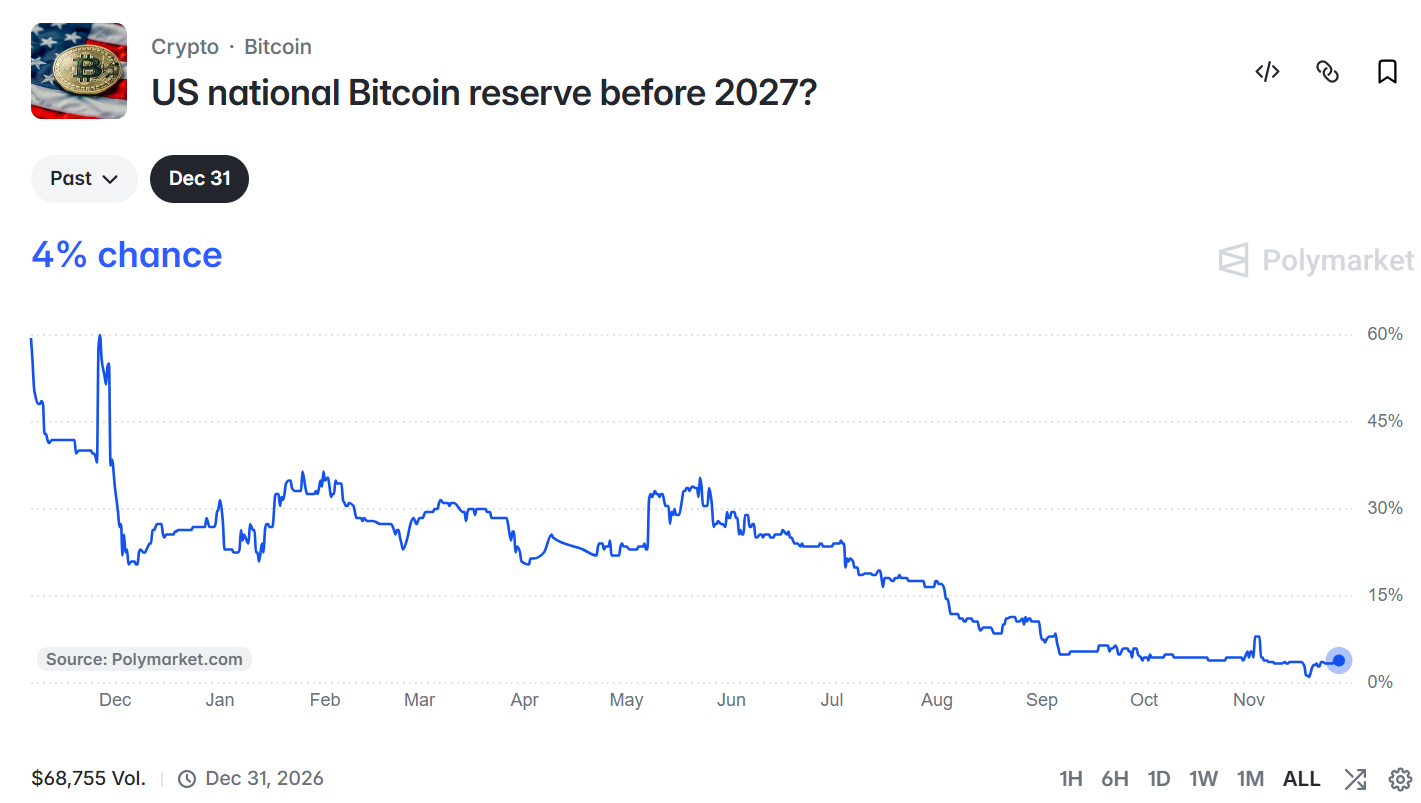
On November 27, a Polymarket contract on whether the United States would establish a national Bitcoin reserve before 2027 priced “Yes” at about 4%, down from 34% in May. Trading volume totaled only about $68,800, and the contract’s settlement terms did not correspond exactly to enactment of H.R. 8957.