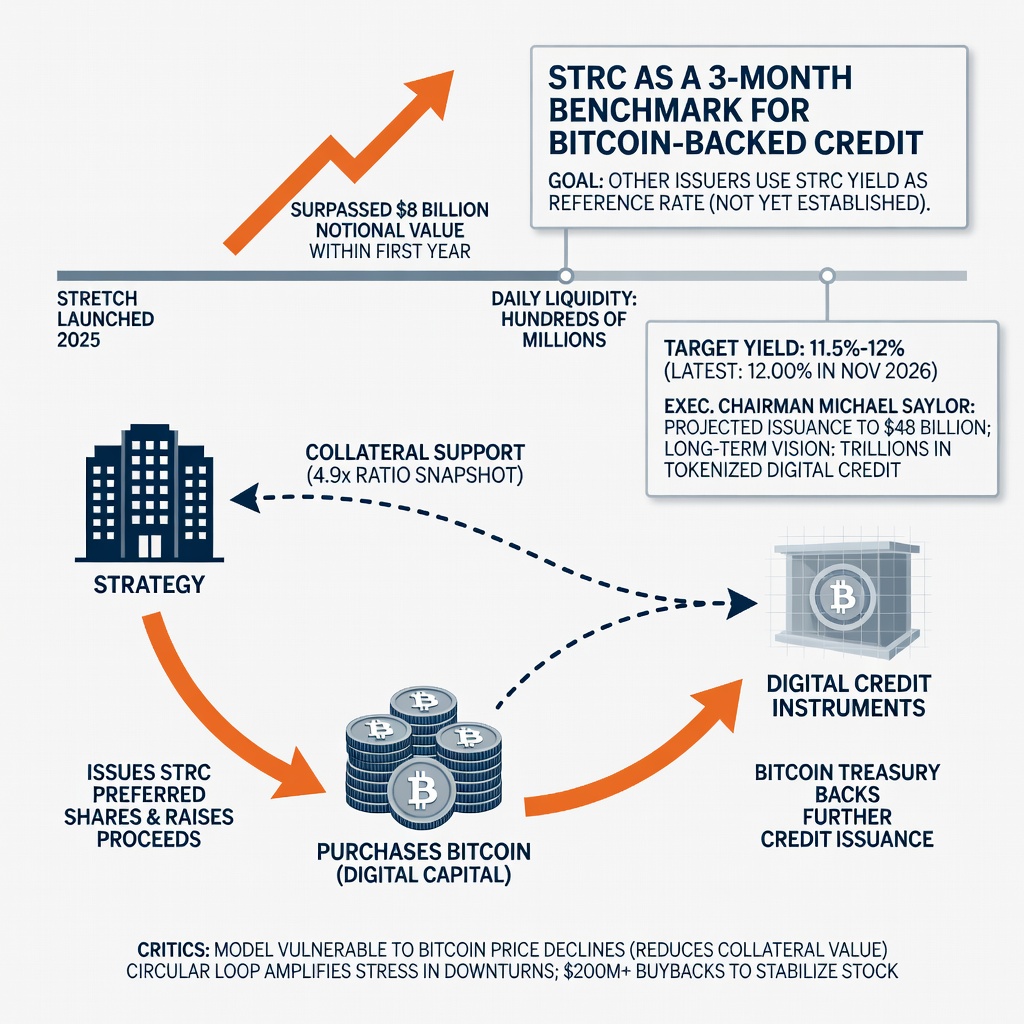
At the time of the original report on November 27, 2026, at 09:48 EST, Strategy wanted other issuers to use the yield on its Stretch preferred stock (STRC) as a three-month reference rate for Bitcoin-backed credit. That was a goal, not an established pricing convention. The three months referred to the proposed benchmark; the shares themselves are perpetual.
How Strategy funds its Bitcoin treasury
Strategy issues STRC and uses the proceeds to buy Bitcoin. Those holdings, which the company calls “digital capital,” in turn support further credit issuance. STRC targets a variable yield of approximately 11.5% to 12%. Its latest reported yield in November 2026 was 12.00%.
As of November 23, Strategy held approximately 851,305 BTC to support its credit instruments. At late-November prices, STRC’s reported collateralization ratio was about 4.9 to 1: roughly $4.90 in Bitcoin value for each dollar of credit. That ratio was a snapshot, not a fixed level of protection.
Scale and funding risk
Stretch launched in 2025 and surpassed $8 billion in notional value within its first year. Reported daily liquidity reached hundreds of millions of dollars, placing STRC among the most liquid preferred stocks globally. The preferred-share structure offered a potential route for funds whose mandates permitted preferred stock but barred direct Bitcoin holdings. Strategy claimed STRC volatility could be as low as 2%; that figure was not a guarantee.
In November 2026, Executive Chairman Michael Saylor projected that issuance could reach $48 billion and outlined an ambition to capture a meaningful share of the global credit market. Strategy’s longer-term vision extended to trillions of dollars in tokenized digital credit. Neither figure represented completed issuance. Separately, Strategy had spent more than $200 million on buybacks in a single week in an effort to stabilize its stock price.
Critics questioned whether the financing model could withstand a sharp fall in Bitcoin’s price. Such a decline would reduce the dollar value of the treasury backing the shares. Paying a yield near 12% would still require cash or continued capital raising, and issuing more shares at a similar yield would increase the amount Strategy needed to pay.