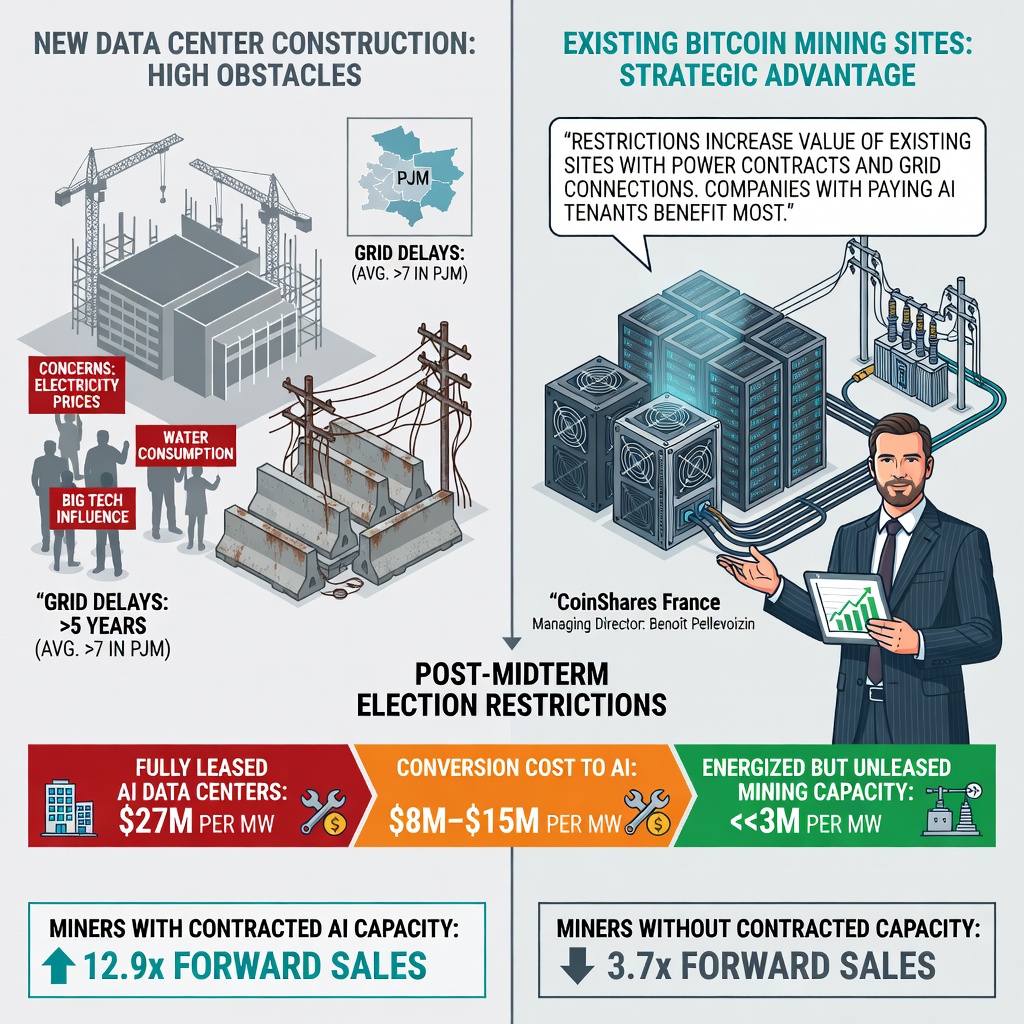
The operating question is whether limits on new US data centers after the midterm elections make existing Bitcoin mining sites more valuable because those sites already hold power contracts and grid connections—and which operators capture that value.
ChainCatcher reported on 10 November 2026, citing Crypto Briefing, that CoinShares France managing director Benoît Pellevoizin said restrictions on new data-center construction after the US midterm elections could increase the value of existing Bitcoin mining infrastructure. He said companies that already have paying AI tenants would benefit the most.
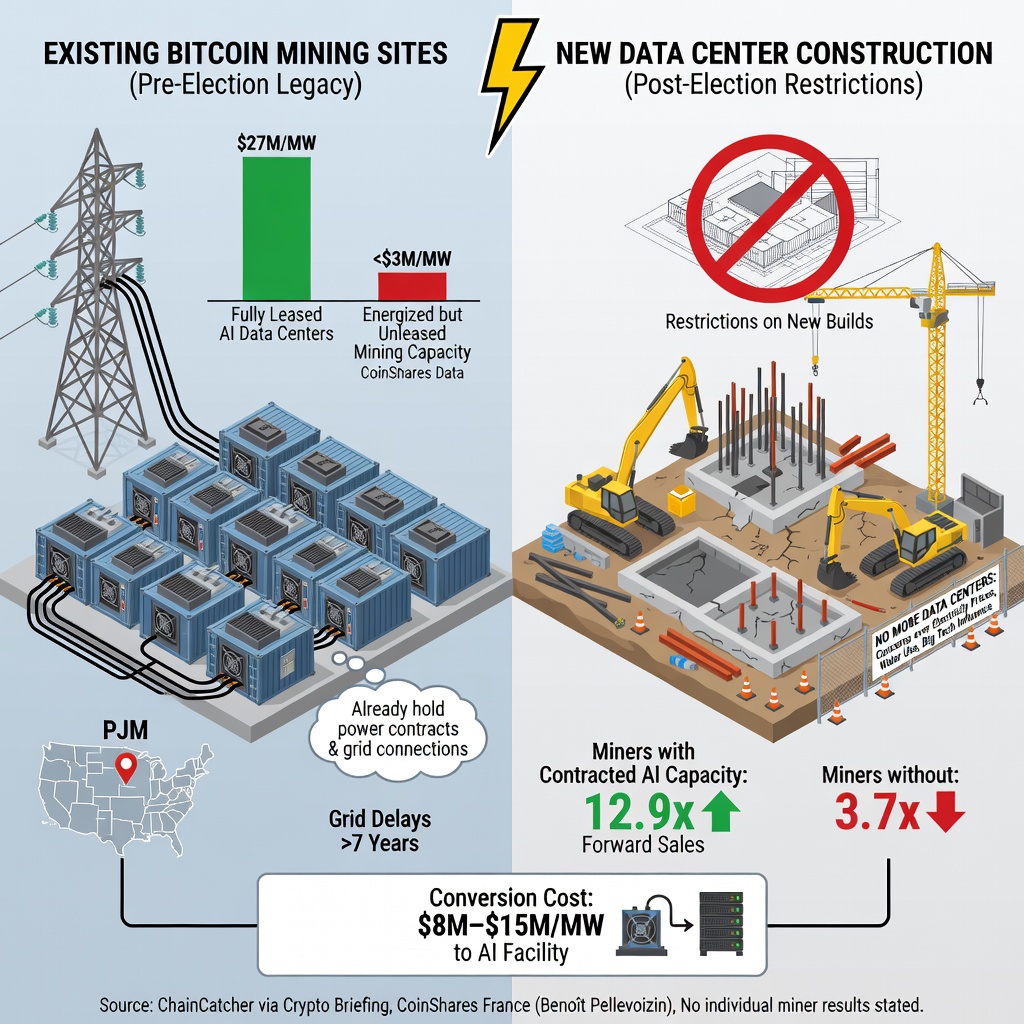
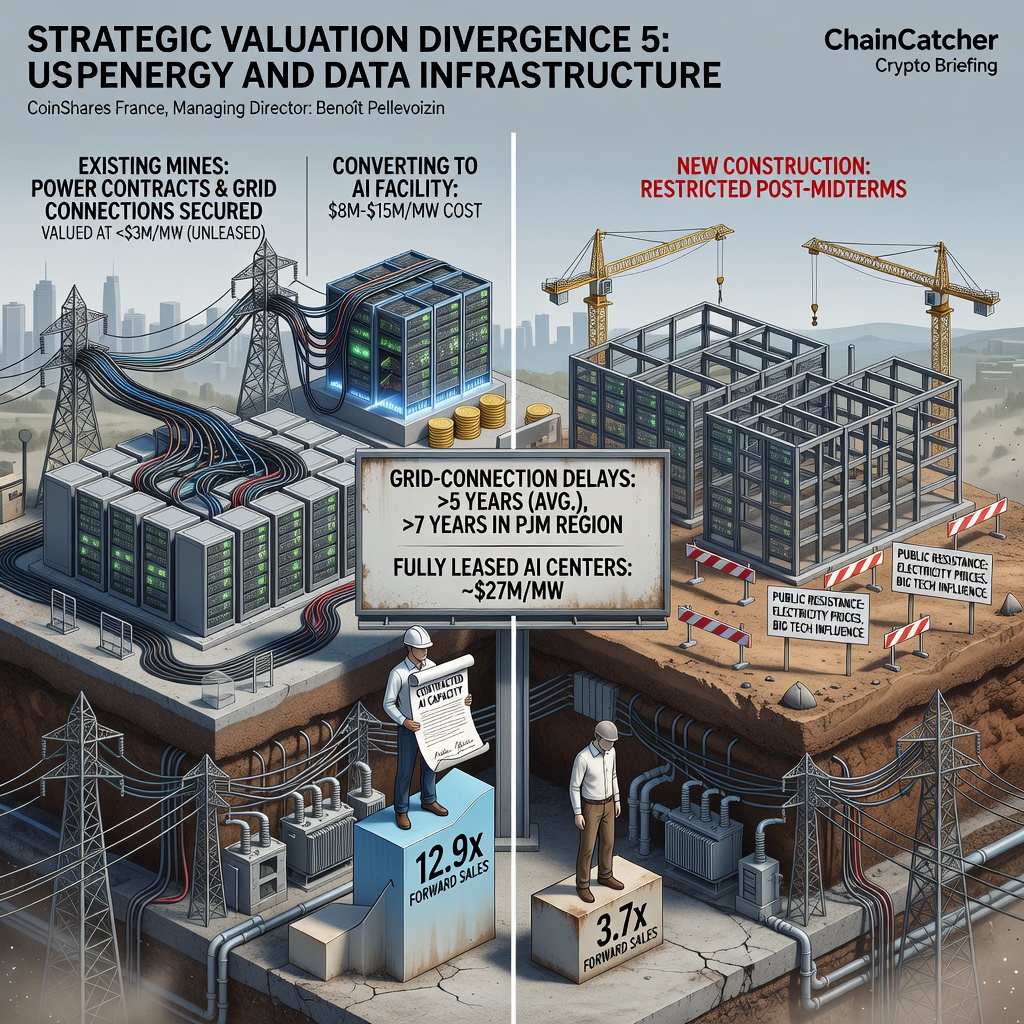
Concerns about electricity prices, water consumption, and the influence of large technology companies have increased public resistance to new facilities. Existing mines face fewer obstacles, he said, because they already hold power contracts and grid connections.
CoinShares data show that grid-connection delays for many projects already exceed five years, and average more than seven years in the PJM region.
Fully leased AI data centers are valued at about $27 million per megawatt. Listed miners holding some energized but unleased capacity are valued at less than $3 million per megawatt. Converting a site into an AI facility costs $8 million to $15 million per megawatt.
Miners with contracted AI capacity trade at an average of 12.9 times forward sales. Miners without contracted capacity trade at 3.7 times.
These are CoinShares figures as reported by ChainCatcher via Crypto Briefing; the report does not state results for any individual miner.
Original article: ChainCatcher