What changed after Bitcoin’s sell-off? In a report published on November 17, 2026, Glassnode described a market with less derivatives leverage but continued pressure on recent buyers and US spot Bitcoin ETF holdings. Bitcoin had fallen about 13% over the preceding week, briefly traded below $63,000 on Saturday—its lowest level since late August—and was near $64,000 on Monday.
Derivatives cooled; ETF outflows continued
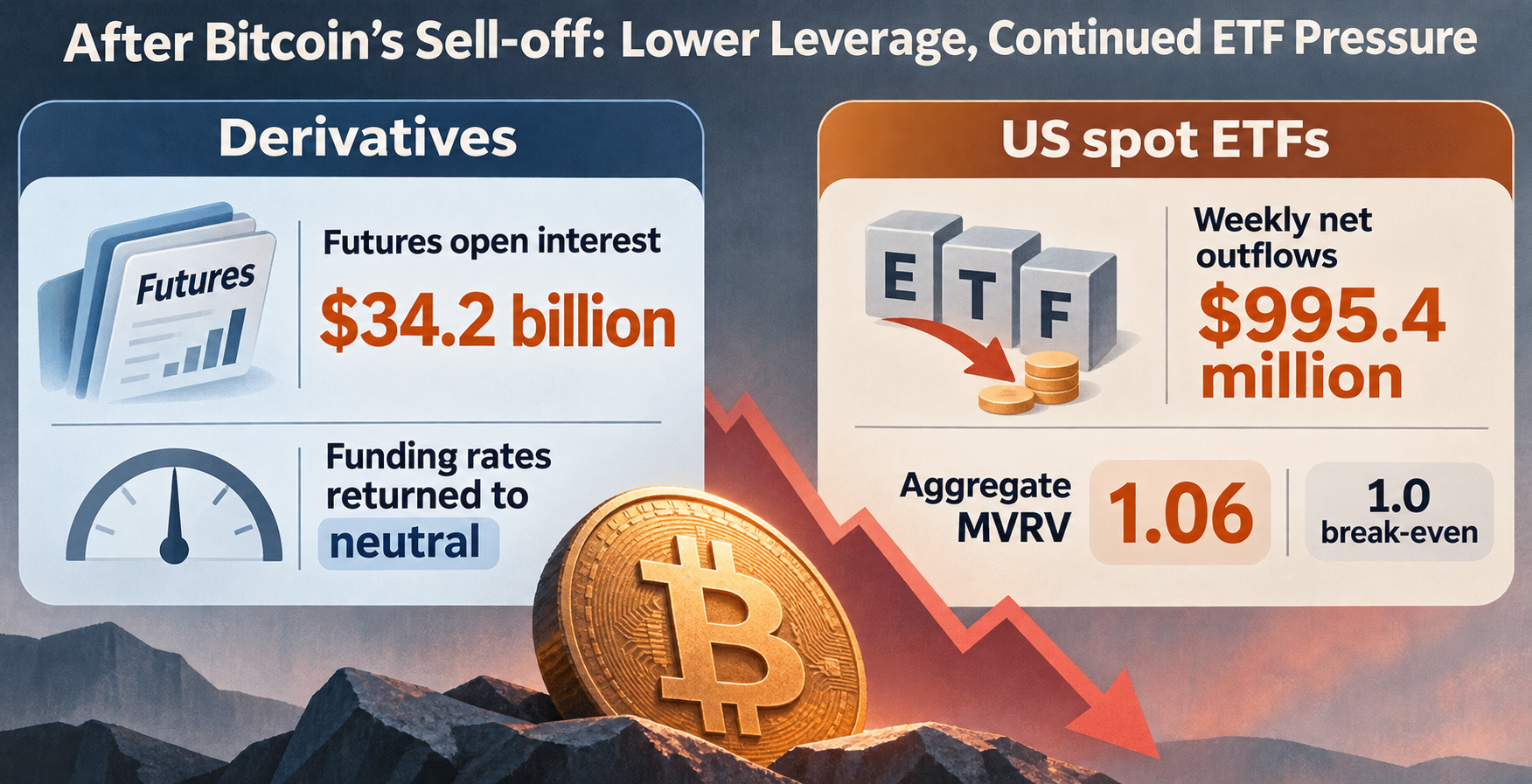
Futures open interest fell 7.2% from the previous week to $34.2 billion, near the bottom of Glassnode’s observed range. The report said perpetual-futures funding rates had returned to neutral after several weeks at elevated levels. Perpetual cumulative volume delta, a measure of aggressive buying against selling, deteriorated from −$493 million to −$1.4 billion. Glassnode characterized the move as a clearing-out of speculative long positions.
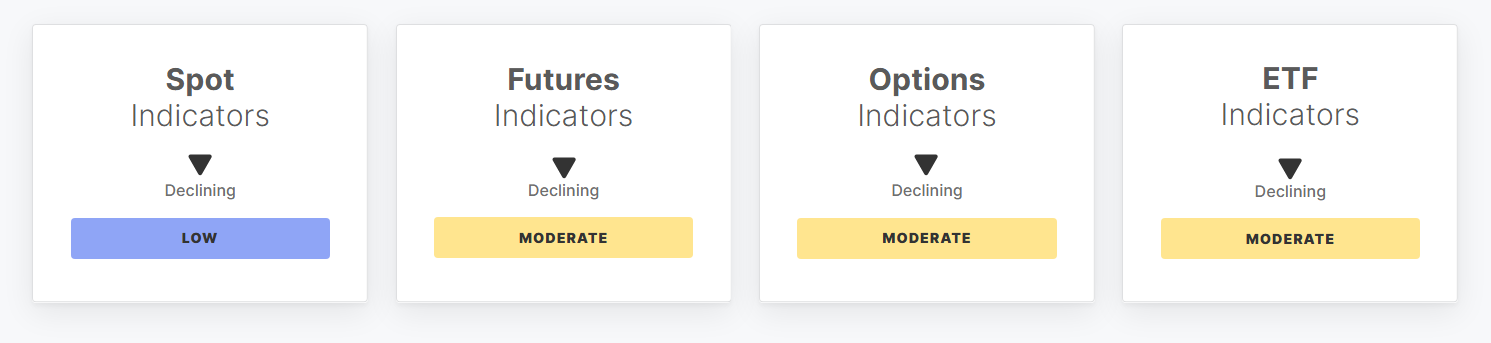
Spot-market measures also weakened. Glassnode’s price-momentum reading fell 36.1%, from 35.6 to 22.8, its weakest reading since August. Spot cumulative volume delta moved from −$51.5 million to −$133.7 million; the report said aggressive selling was strongest from Thursday through Saturday and eased on Sunday. In options, 25-delta skew rose 30.9% to 13.7%, indicating a higher premium for downside protection than at any point since August.
US spot Bitcoin ETFs recorded net outflows on every trading day of the preceding week. Weekly net outflows narrowed to $995.4 million, while weekly trading volume fell to $11.5 billion. Glassnode put the ETFs’ aggregate market-value-to-realized-value ratio, or MVRV, at 1.06—close to the 1.0 aggregate break-even level, not a measure of every investor’s individual return.
Recent buyers carried the losses
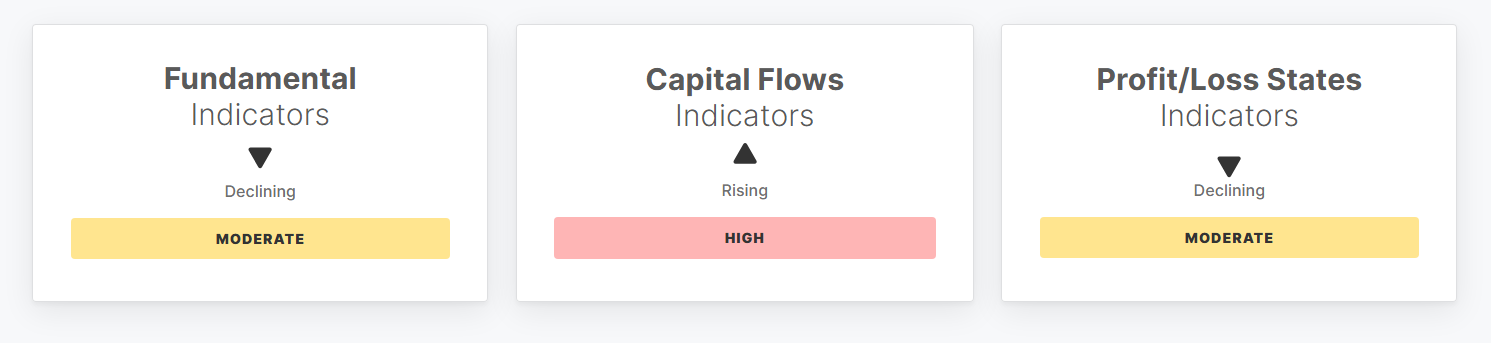
On-chain activity remained substantial despite the price decline. Entity-adjusted daily transfer volume rose 3.6% to $5.4 billion, and daily active addresses stood at about 659,700. But monthly realized-cap growth slowed from 0.43% a week earlier to 0.04%, which Glassnode interpreted as a sharp slowdown in new capital entering Bitcoin.
The short-term-holder-to-long-term-holder supply ratio edged up to 15.1%, while Glassnode’s hot-capital share remained at 22.0%. The share of coins in profit fell from 60.4% to 55.3%. Short-term holders’ net unrealized profit/loss ratio turned negative at −7.4%, and realized losses reached their highest level since July, according to the report.
Glassnode’s assessment was that ETF selling, speculative-long liquidations and broader risk aversion contributed to the decline. It said leverage risk had eased, but identified two unresolved questions for the $64,000 area: whether ETF flows would turn positive and whether selling by recent buyers would spread to longer-term holders. The report did not establish that $64,000 would hold as a price floor.