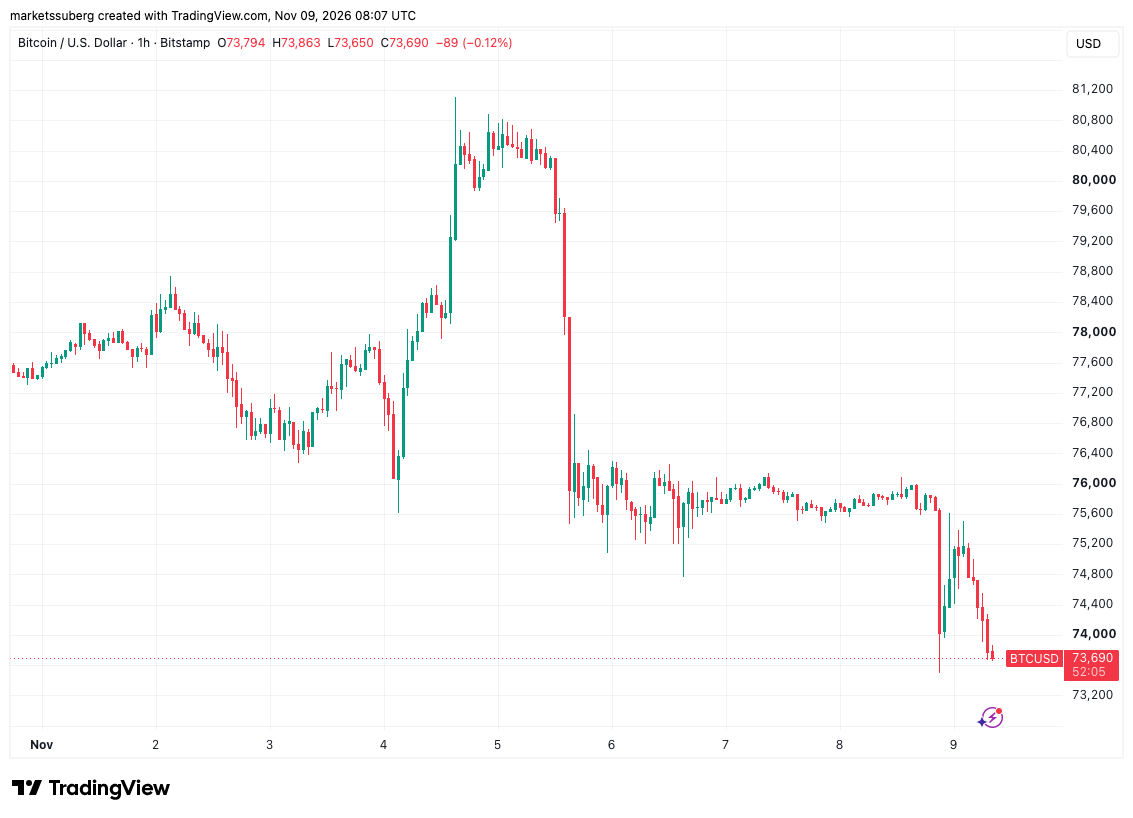
As reported on November 9, 2026, Bitcoin had fallen to about $73,500 late Sunday—its lowest level since August 21—before briefly recovering above $75,000. The move came ahead of US inflation reports scheduled for later that week, while technology-stock futures were volatile following an announcement from Nvidia’s board.
Liquidations and price levels
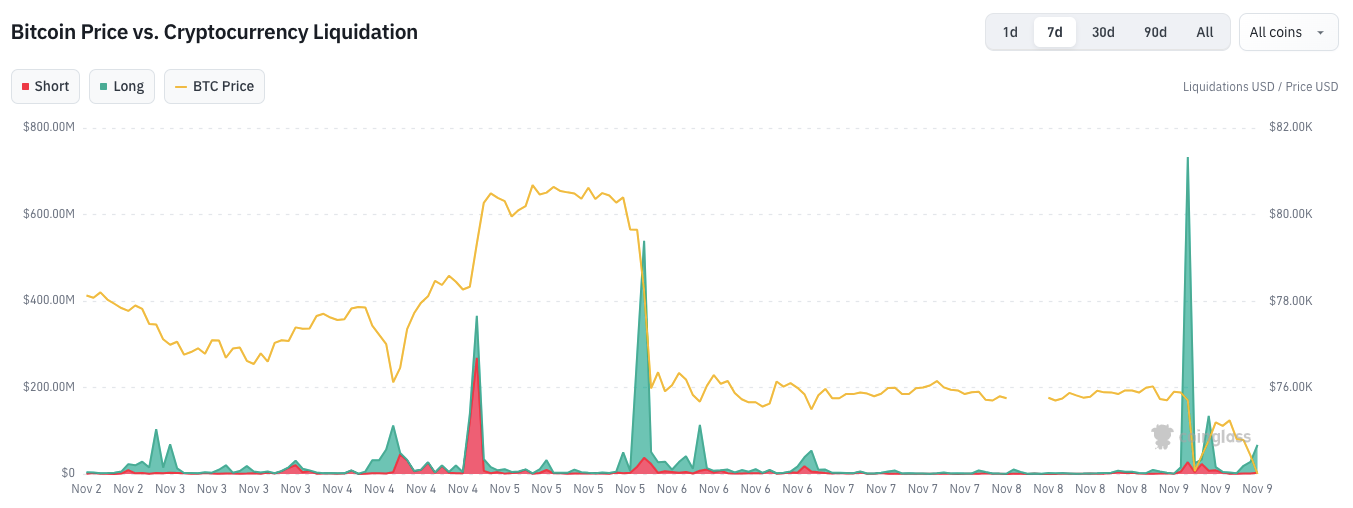
Bitcoin slipped below $74,000 shortly before Sunday’s weekly close, according to TradingView data. CoinGlass recorded about $1.12 billion in leveraged crypto-position liquidations in the 24 hours through 9 am UTC Monday. That figure covers crypto markets, not Bitcoin alone.
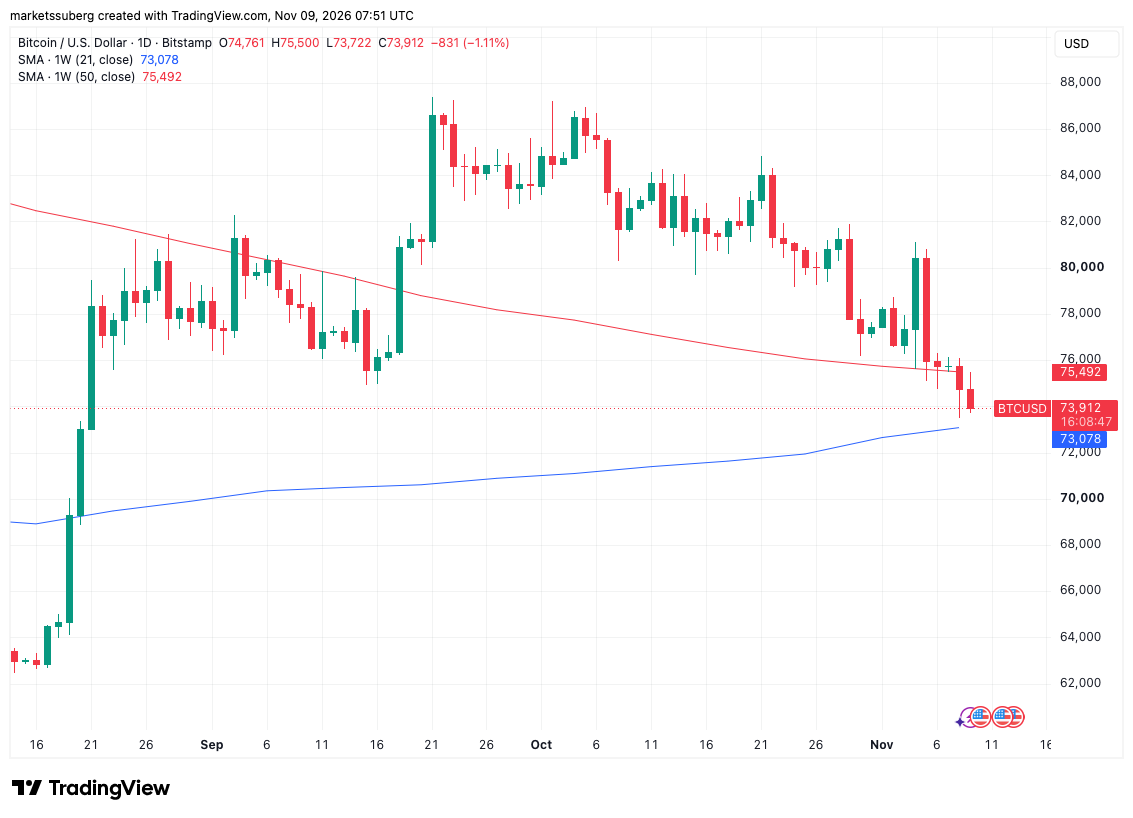
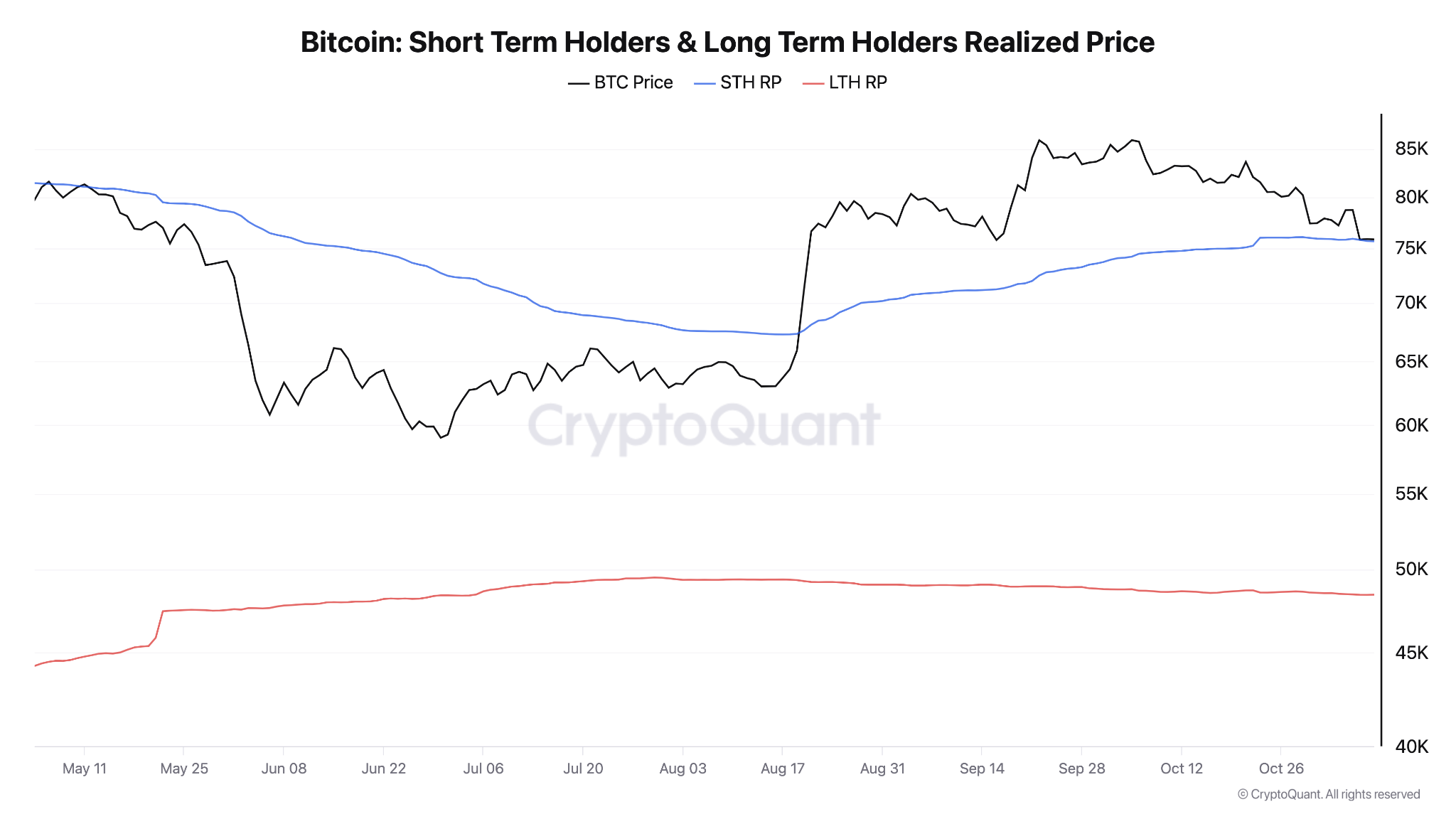
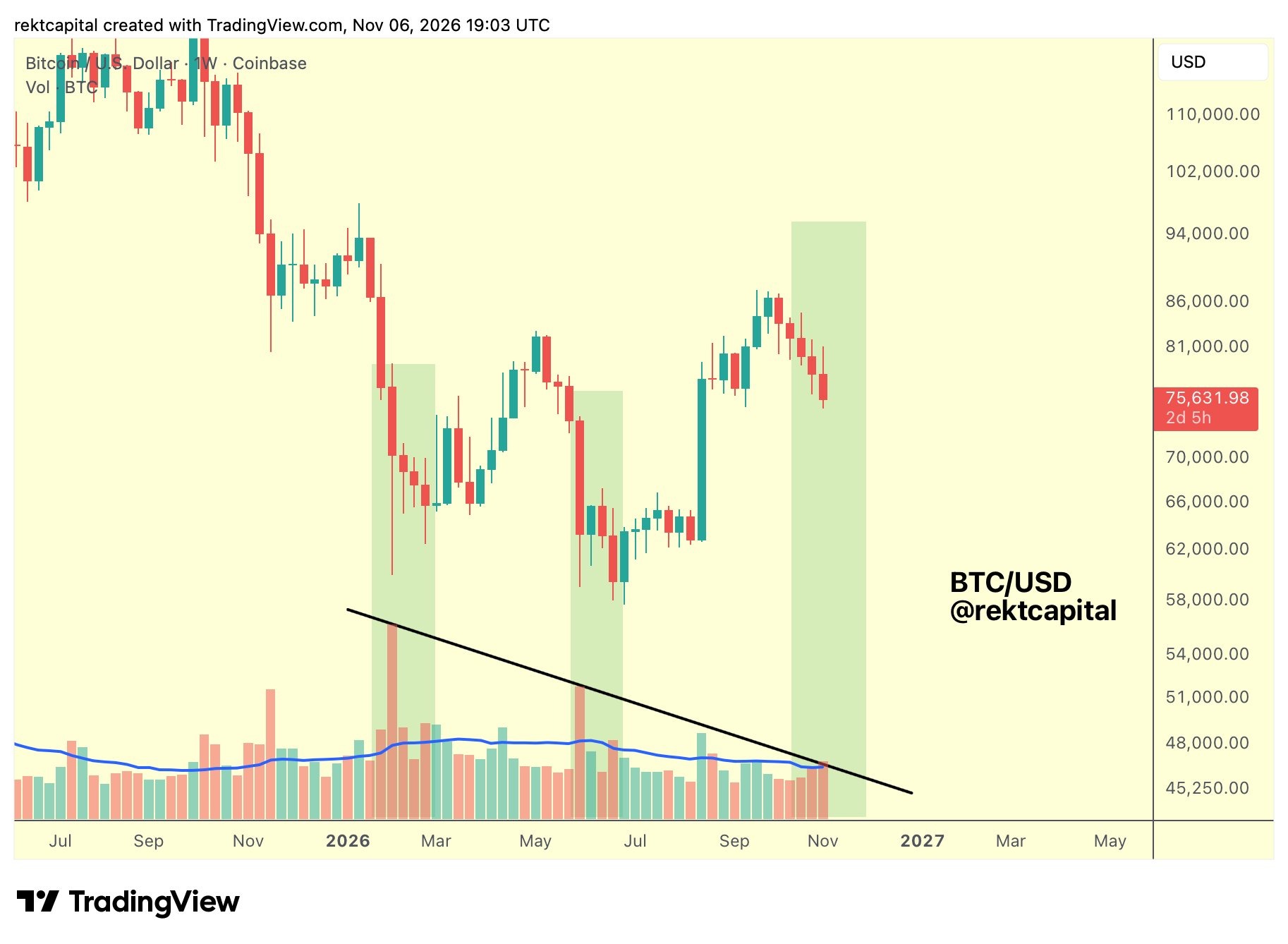
Bitcoin also fell below its 50-week simple moving average of $75,492 and approached its 21-week average of $73,078. CryptoQuant put the short-term holder cost basis—the estimated average cost of coins last moved less than 155 days earlier—at $75,691 on Monday.
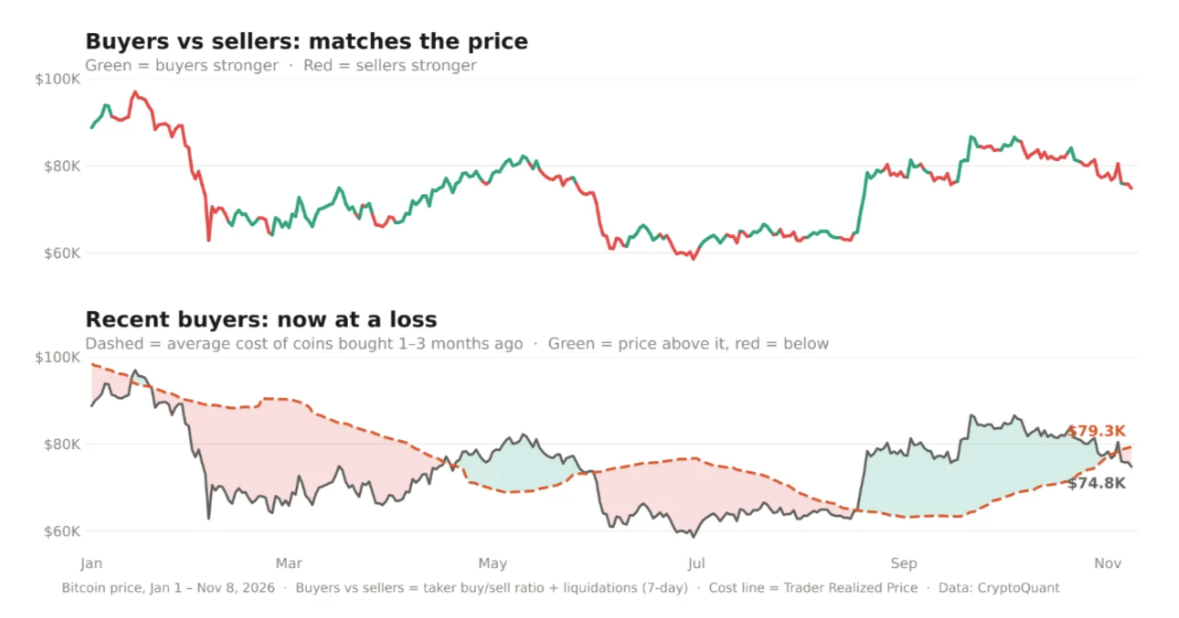
A CryptoQuant community analyst estimated the cost basis for coins last moved one to three months earlier at about $79,300. The analyst said that level could act as resistance if recent buyers sold when they broke even, noting that Bitcoin had spent months below it during February–April and June–August 2026. Trader Rekt Capital said Sunday that selling volume would need to rise before sellers showed signs of exhaustion; neither assessment established where a price bottom would be.
Nvidia probe adds to technology-market uncertainty
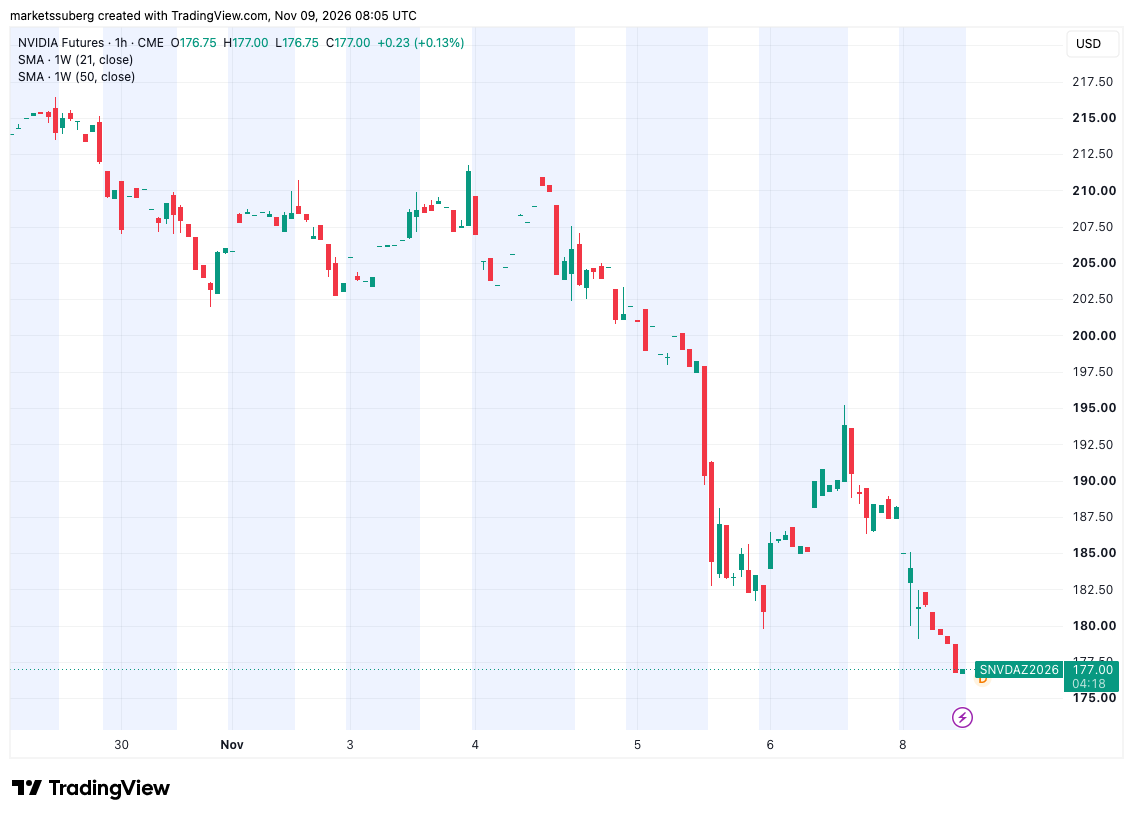
Nvidia’s board said Sunday that it had opened an independent investigation into reports that CEO Jensen Huang was targeted by a foreign intelligence effort. The board said it had no reason to believe US national security or company secrets were compromised. China’s foreign ministry denied the spying allegations Monday.
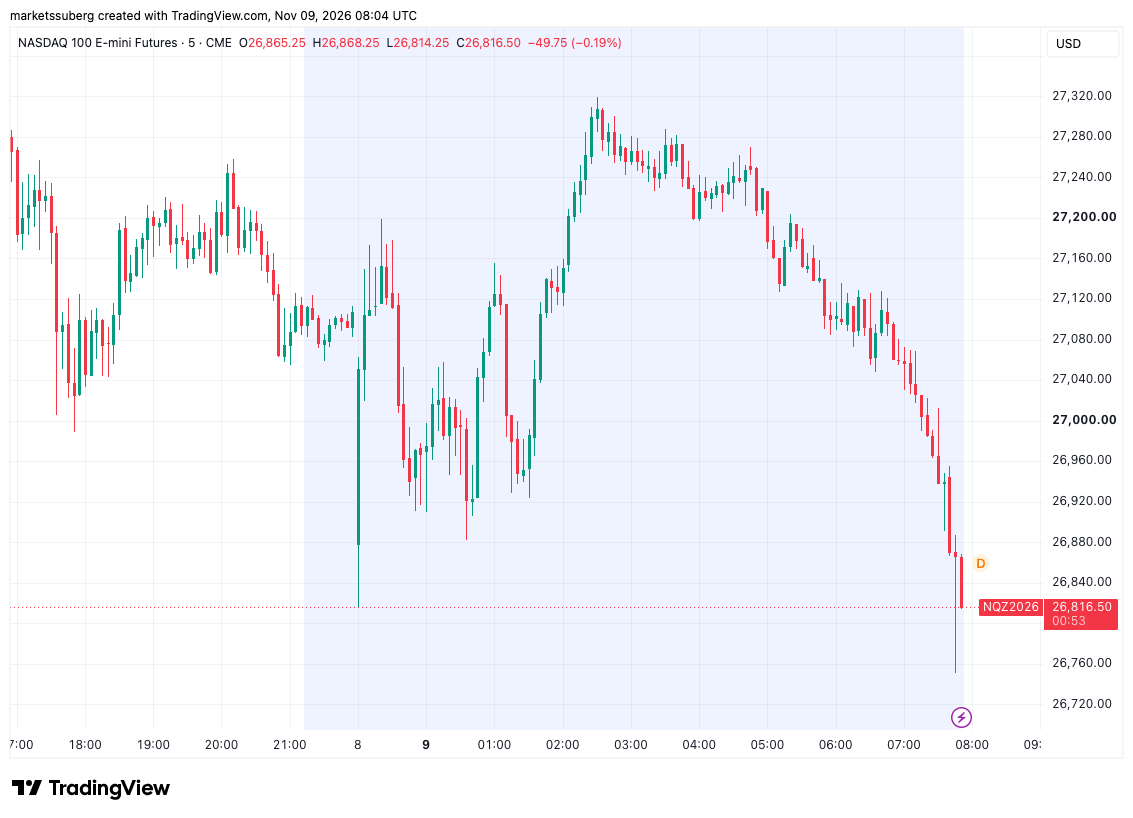
Nasdaq 100 futures fell early Monday, recovered, then turned lower again ahead of the US open; S&P 500 and Dow futures remained higher at that point. The probe followed a technology-stock sell-off the previous week as investors weighed AI spending and possible US regulatory changes after the midterm elections. Economist Mohamed El-Erian called the timing “unfortunate,” citing Nvidia’s importance to technology and broader markets, alongside governance and geopolitical uncertainty.
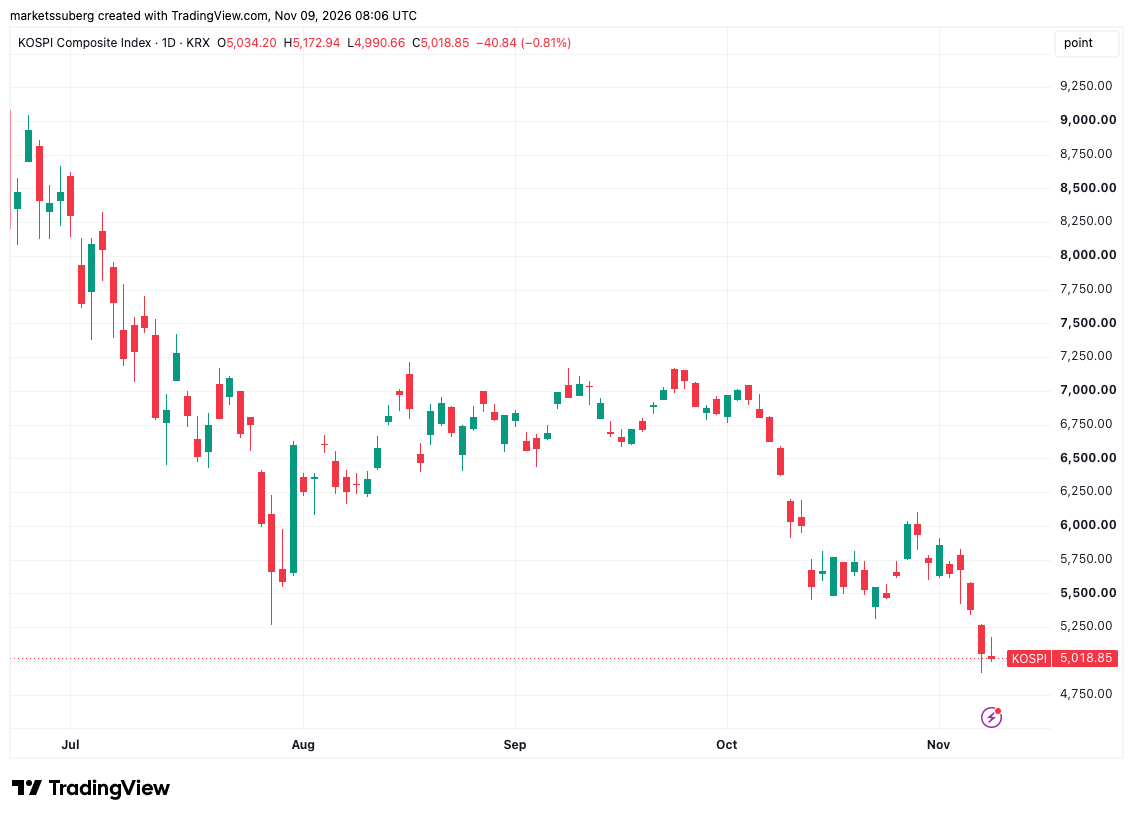
South Korea’s Kospi closed down 0.8% at 5,018.85 on Monday. South Korean Vice Minister of Science and ICT Ryu Jemyung told a parliamentary committee he expected contracted Nvidia chip production and deliveries to proceed without disruption, according to CNA.
Inflation, oil and interest rates
The US Bureau of Labor Statistics was scheduled to publish October’s Consumer Price Index on Tuesday, November 10, and Producer Price Index on Friday, November 13, both at 8:30 am ET. September consumer prices had risen 3.7% year over year; a 9.1% monthly rise in gasoline prices accounted for more than half of that month’s increase in the overall index.
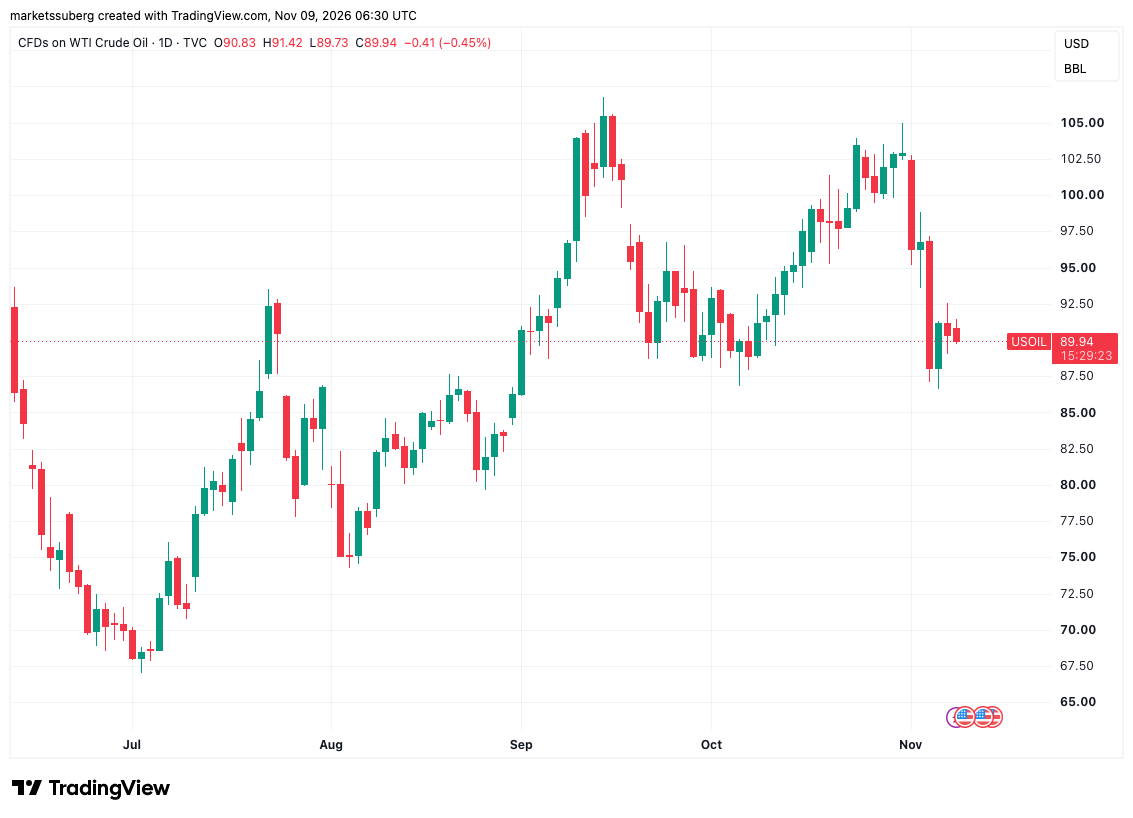
West Texas Intermediate crude futures traded near $90 a barrel Monday morning. President Donald Trump had told CNN on Sunday that renewed US strikes on Iran were “highly unlikely,” while saying the decision depended on whether Tehran signed an agreement. Economist Robin Brooks argued that the war was keeping oil prices elevated and forecast that a decline in crude could favor Bitcoin and other assets. That was his outlook, not an observed price effect.
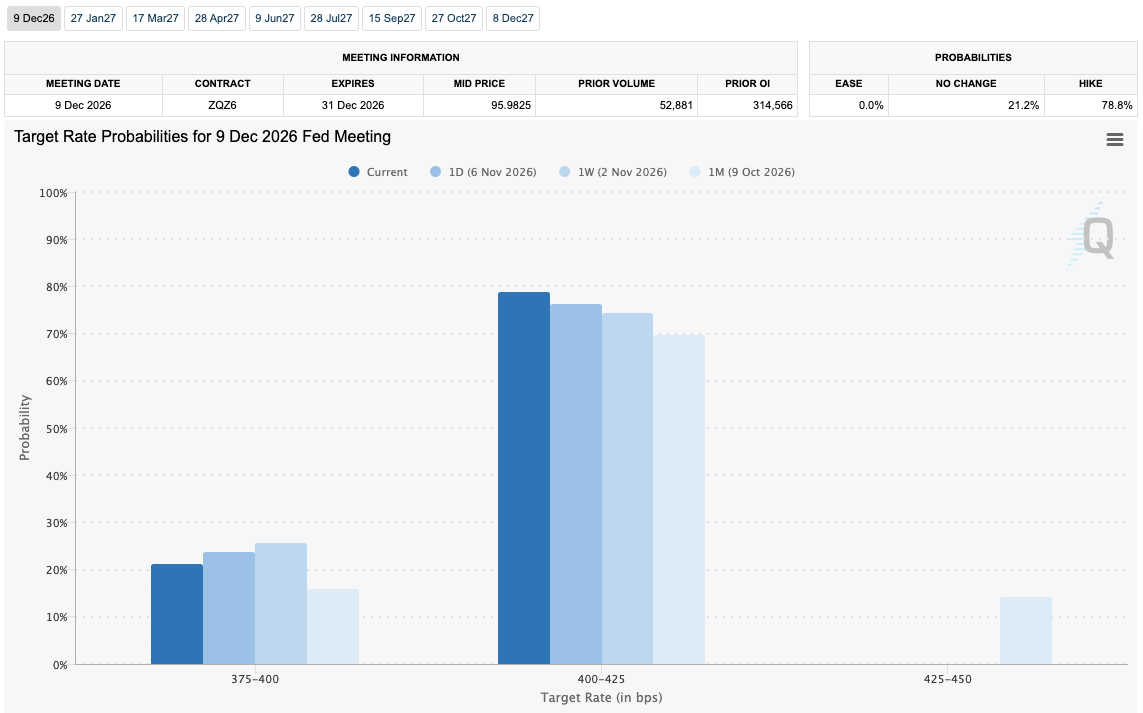
CME Group’s FedWatch Tool showed markets assigning a 78.8% probability to a 25-basis-point Federal Reserve rate increase in December. Fed Governor Christopher Waller and Vice Chair for Supervision Michelle Bowman were scheduled to discuss the economic outlook on Tuesday.