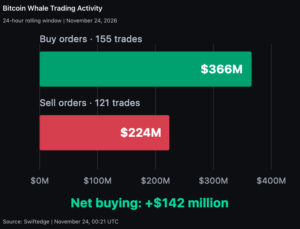
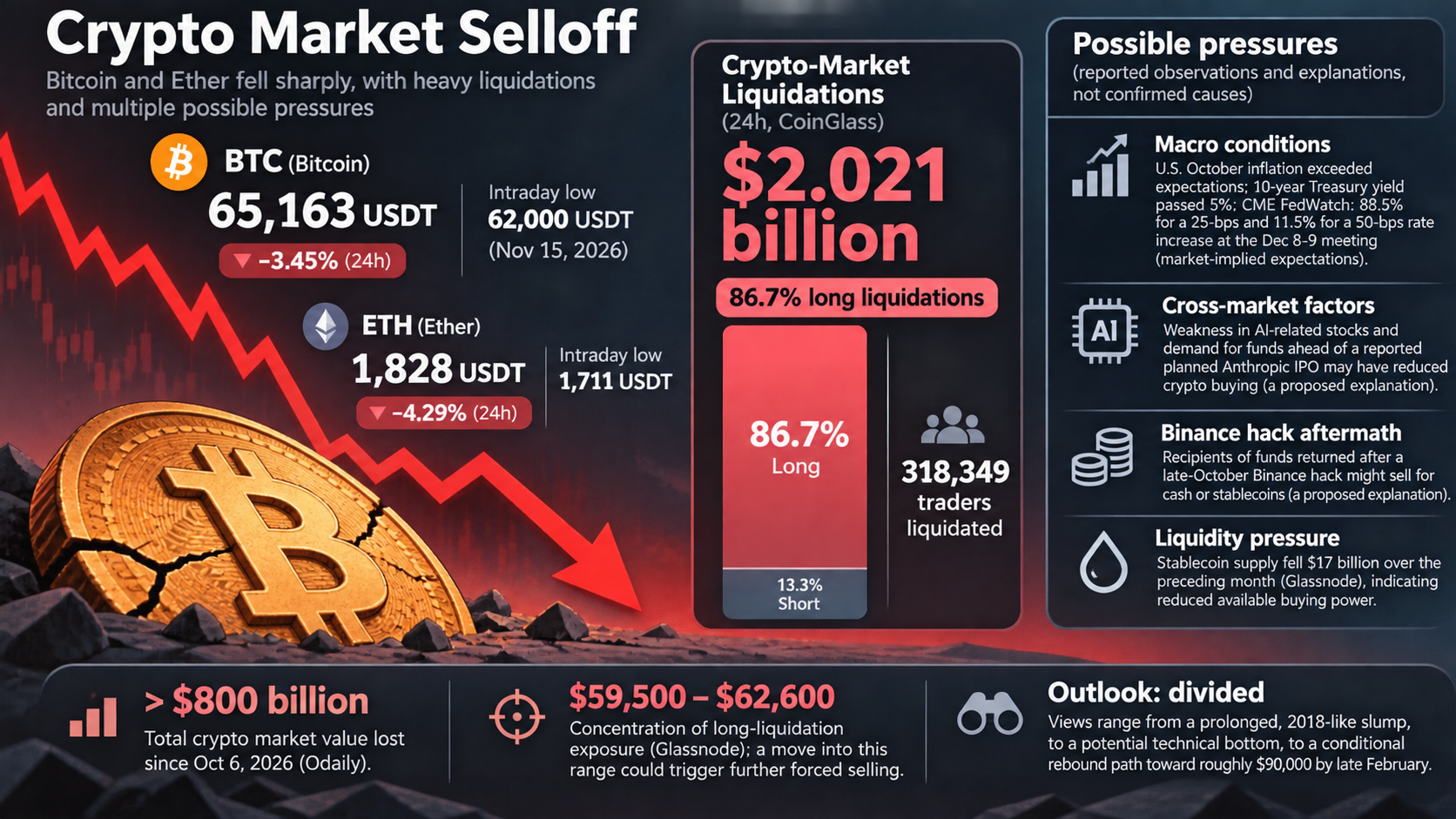
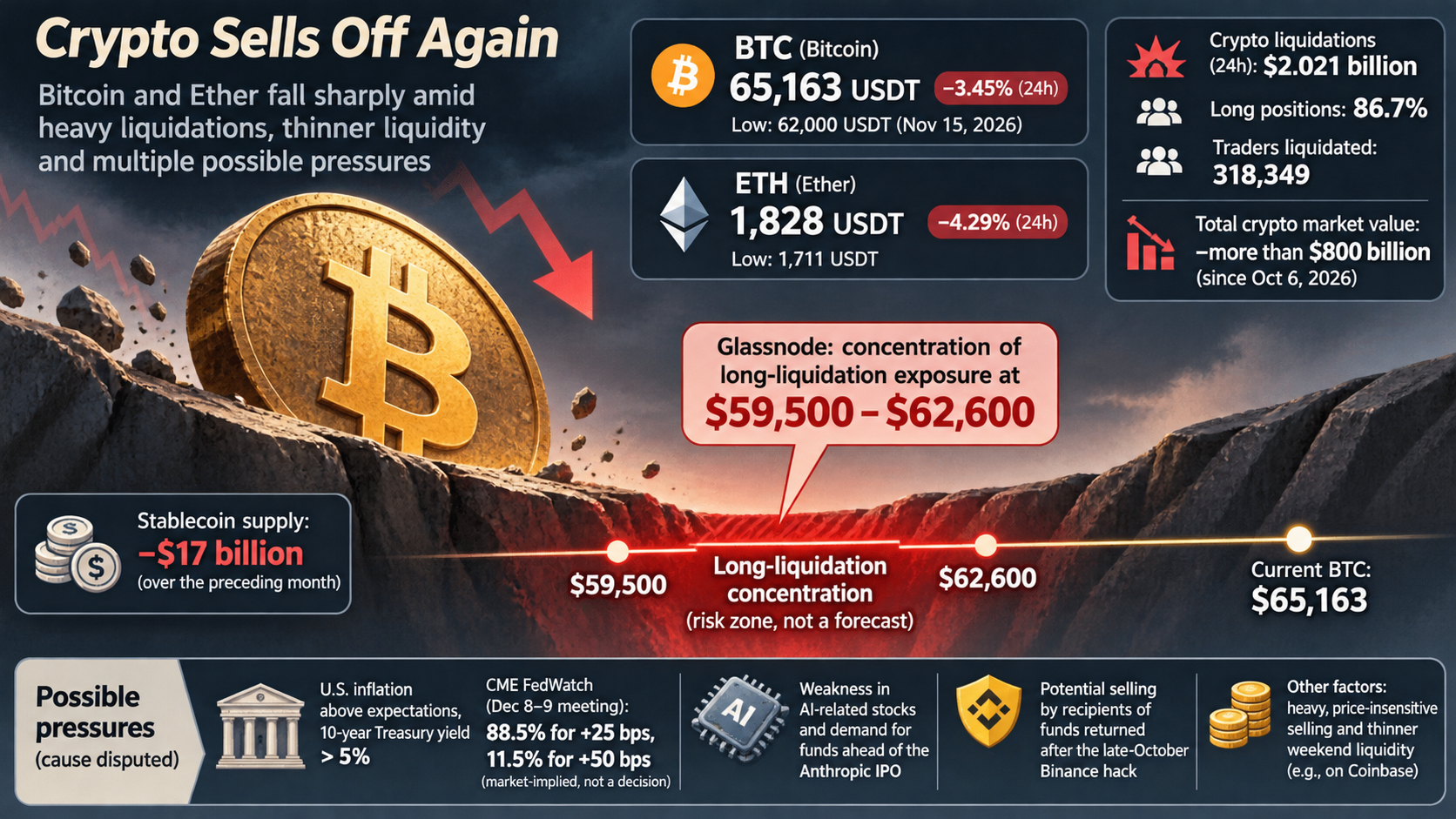
Bitcoin fell as low as 62,000 USDT on November 15, 2026, according to OKX prices cited by Odaily. It had recovered to 65,163 USDT by the report’s publication, still down 3.45% over 24 hours. The move is a Bitcoin market story; the report provides no evidence of a change in mining costs, hashrate or network difficulty behind it.
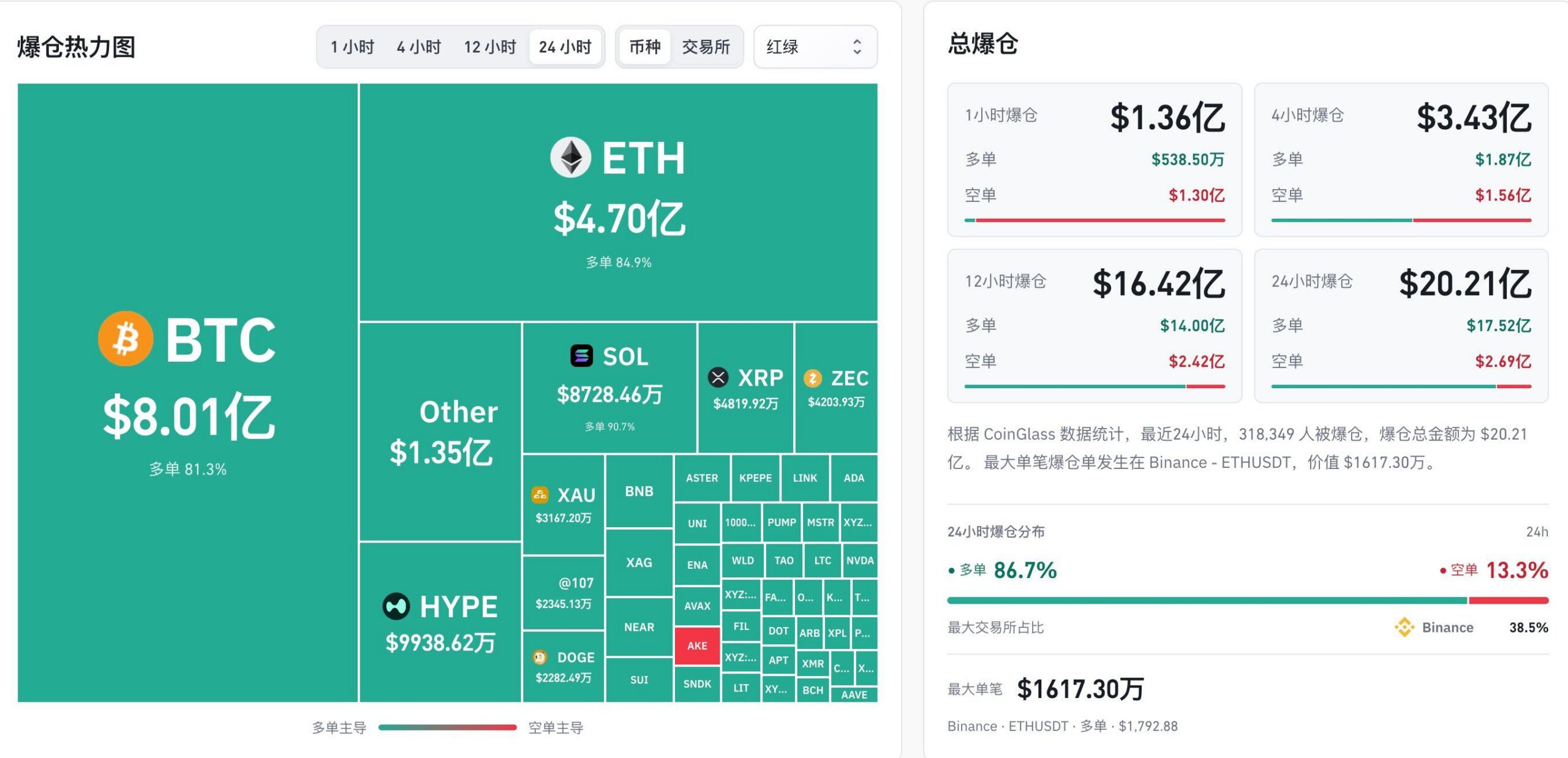
Ether touched 1,711 USDT before recovering to 1,828 USDT, down 4.29% over 24 hours. CoinGlass data cited in the report put crypto-market liquidations at $2.021 billion over the preceding 24 hours, with long positions accounting for 86.7% and 318,349 traders liquidated. Odaily said the total crypto market had lost more than $800 billion in value since October 6, 2026.
What drove the selling? The cause remains disputed
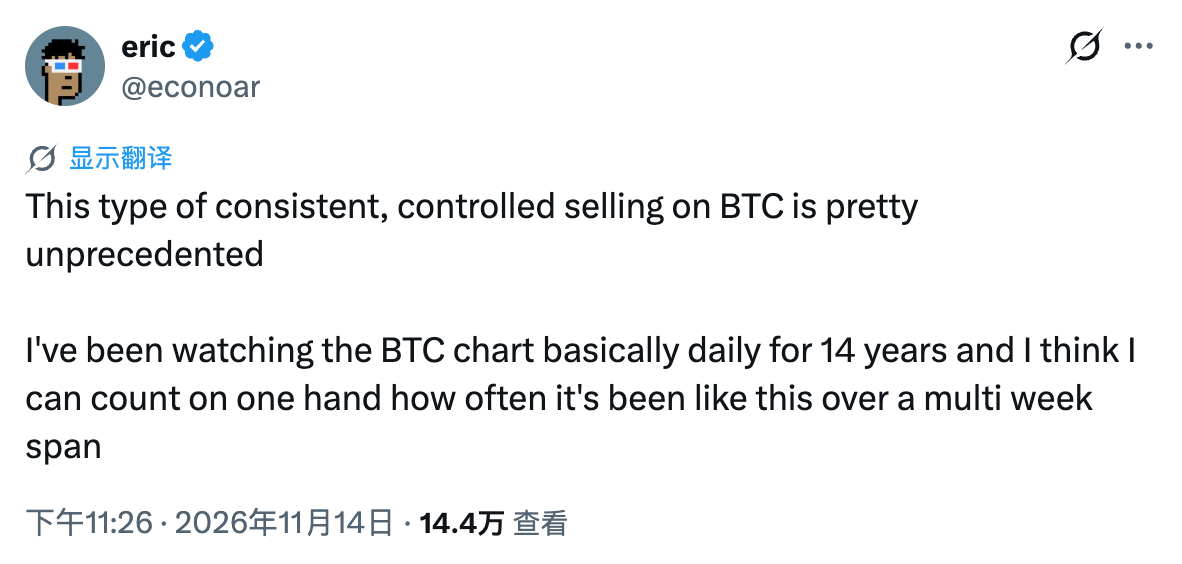
Odaily did not identify a single confirmed trigger. Ethereum developer and investor Eric (@econoar) described the sustained selling as unusually persistent. Trader and Fullstack founder Flood (@ThinkingUSD) characterized it as unusually aggressive and insensitive to price, and said the main pressure appeared on Coinbase during a thinly traded weekend. Those are their observations, not proof of who sold or why.

The report also cited macroeconomic and cross-market explanations. It said October U.S. inflation data had exceeded expectations and the 10-year Treasury yield had passed 5%. Its November 14 citation of CME FedWatch put the probabilities of a 25-basis-point and 50-basis-point Federal Reserve rate increase at the December 8–9 meeting at 88.5% and 11.5%, respectively. Those figures were market-implied expectations, not policy decisions.
Fundstrat co-founder Tom Lee suggested that weakness in AI-related stocks and demand for funds ahead of a reported planned Anthropic IPO could have reduced crypto buying. He also suggested that recipients of funds returned after a late-October Binance hack might sell for cash or stablecoins. These were proposed explanations, not established causes of the Bitcoin decline.
Liquidity and the next price level
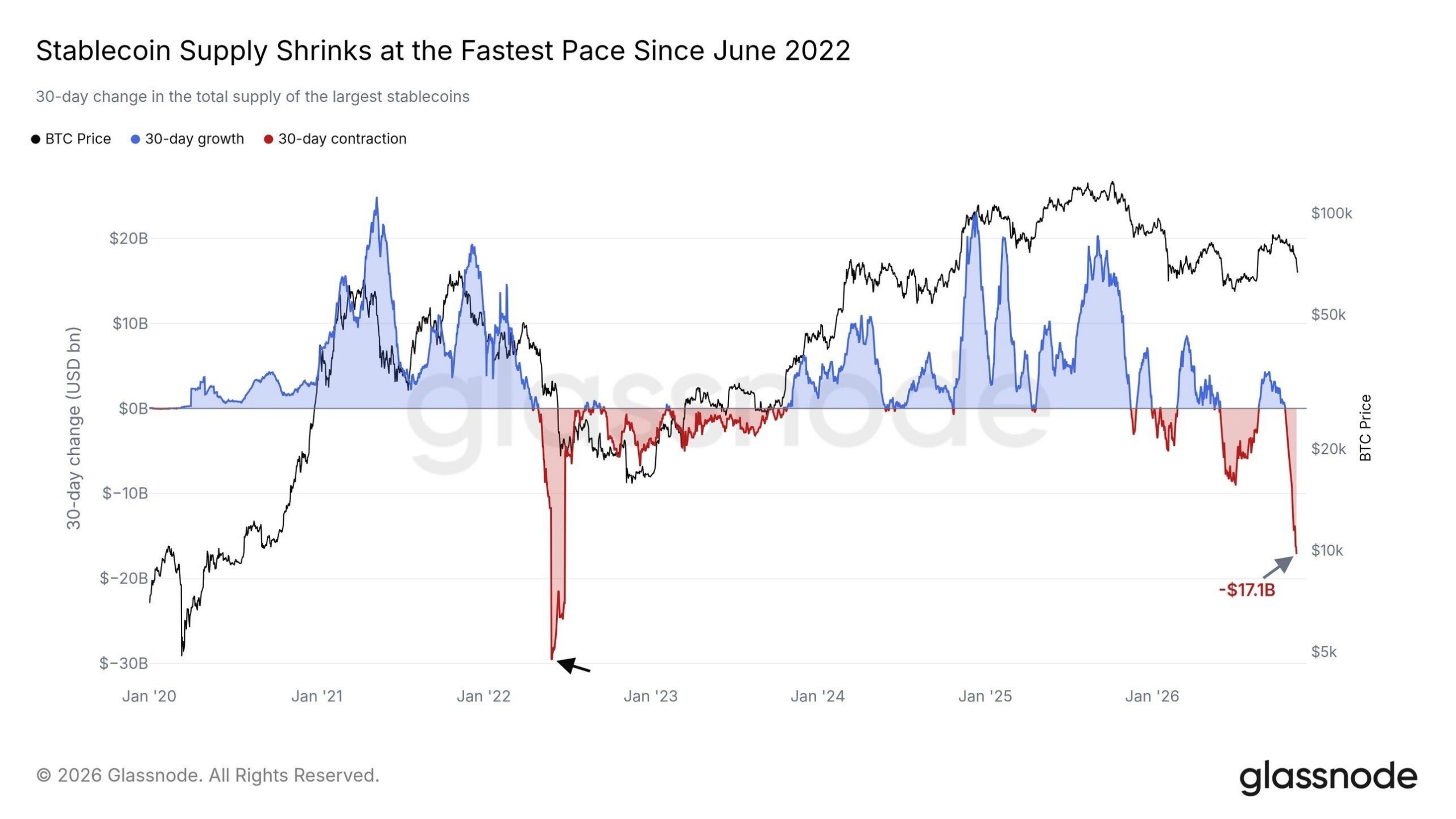
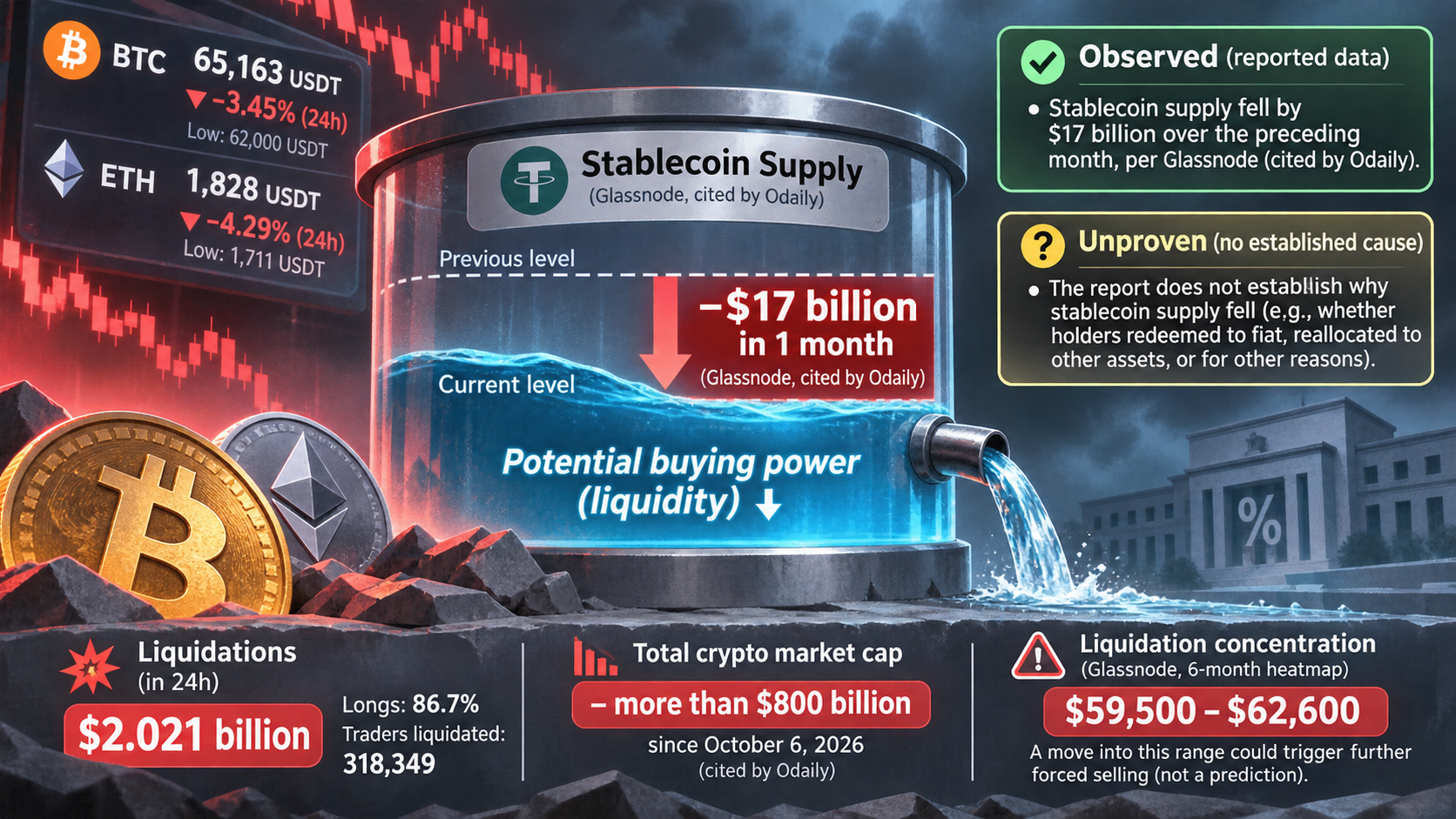
Glassnode data cited by Odaily showed stablecoin supply falling $17 billion over the preceding month. A decline in supply does not, by itself, establish why holders moved funds, but it formed part of the report’s concern about available buying power.
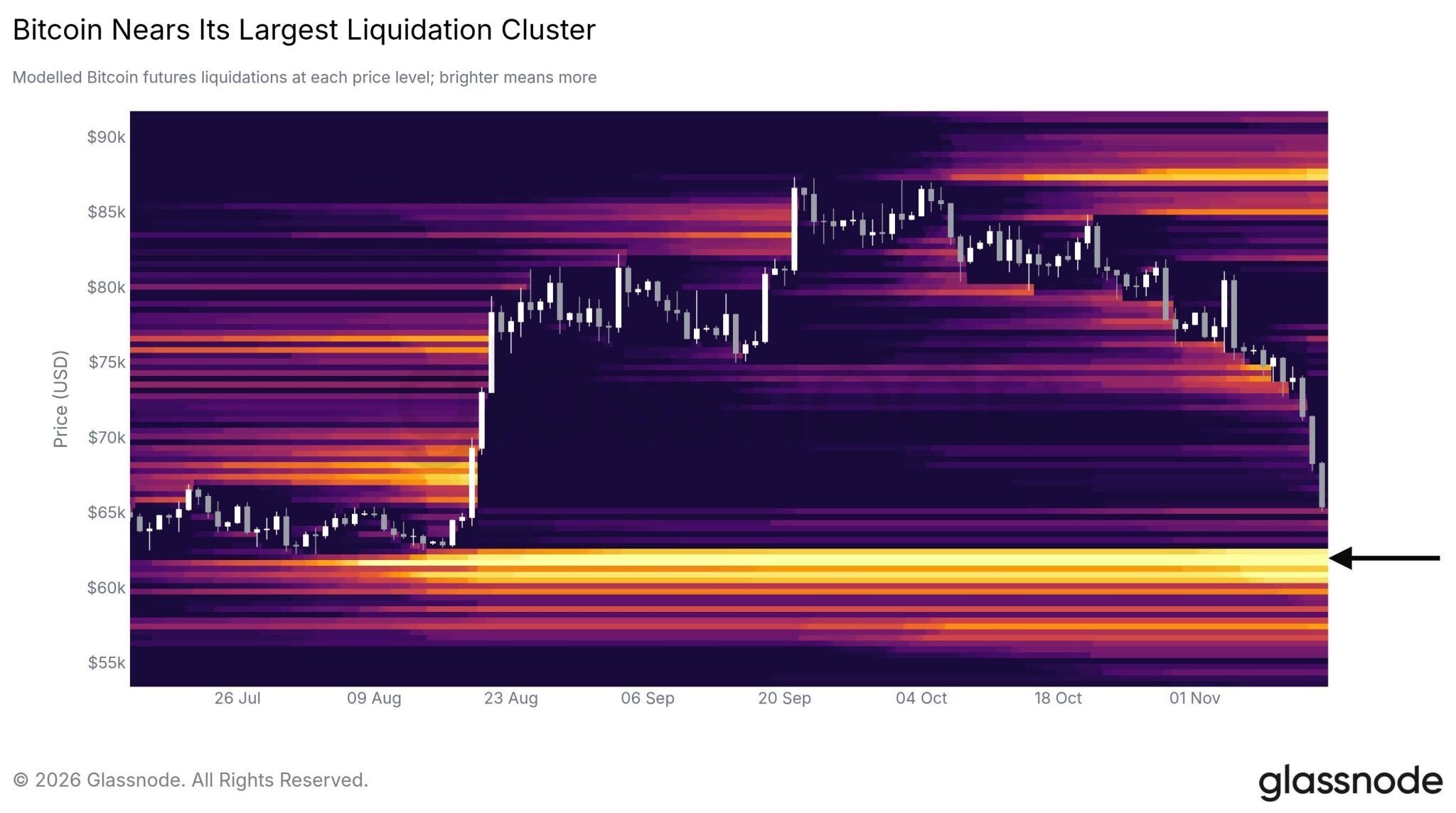
Glassnode’s six-month liquidation heatmap placed a concentration of long-liquidation exposure around $59,500–$62,600. A move into that range could trigger further forced selling; the heatmap is not a prediction that it will.
Analysts differed on the outlook. Bitwise chief investment officer Matt Hougan compared market sentiment with mid-2018 and said the timing of a compelling buying opportunity was difficult to judge. GSR co-founder Rich Rosenblum argued Bitcoin might be nearing a technical bottom. Strive chairman and CEO Matt Cole proposed a more specific rebound scenario by comparing the move with a pattern he attributed to a SpaceX IPO; his projected path toward roughly $90,000 by late February was conditional, not an observed outcome.