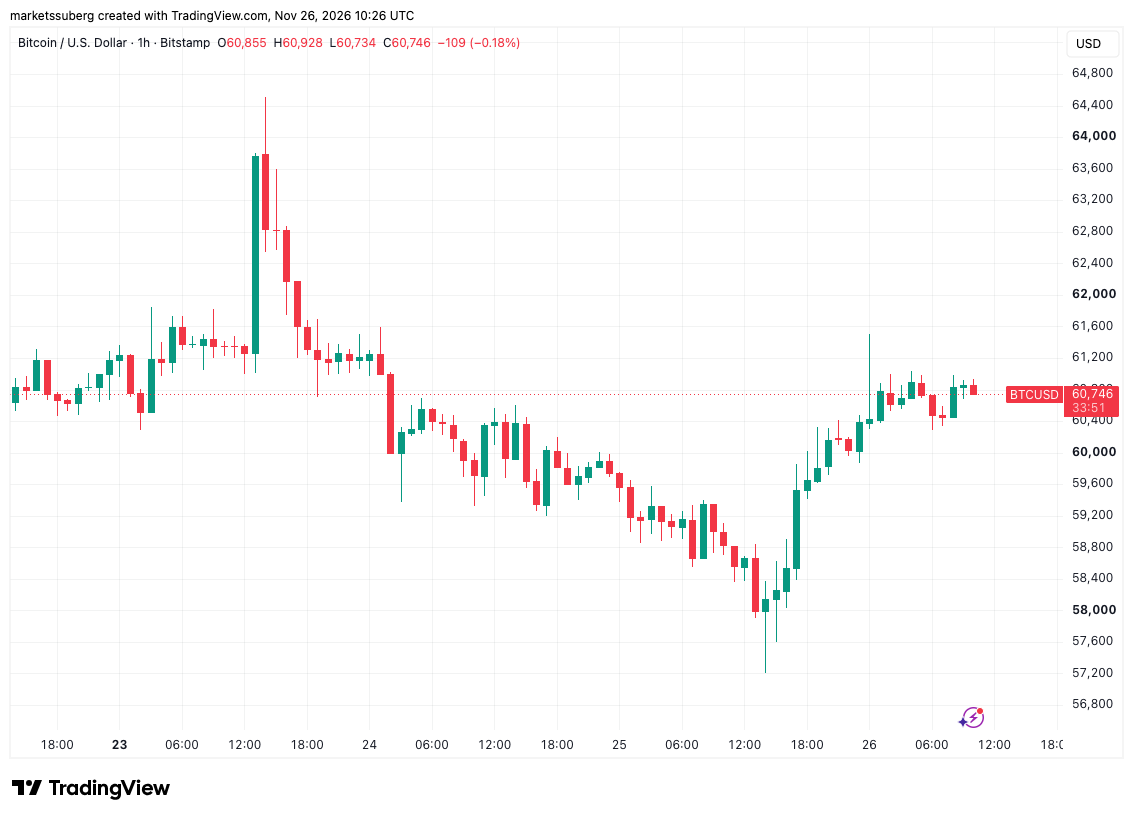
Bitcoin closed above $60,000 on Nov. 25, 2026, as selling pressure eased. By noon UTC on Nov. 26, BTC/USD was up 0.8% and approaching $61,000, according to TradingView. Digital asset manager Talos said spot and derivatives order books still favored sellers, leaving the rebound vulnerable as liquidity thinned for Thanksgiving.
Stocks recovered, but spot demand lagged
Bitcoin and stocks rose after Nvidia announced Jensen Huang’s return as CEO shortly before the US market opened on Nov. 23. Both later gave back much of their gains. Talos said the decision settled a leadership question without resolving uncertainty over AI spending, elevated US inflation or the prospect of new international tariffs.
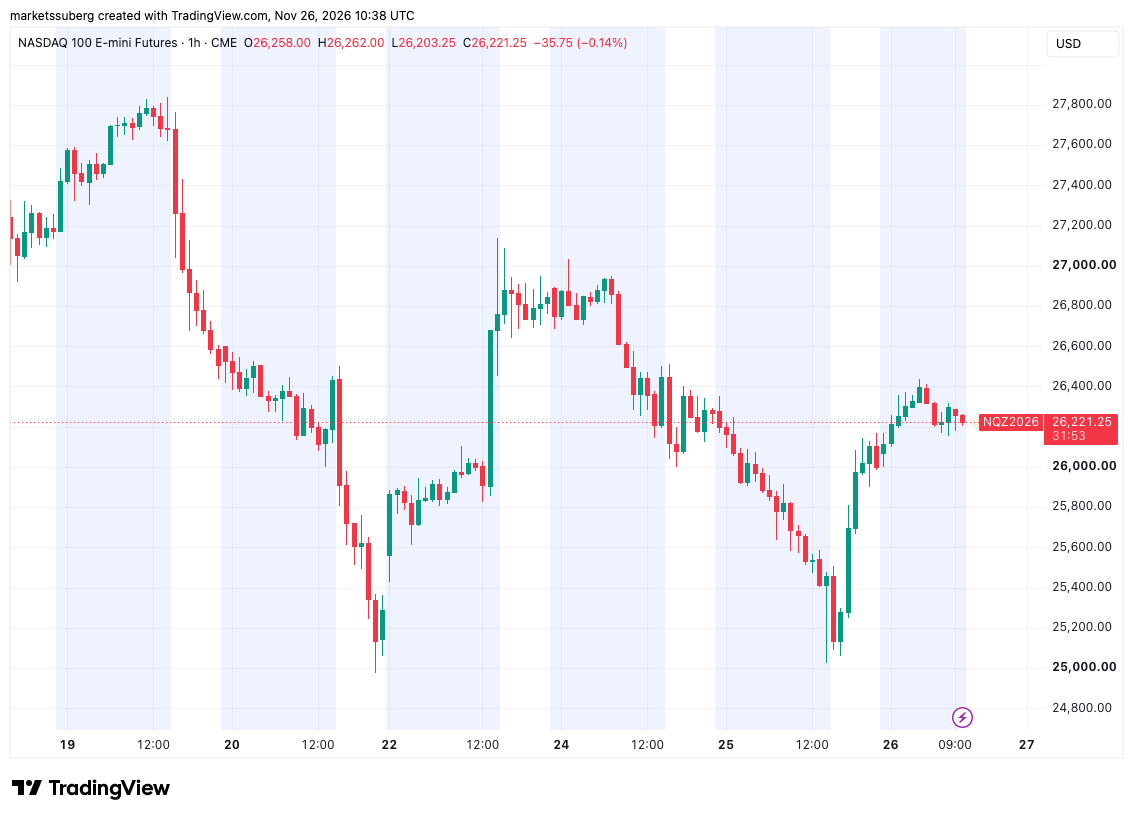
Bitcoin continued to track technology stocks closely: Cointelegraph reported on Nov. 25 that its correlation with the Nasdaq Composite had reached 0.73. On Thanksgiving, S&P 500 and Nasdaq futures were both up about 0.5% ahead of a shortened US stock market session on Nov. 27.
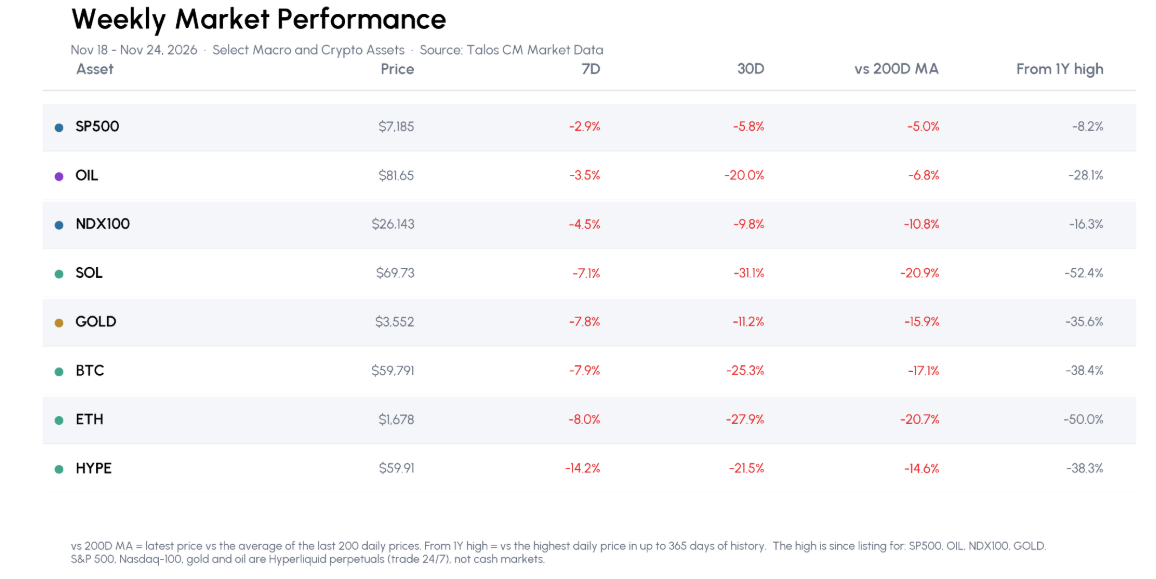
Talos distinguished buying to close short positions from sustained demand for Bitcoin: “Until short covering turns into net buy pressure and sustained spot demand, the move remains fragile heading into thin holiday liquidity.”
Downside volatility was 2.4 times upside volatility
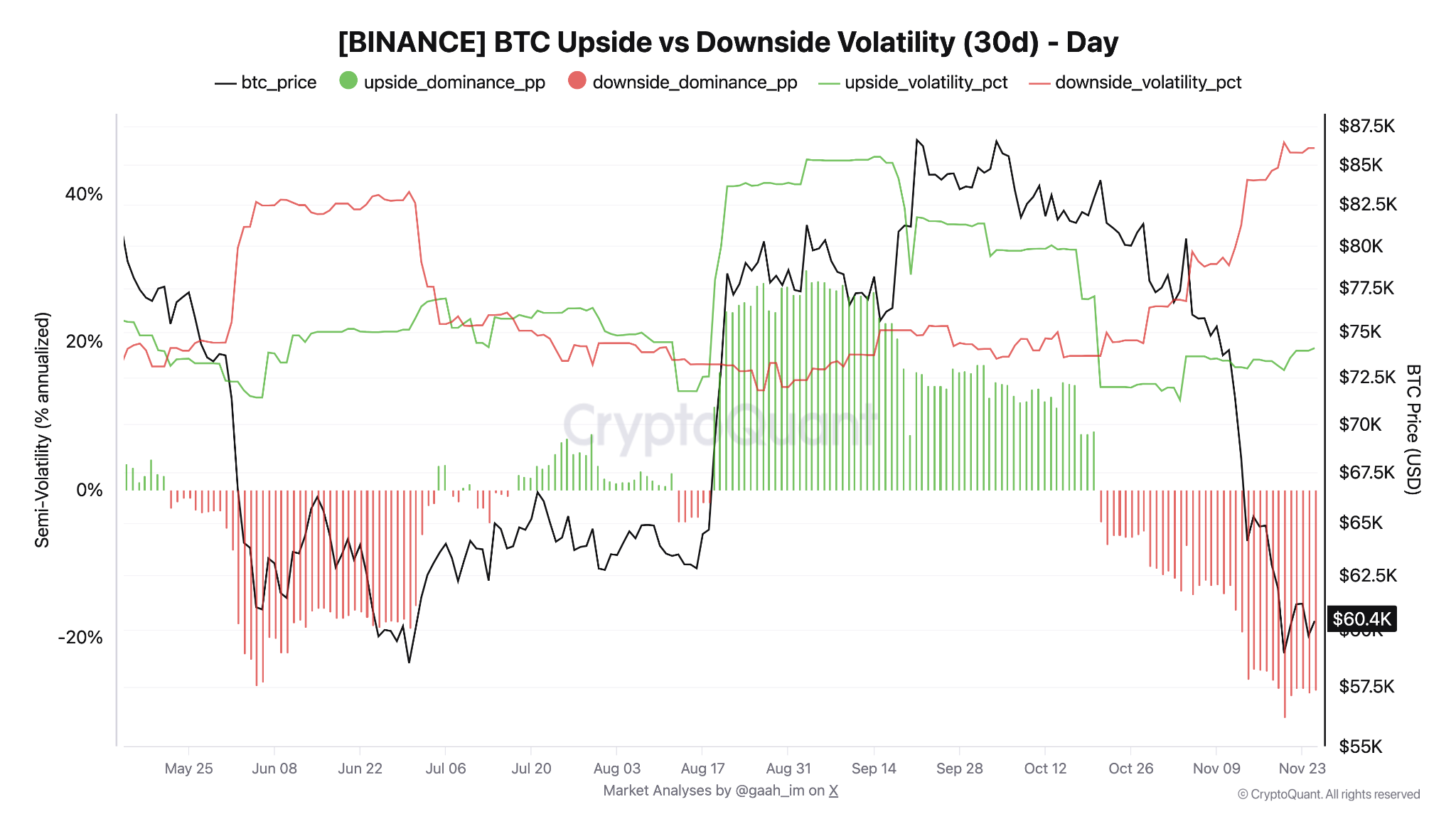
Over a rolling 30-day period, annualized downside volatility for Bitcoin derivatives on Binance reached 46%, compared with 19% on the upside, according to CryptoQuant data. A CryptoQuant community analyst said that if the imbalance persisted, it would suggest the market was gradually repricing Bitcoin lower.
Bitcoin remained above the realized price of its outstanding supply, a level that had served as support since the end of the 2022 bear market. Bitcoin traded below that level in every prior bear market, with the longest stretch lasting 301 days.