Can a Bitcoin mining site with power already secured become an AI data center? As reported by Cointelegraph on November 12, 2026, local restrictions on new data centers could make existing powered sites more attractive. But power access alone does not cover the cost or operating demands of a conversion.
Local approvals may favor existing sites
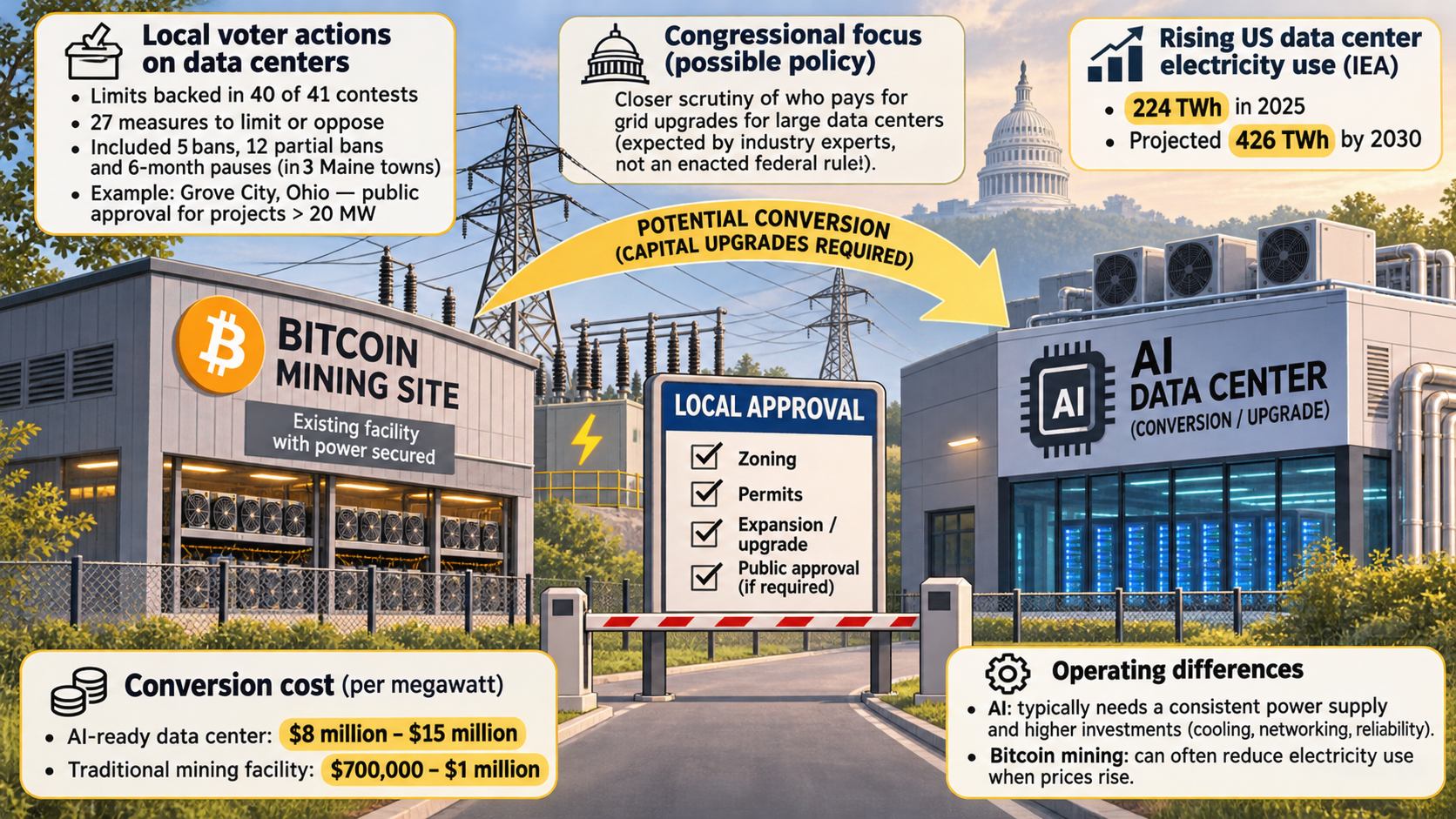
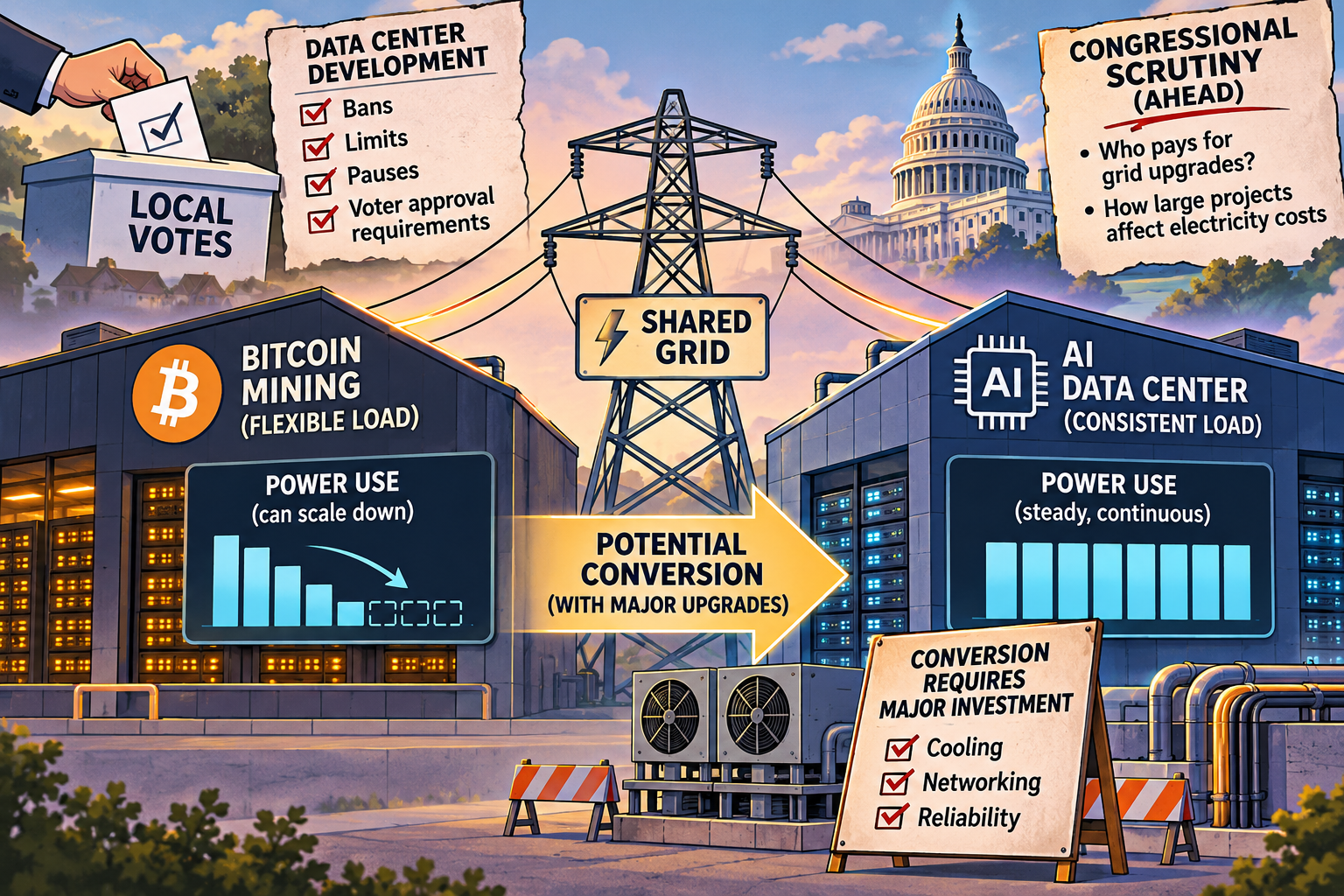
In local contests held alongside the November 3 US midterms, voters favored limiting data center development in 40 of 41 contests tracked by Ballotpedia, according to Cointelegraph. The measures varied: they included bans, limits on larger facilities, temporary pauses and requirements for voter approval.
Ballotpedia separately counted 27 measures to limit or oppose new data centers that voters backed. These included five complete bans, 12 partial bans and six-month pauses in three Maine towns. In Grove City, Ohio, voters approved a rule requiring public approval for large projects using more than 20 megawatts of electricity, among other conditions.
Jamie Brown, CEO of server-hosting company Global Kiwi Labs, told Cointelegraph that restrictions could strengthen the case for miners to repurpose existing electricity contracts and facilities. Jordan Knecht of blockchain infrastructure company Kresus cautioned that local zoning, permits and power access can still prevent a site from being expanded or upgraded.
Power access is only the starting point
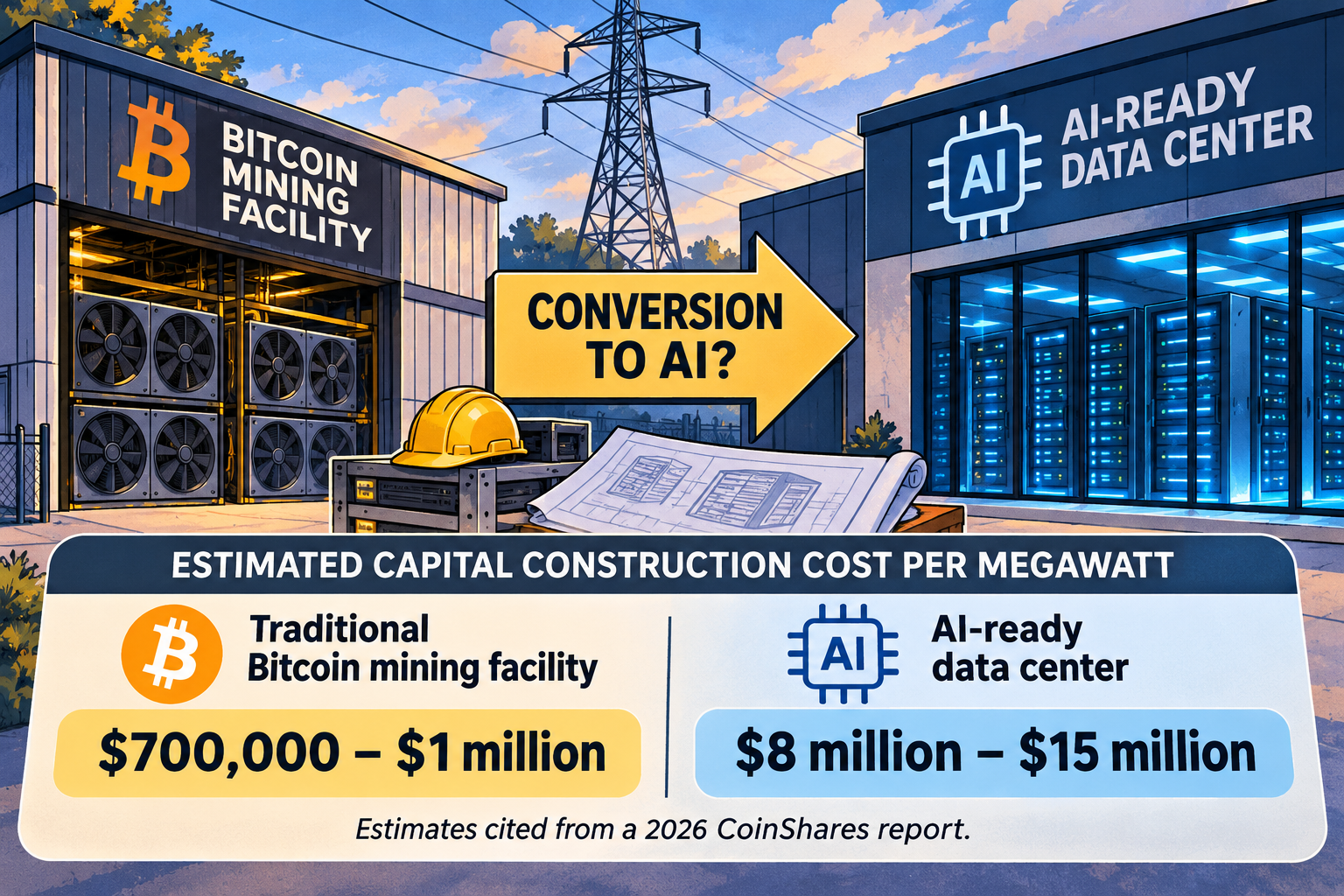
Publicly listed Bitcoin miners announced more than $70 billion in AI and advanced-computing contracts during 2025 and early 2026, according to a first-quarter CoinShares report cited by Cointelegraph. Announced contracts do not remove the capital cost of conversion: a 2026 CoinShares report put AI-ready data center construction at $8 million–$15 million per megawatt, versus $700,000–$1 million per megawatt for traditional mining facilities.
Knecht said AI workloads require further investment in cooling, networking and reliability. Yuliya Barabash, founder of SBSB Fintech Lawyers, noted a running-cost difference: Bitcoin miners can often reduce consumption when electricity prices rise, while AI data centers typically need a consistent power supply. She said higher power prices and regulatory requirements could reduce profitability or delay projects.
Grid costs remain an open question
The International Energy Agency estimated that US data centers used 224 terawatt-hours in 2025 and projected consumption of 426 terawatt-hours by 2030. Against that backdrop, Knecht and Barabash expected closer congressional scrutiny of who pays for grid infrastructure serving large data centers. Their comments described a possible policy focus, not an enacted federal rule.
For a miner considering AI, the operational question is whether potential revenue justifies the capital upgrades and steadier power supply. Brown argued that AI would offer miners a better return than mining; the source did not establish that outcome for any individual facility.
Source: cointelegraph.com (originally published 2026-11-12 04:43 UTC+8)