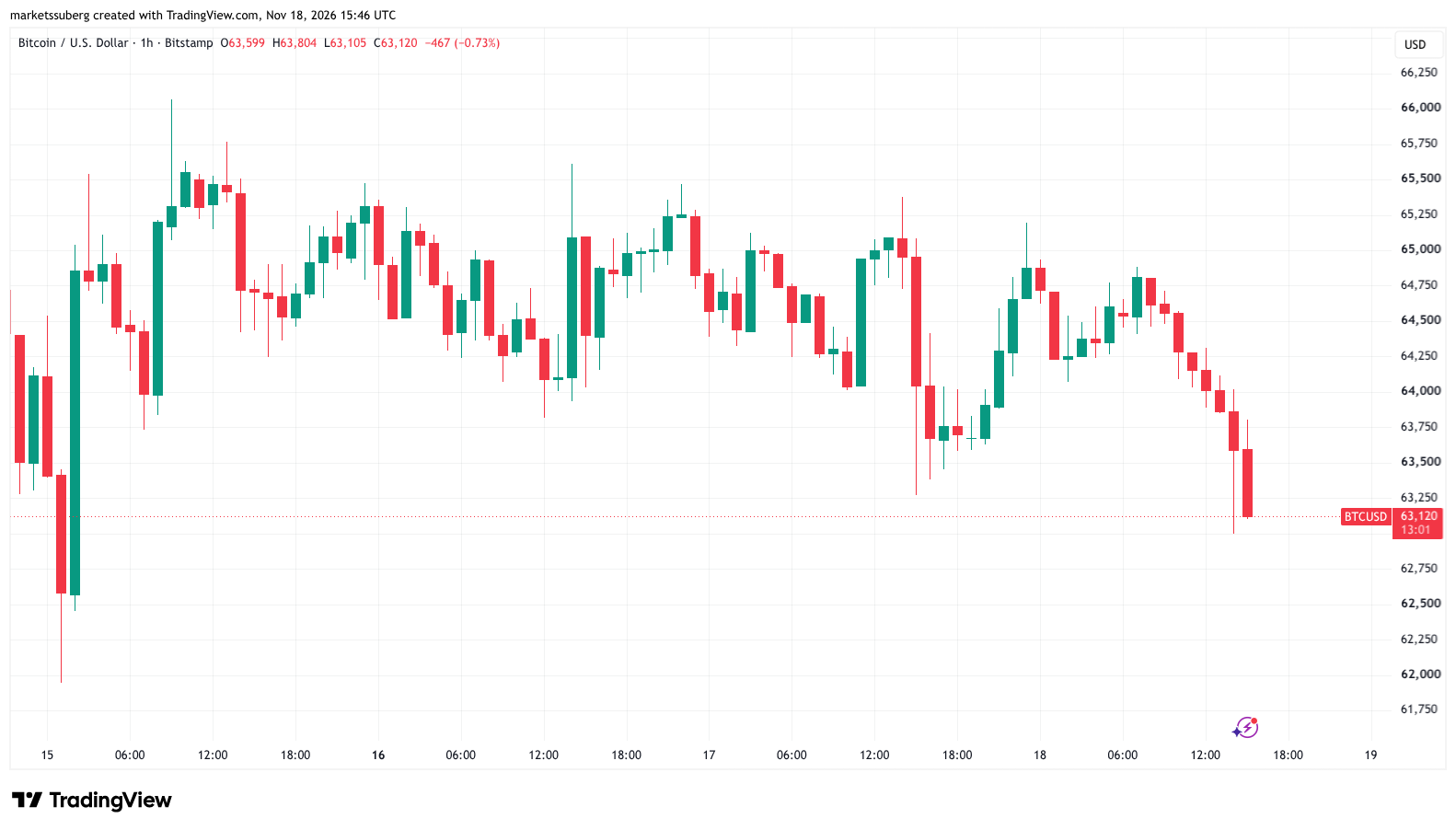
Bitcoin fell below $63,000 after the US stock market opened on Wednesday, Nov. 18, 2026, as equities weakened and Federal Reserve governor Christopher Waller raised the prospect of a larger interest-rate hike. TradingView data cited in the original report showed BTC down 3% on the day.
Speaking to CNBC, Waller argued for a 50-basis-point hike at the Fed’s December meeting, rather than the 25-basis-point increase markets largely expected. He said inflation had remained above the Fed’s 2% target for five years and warned that businesses could become accustomed to passing annual price increases of 3% or more to consumers. Officials might need to “shock people,” he said, to change those expectations. His comments were an argument for tighter policy, not an announced rate decision.
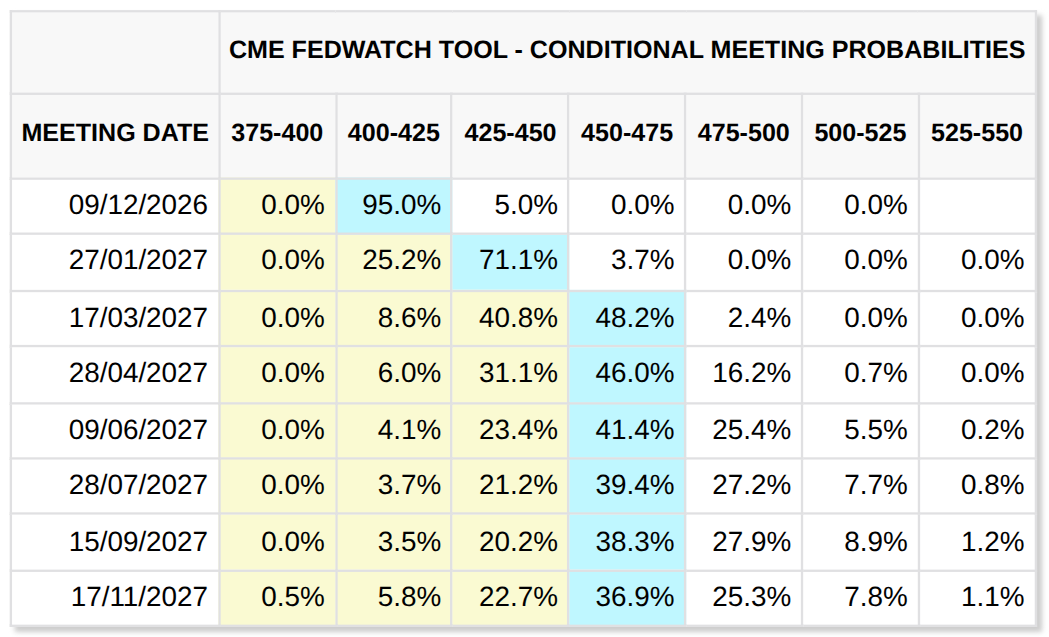
At the time of the report, CME Group’s FedWatch Tool put the market-implied probability of a 25-basis-point December hike above 95%. Economist Robin Brooks disputed the case for further tightening, arguing that cooling oil prices weakened it and calling additional hikes a “terrible mistake.”
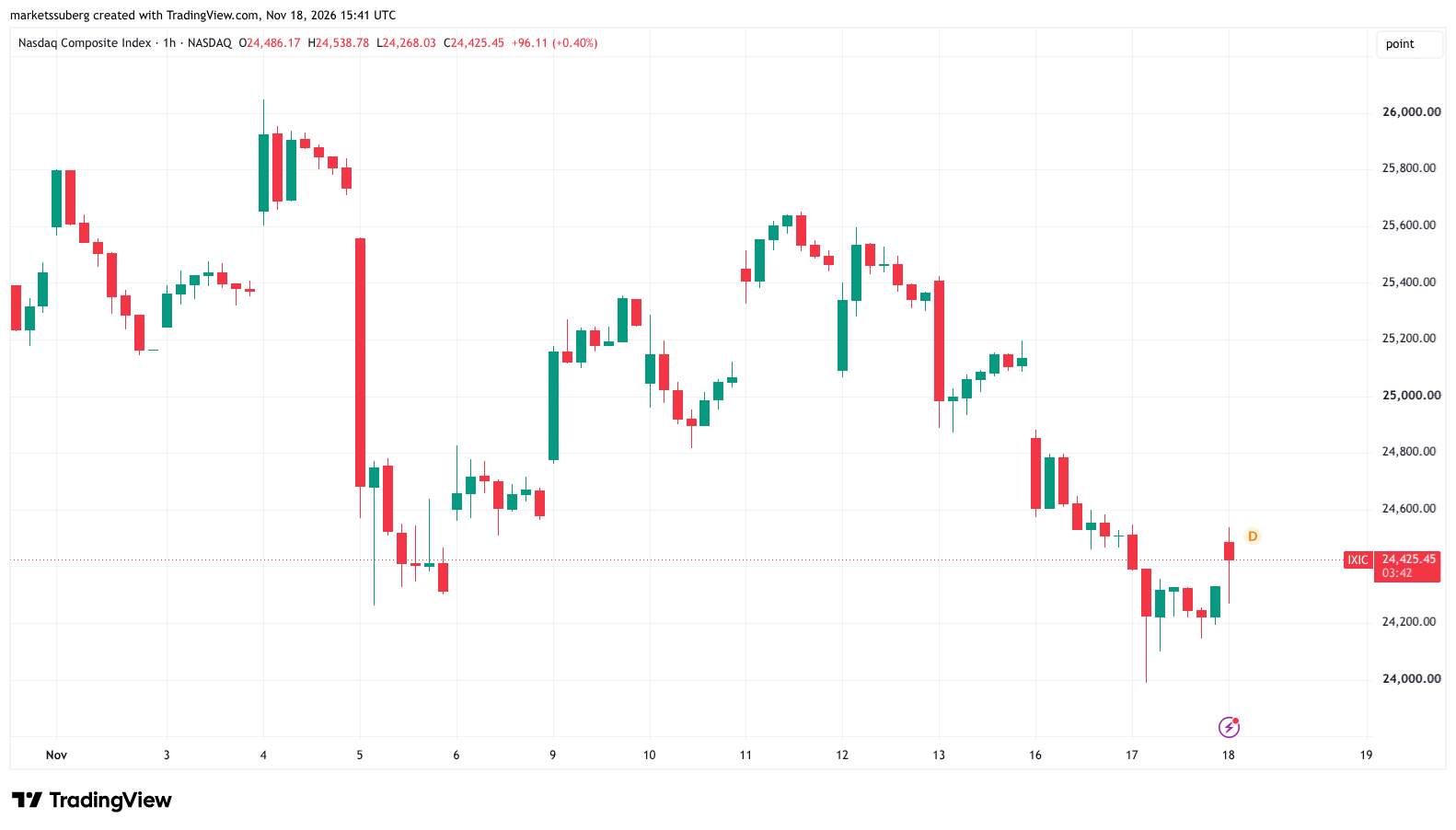
The S&P 500 was down 0.3% on Wednesday, while the Nasdaq Composite fluctuated around its opening level. Bitcoin had traded between $64,000 and $66,000 since Nov. 15 before the decline.
Independent analyst David Eng described Bitcoin selling pressure as “extreme.” He cited $8.7 billion in net capital outflows over 30 days and $2.1 billion in year-to-date net outflows from US spot Bitcoin ETFs. Eng estimated that a $290 million-per-day improvement in the balance between buying and selling would eliminate the measured 30-day net outflow. That is his assessment of flows, not a forecast of the price or a claim that Bitcoin requires $290 million in new daily purchases.