
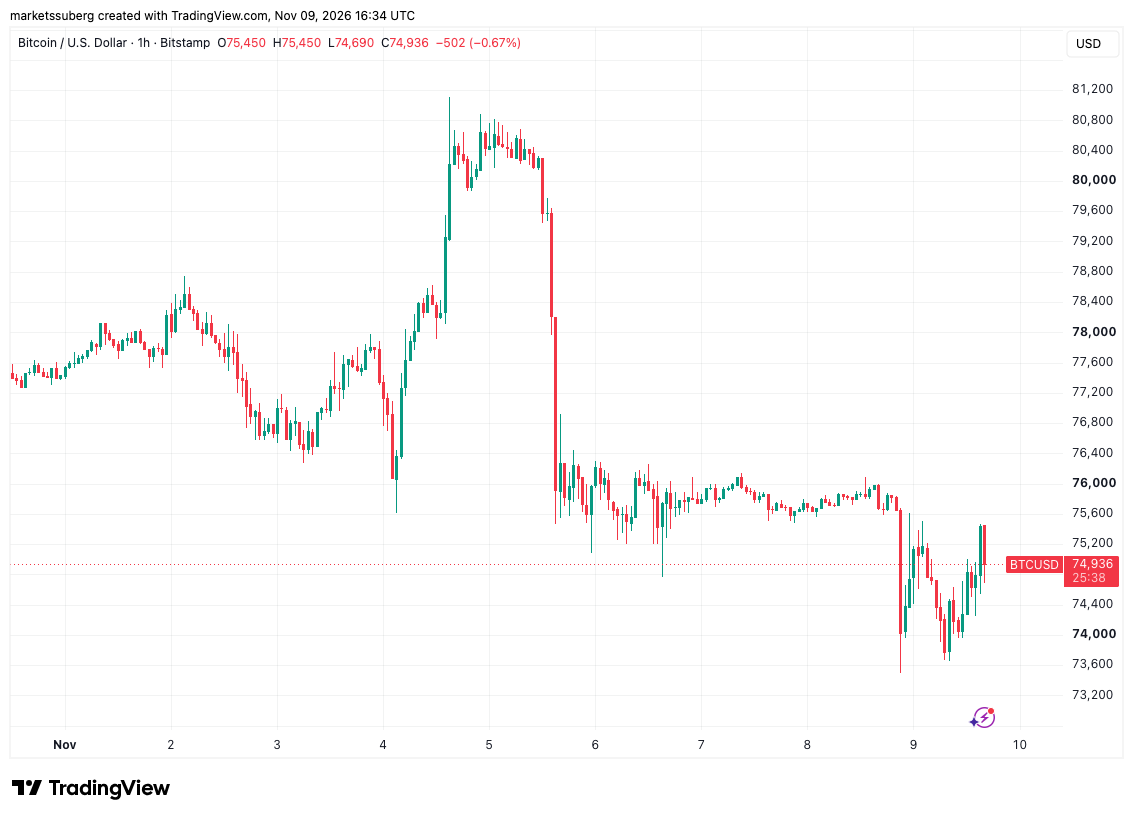
Bitcoin moved back above $75,000 after the US market opened on Monday, November 9, 2026, as technology stocks recovered. In reporting published November 10 (UTC+8), TradingView data showed BTC/USD up 0.8% after it had fallen to $73,500 on Sunday—its lowest level since August 21.
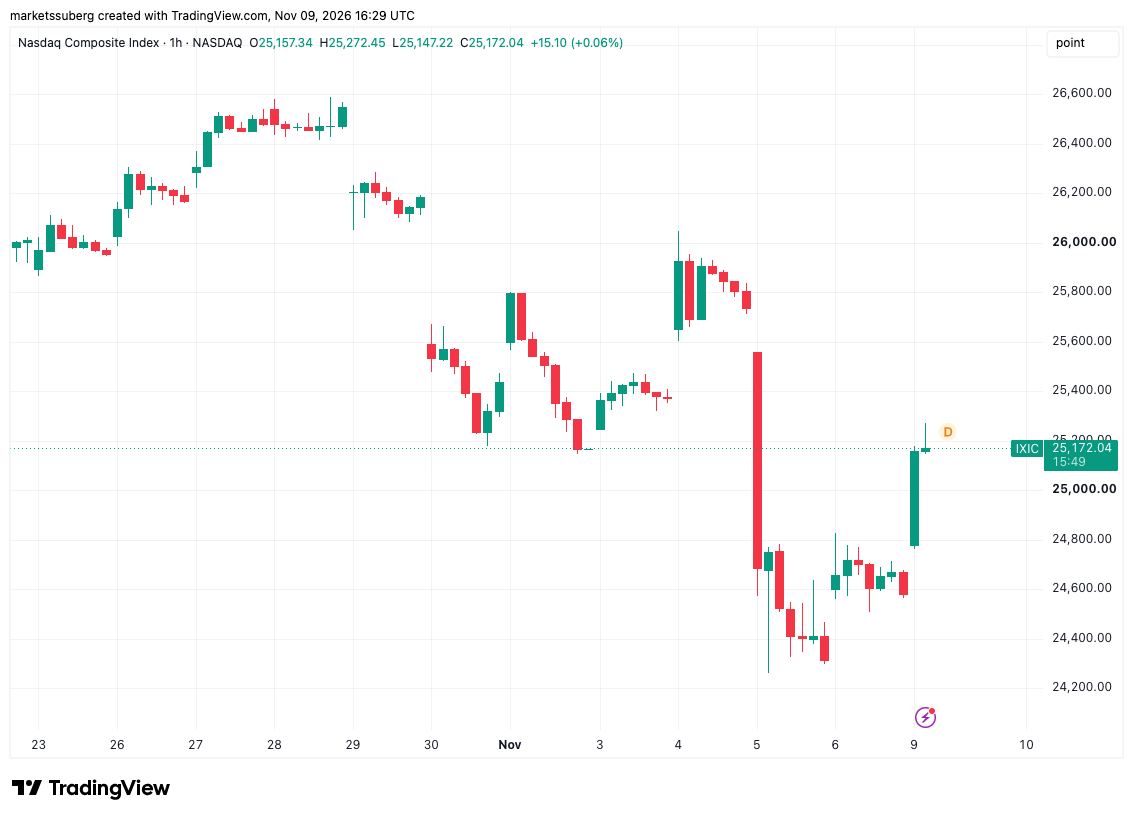
The decline coincided with a claim that Nvidia CEO Jensen Huang may have been the target of a Chinese intelligence effort. Beijing denied the claim. Nvidia shares fell about 6% to $170.24 in early Monday trading before reaching a session high of $179.92. The Nasdaq Composite Index, meanwhile, gained about 2.5% in the first hour of US trading; the report put its gain at up to 2.6% for the day.
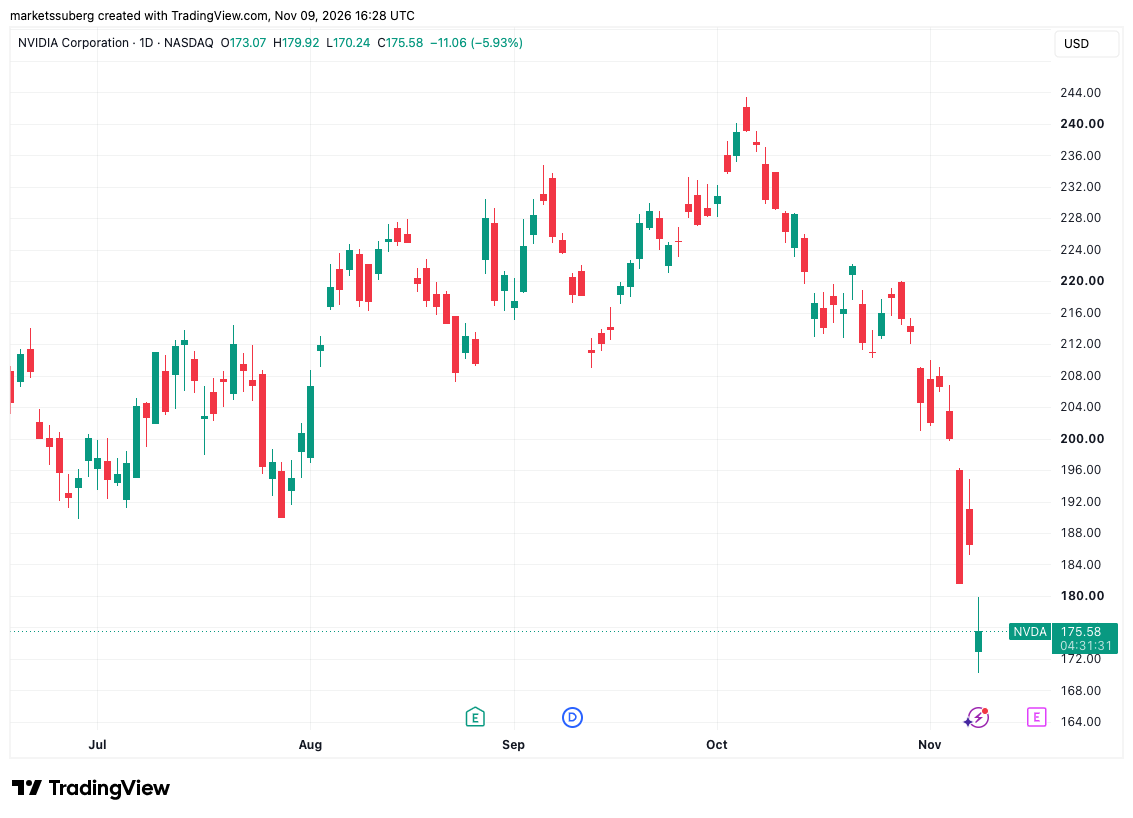
Dan Ives of Yorkville Ives & Co. warned in a Sunday note, quoted by CNBC, that the episode could weigh on Nvidia shares and prompt congressional inquiries. Former SEC chair Gary Gensler said the company’s board would face “tough choices” depending on its internal investigation’s findings.
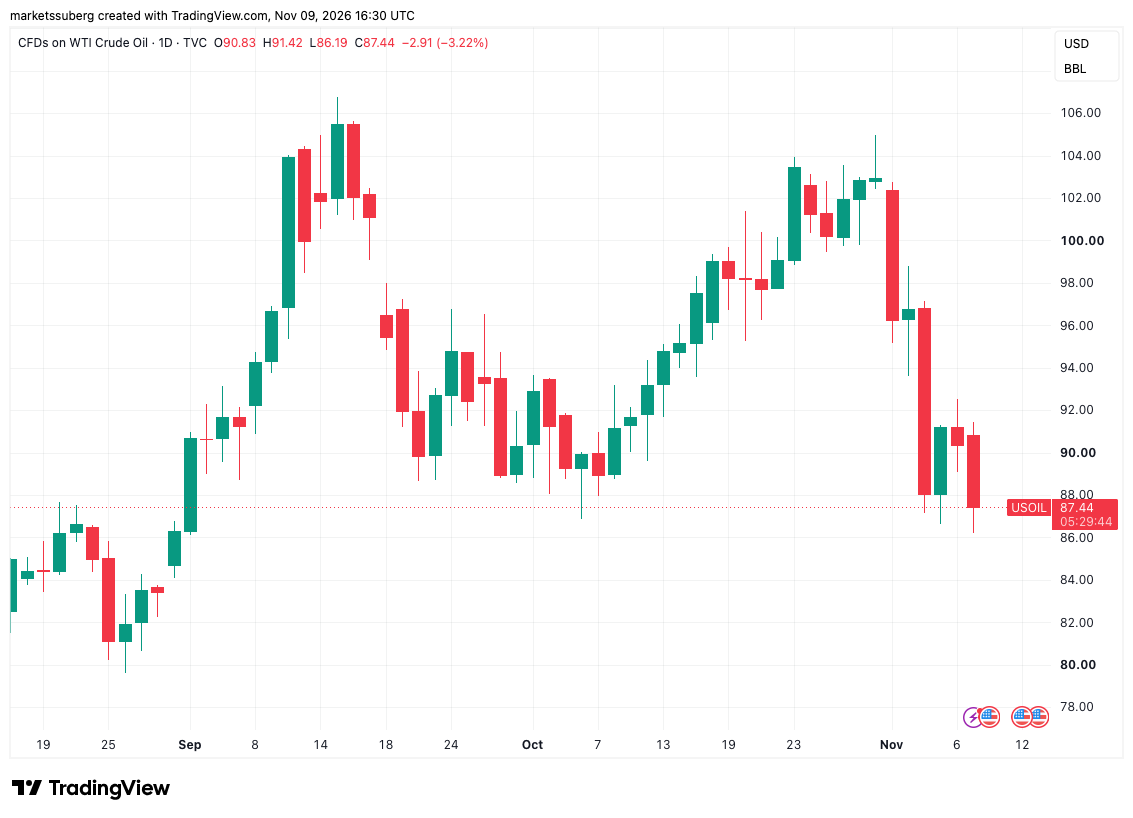
US WTI crude fell to $86.19 per barrel on Monday, its lowest level since September 1, before recovering to around $88.20. Economist Robin Brooks said that, even if recent negative correlations between oil and gold, Bitcoin and the S&P 500 weaken, lower oil prices could lift those assets. That was his assessment, not an established explanation for Bitcoin’s move.
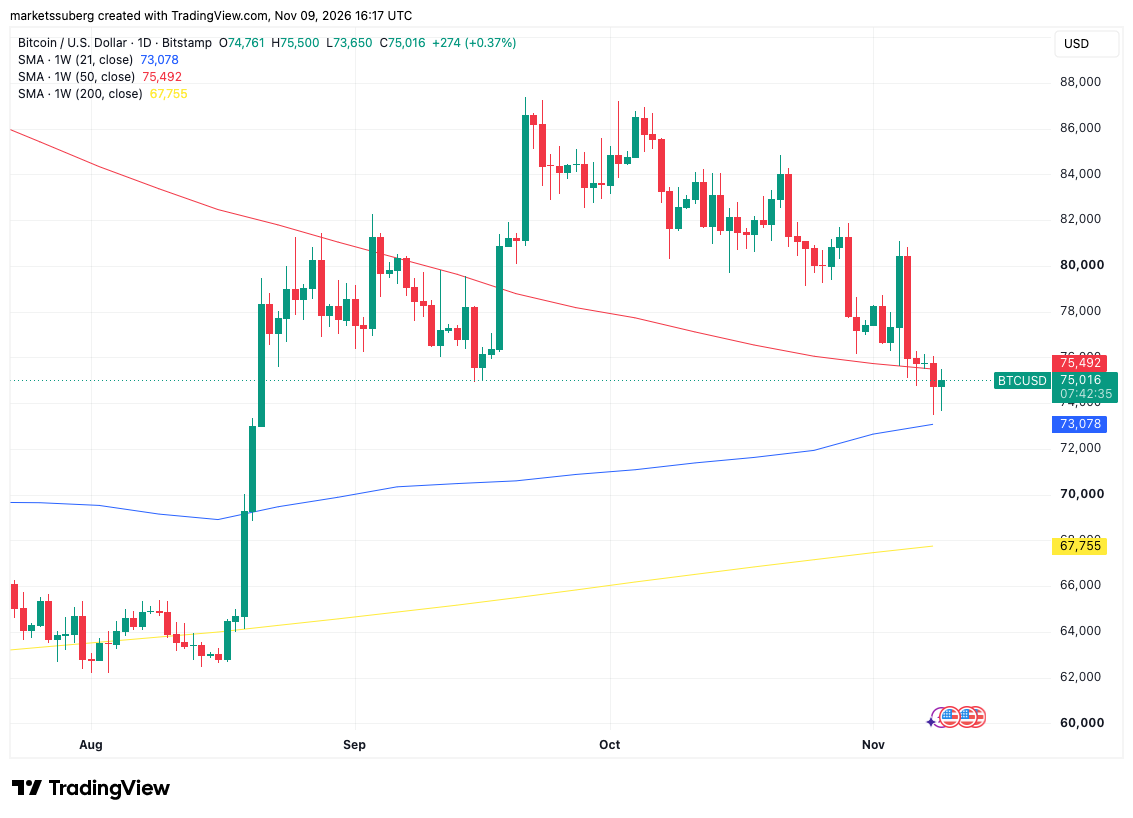
The downside level was a possibility, not a forecast. BTC/USD traded between its 21-week simple moving average of $73,078 and 50-week average of $75,492 on Monday. Keith Alan, cofounder of Material Indicators, said thin order books and the broader market structure left room for a test of the 200-week average at $67,755. He stressed that such a test was “possible, not inevitable,” and said the weekly picture was beginning to look more bullish.
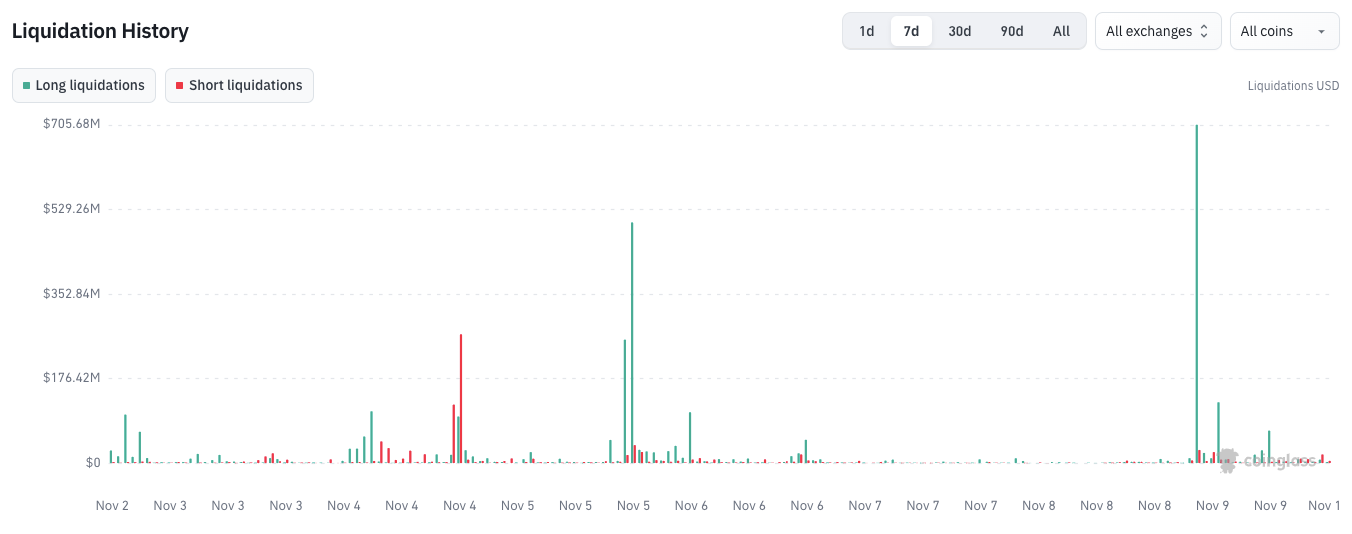
CoinGlass put crypto-market liquidations over the preceding 24 hours at $1.2 billion as of 5 p.m. UTC Monday. That figure covers the broader crypto market, not Bitcoin alone.